From Leather Boot to Speed Tool
Lighter, faster, more visible — the evolution of PUMA football boots
July 3, 2026
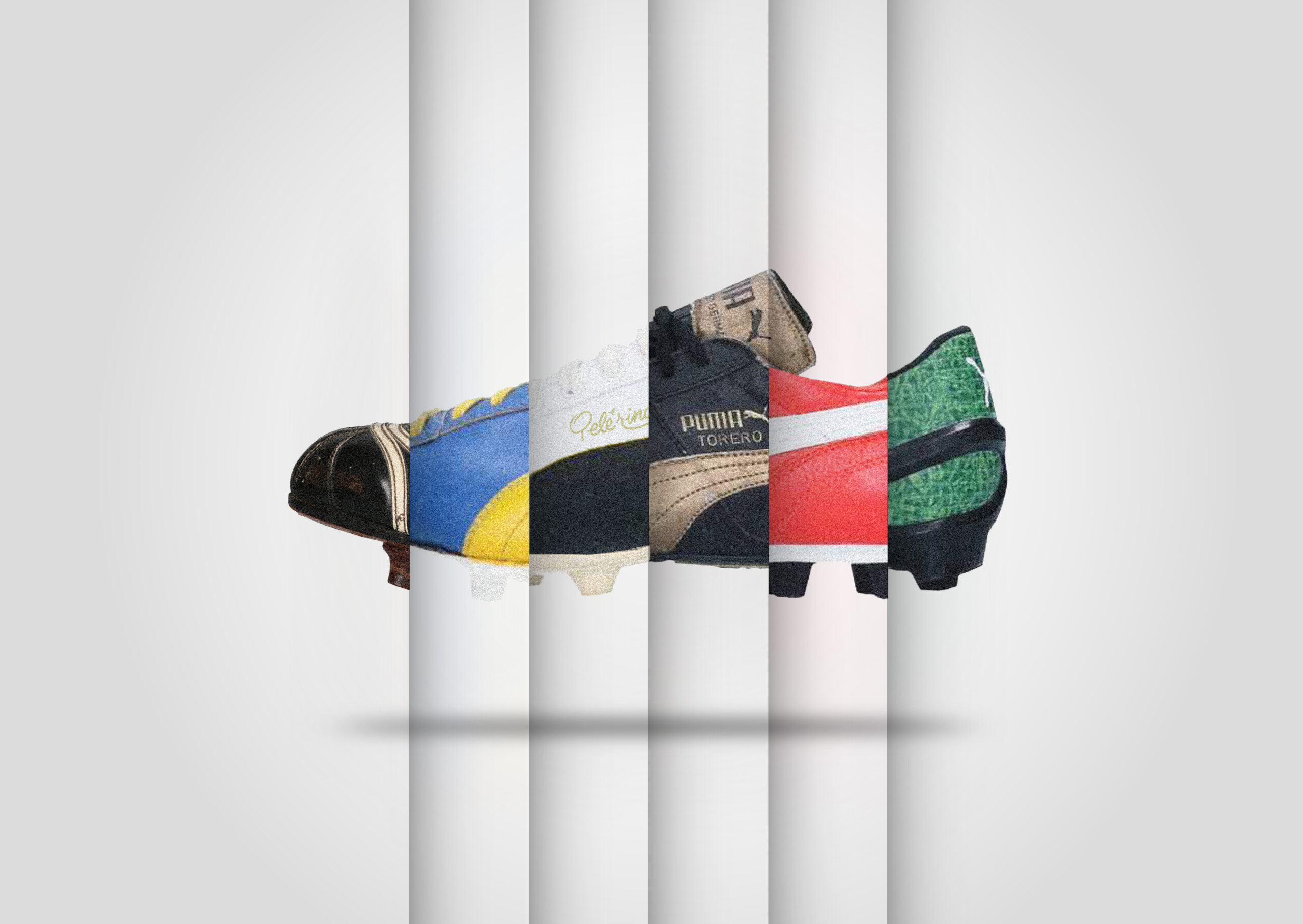
The history of football is also a history of materials, technology and weight. Of leather that soaked up water and new lightweight materials. Of studs that were first nailed on and later made replaceable. Of soles that became more flexible, uppers that became lighter, and designs that became increasingly visible.
At the current World Cup, that visibility is hard to miss. With the SHOWTIME PACK, PUMA brings bold colors and mismatched looks back to football’s biggest stage — inspired by the iconic Tricks Packs of 2014 and 2016. When Christian Pulisic drives into the box for the USA or Neymar Jr. starts a dribble for Brazil, the world catches sight of the boot for a split second. For the players themselves, however, the boot is meant to become part of the movement: supporting every sprint, every touch, every turn — without ever getting in the way.
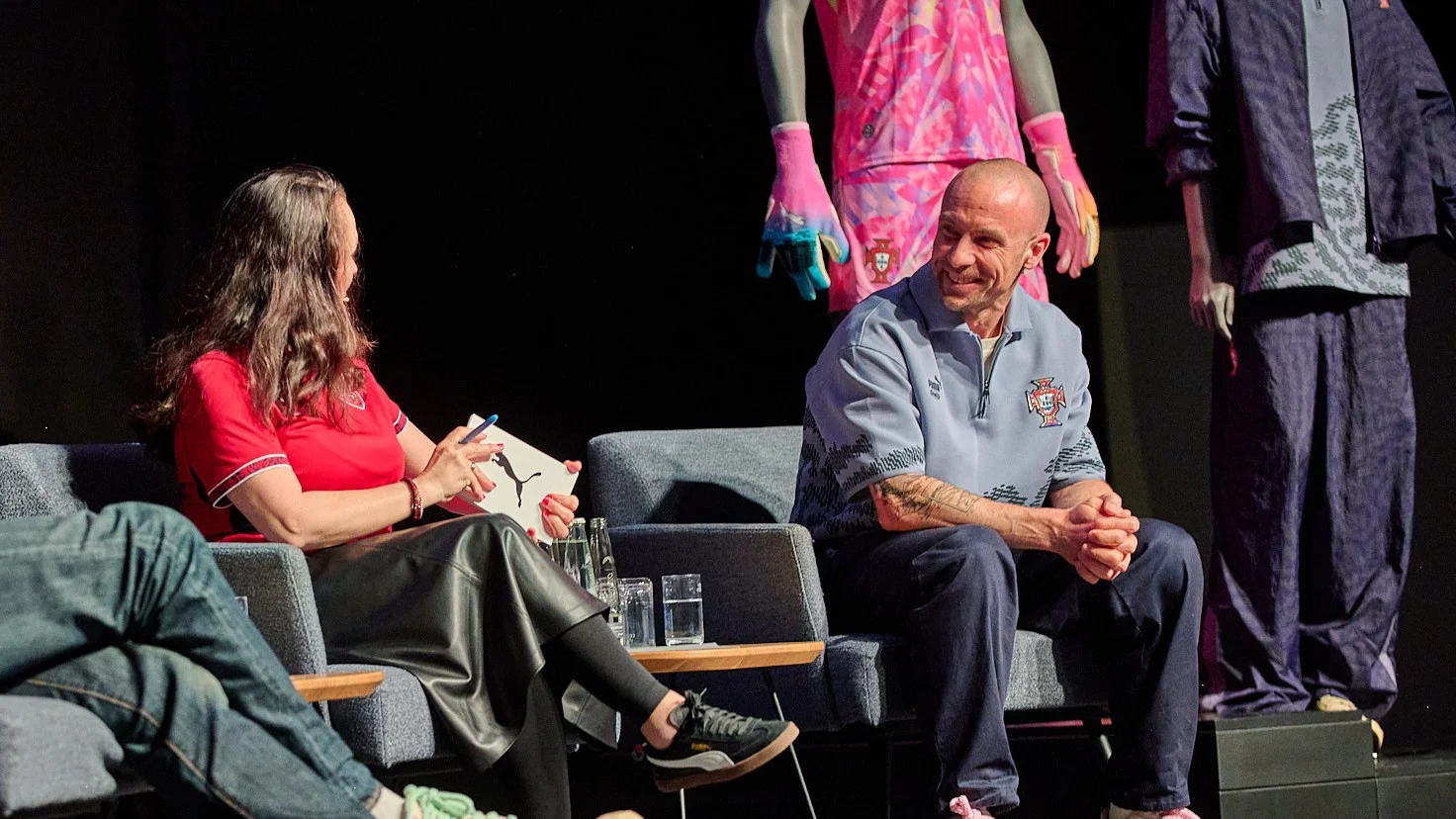
For Tung Hoang, Manager at the PUMA Archive, football boots are more than evidence of a constantly changing football culture. A football boot enthusiast himself, he closely follows how they have changed over the decades: from heavy leather models to ultra-light performance tools, from black workwear to visible statements on the pitch.
For Tung Hoang, Manager at the PUMA Archive, football boots are more than evidence of a constantly changing football culture. A football boot enthusiast himself, he closely follows how they have changed over the decades: from heavy leather models to ultra-light performance tools, from black workwear to visible statements on the pitch.
“You really had about half a kilo of shoe on your foot.”
– Tung Hoang, Manager of the PUMA Archive
– Tung Hoang, Manager of the PUMA Archive
The term itself already says a lot about the origins: Football Boots. “At the beginning, they really were proper boots,” says Tung. In England, the birthplace of football, players initially used work boots or military boots to play the game. They were high-cut, heavy, made of leather and fitted with nailed-on studs. Their main purpose was protection and support. “And of course they were heavy — you really had about half a kilo of shoe on your foot.” In rain and mud, they quickly became even heavier.
This principle lasted for a long time. From the early football boots of the late 19th century until the 1940s, little changed. The major transformation began in the 1950s. When PUMA launched its ATOM in 1950, it was a small sensation. The boot weighed around 300 grams. “Wherever material could be saved, it was saved,” says Tung. On the leather, the sole, the construction, the height of the upper. Becoming lighter without giving up protection — that was the decisive step at that time.
This principle lasted for a long time. From the early football boots of the late 19th century until the 1940s, little changed. The major transformation began in the 1950s. When PUMA launched its ATOM in 1950, it was a small sensation. The boot weighed around 300 grams. “Wherever material could be saved, it was saved,” says Tung. On the leather, the sole, the construction, the height of the upper. Becoming lighter without giving up protection — that was the decisive step at that time.
In 1952, the SUPER-ATOM brought the next technological sensation: screw-in studs. Players could now adapt the boot to the surface: wet grass, dry grass, soft ground. With the right studs, the boot became a tool that worked with the playing conditions — and while many technologies changed or disappeared over time, the principle of screw-in studs is still used today.
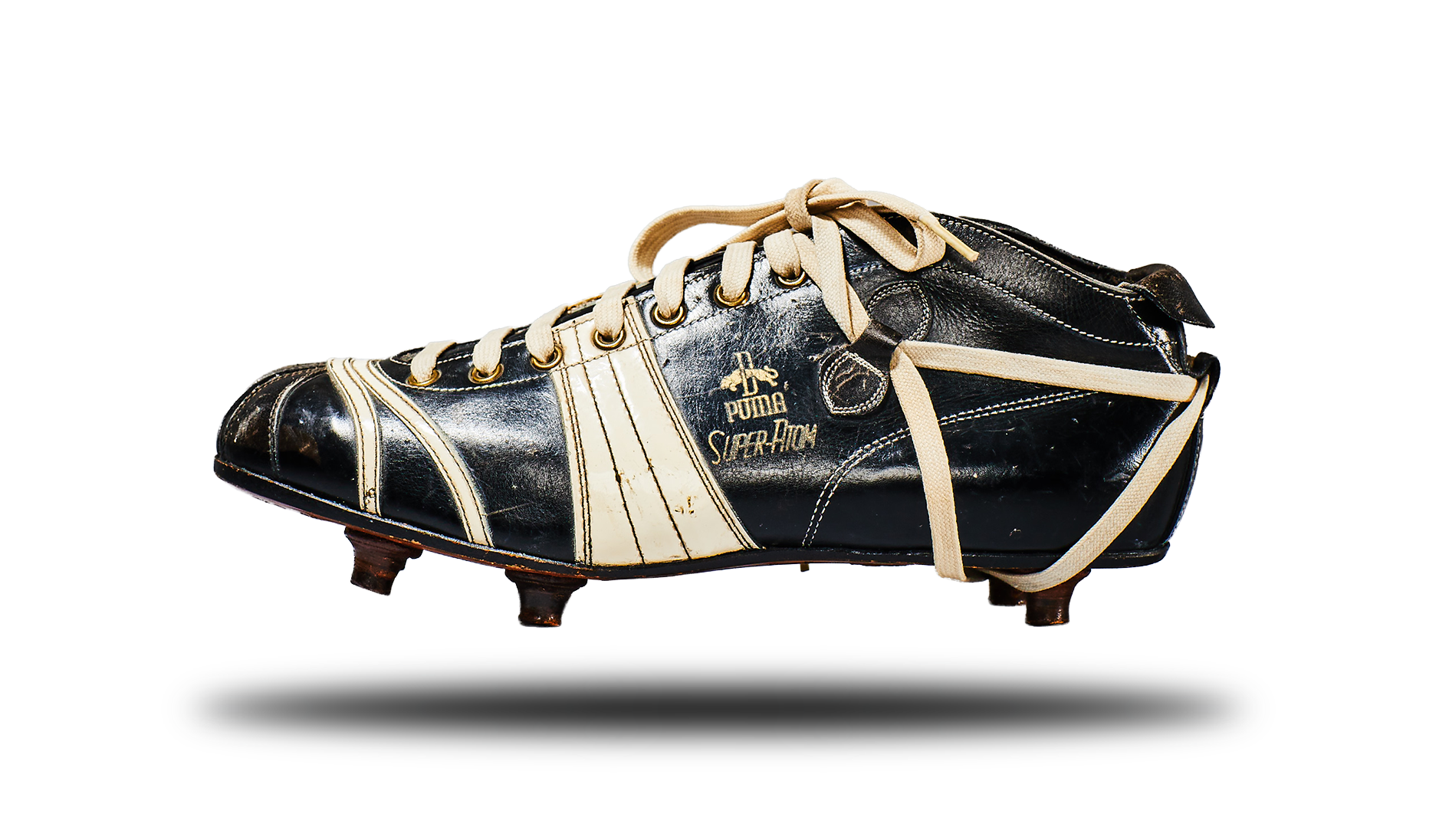
PUMA SUPER-ATOM from 1952
Screw-in studs at the PUMA SUPER-ATOM in 1952
PUMA ad for the SUPER-ATOM
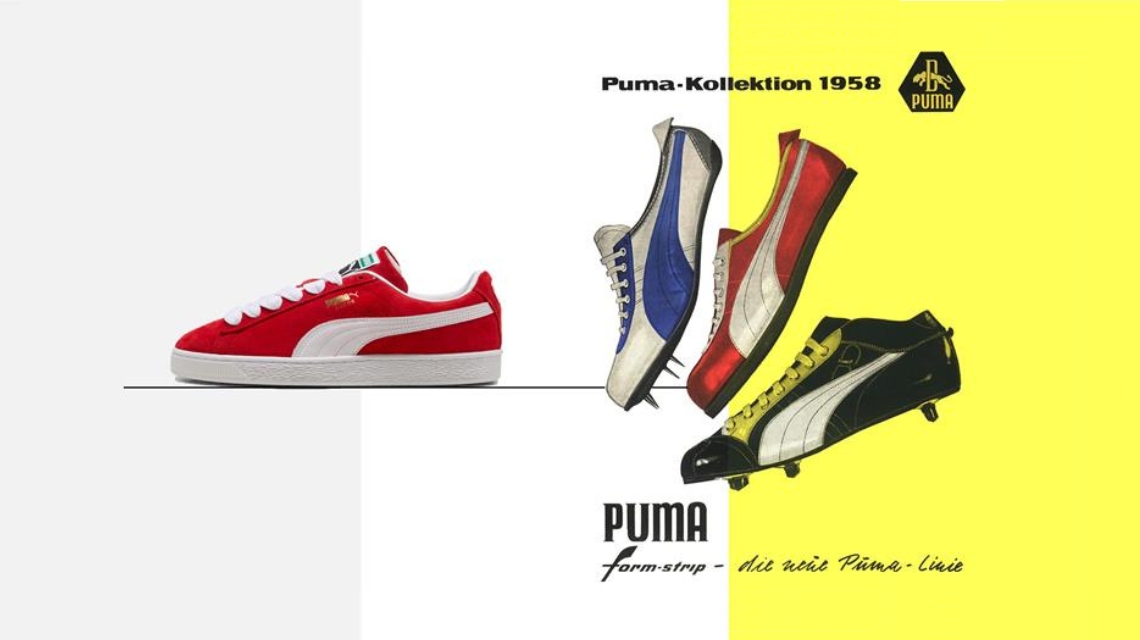
The PUMA Formstrip in 1958 is also a part of this development. Originally, it combined visibility and function. It took up earlier stabilizing features such as overlaying bands and laces running around the ankle, bringing them together in one dynamic element that gave the boot lateral support while also creating a strong visual contrast. As football became increasingly visible on black-and-white television, this mattered too: clear lines, strong light-dark contrast, recognizability. Today, the Formstrip is one of PUMA’s most important trademarks.
On Eusébio and the PUMA KING:
“He wasn’t trapped in the boot anymore — the more flexible sole simply suited his explosive style of play.”
– Tung Hoang
“He wasn’t trapped in the boot anymore — the more flexible sole simply suited his explosive style of play.”
– Tung Hoang
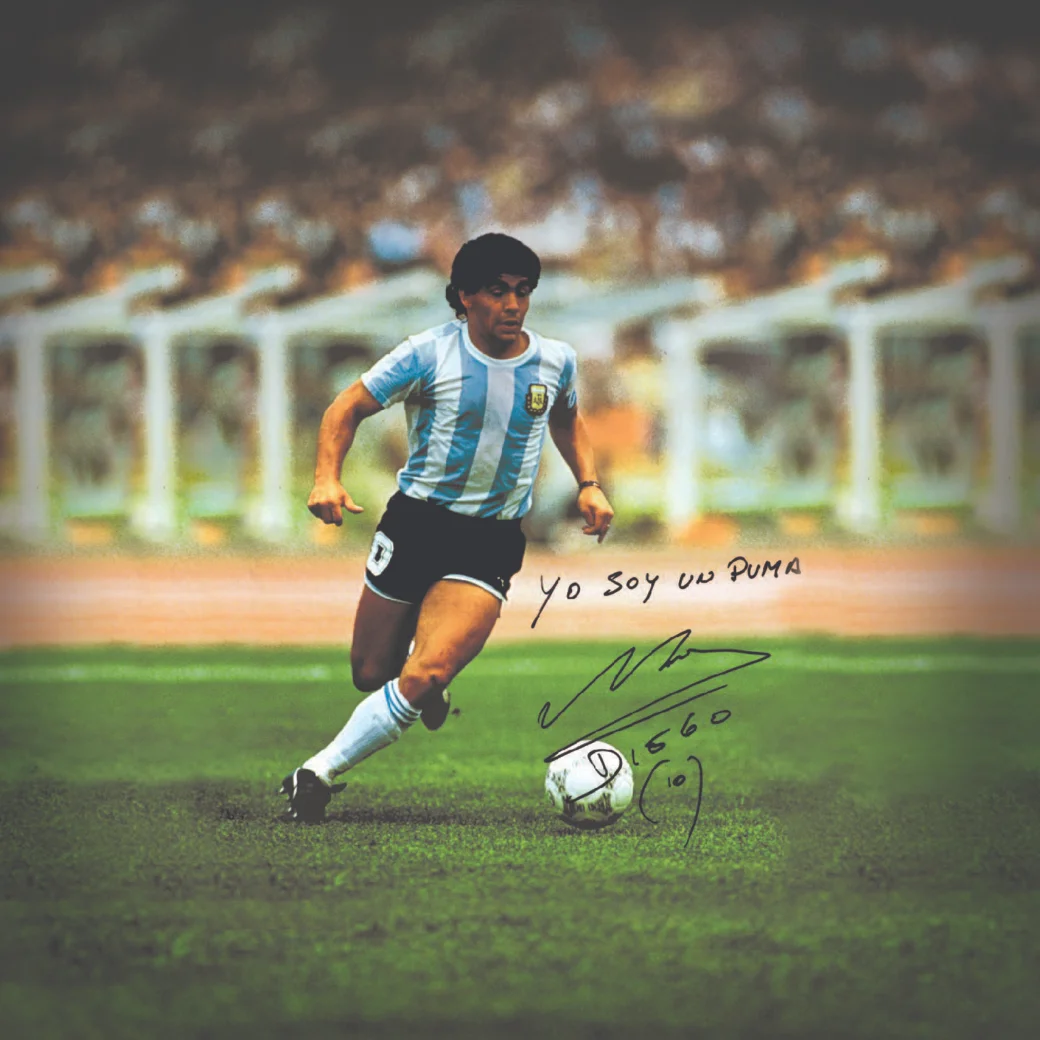
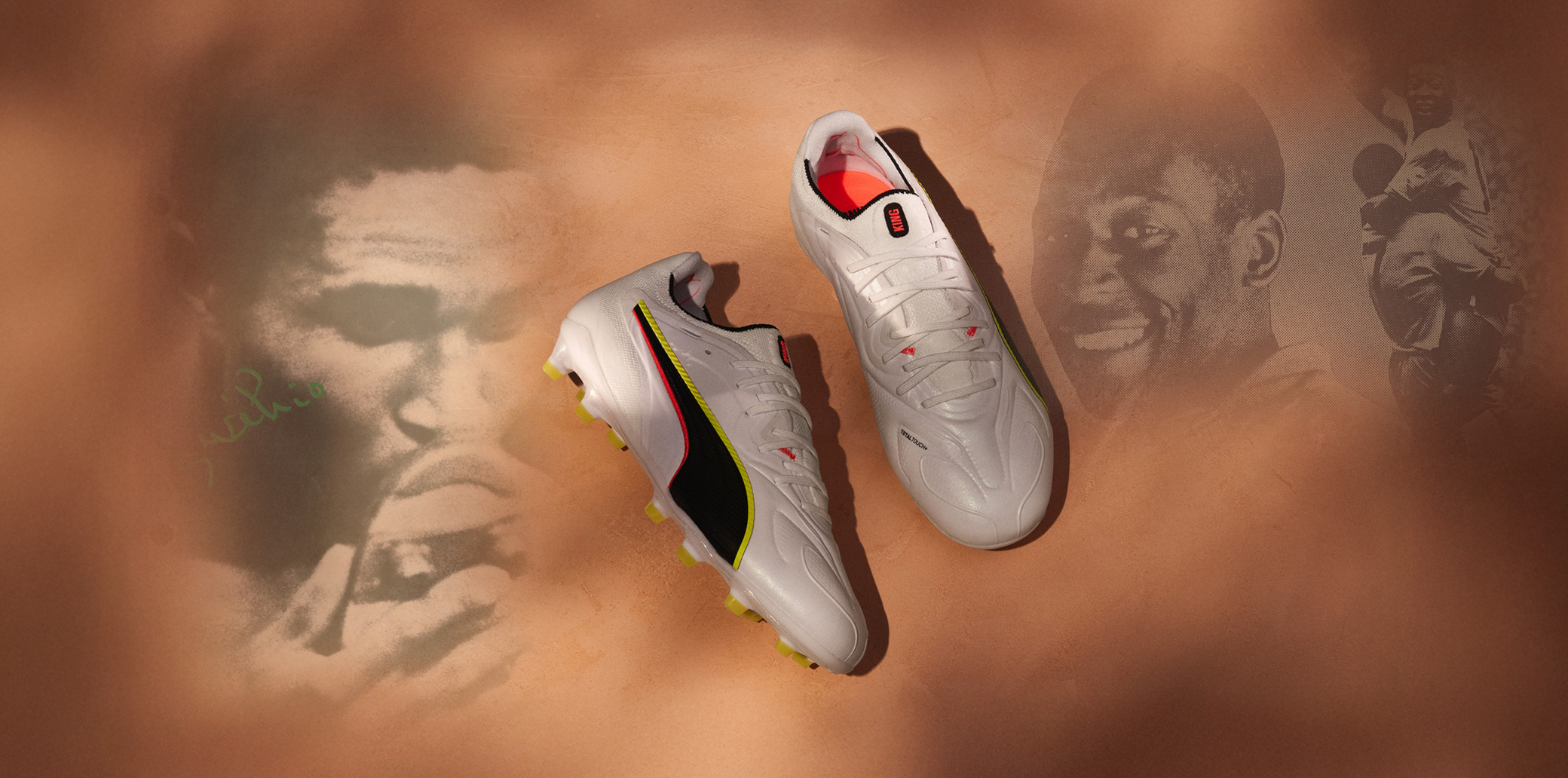
A new decade, a new development: in the 1960s, nylon came into fashion — also on the foot. The material brought more flexibility and less weight. The boot became more agile, the foot could move more naturally. In 1966, the PUMA KING was launched — eventually worn by football gods such as Eusébio, Pelé, Johan Cruyff, Diego Maradona and Lothar Matthäus. For Tung, Eusébio in particular shows what this new type of boot could do: “He wasn’t trapped in the boot anymore — the more flexible sole simply suited his explosive style of play.”
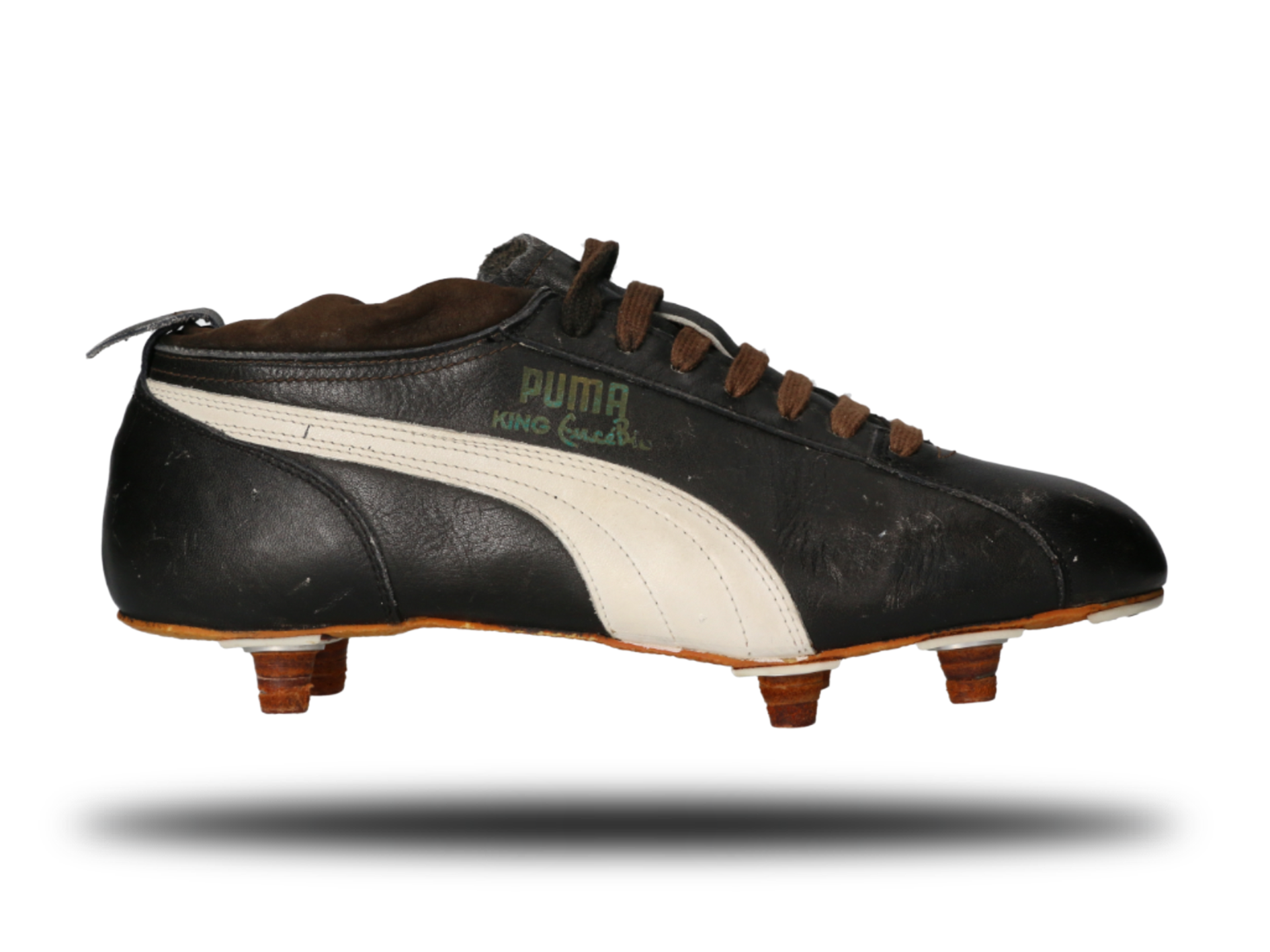
PUMA KING Eusébio from 1966
The 1970s added new ideas around fit, protection and individuality. In 1971, PUMA set a quiet milestone with the Pelérina — a football boot built on a women-specific last. Technologies such as Fers-O-Til and later S.P.A. — short for Sportabsatz, or sports heel — focused on the Achilles tendon area, aiming to reduce pressure, protect the heel and lower the risk of overextension.
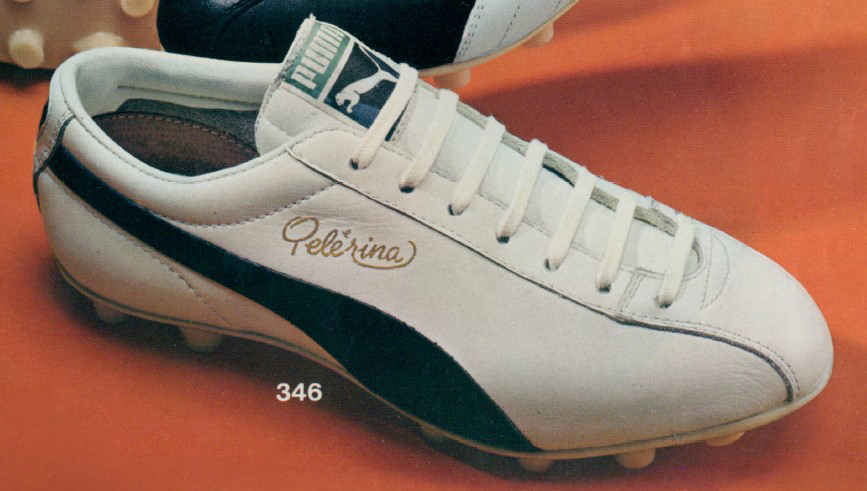
PUMA Pelérina from 1971
PUMA-Fers-O-Til (Achilles Tendon Pad)
PUMA S.P.A. KING from 1978
Graphic of PUMA Sportabsatz from 1981
Colour also became more important: boots such as the Netzer-Azur brought a flash of blue onto the pitch — long before colorful football boots became mainstream in the late 1990s.
PUMA Netzer-Azur
PUMA doubled down on flexibility when it introduced the DuoFlex technology in 1982. Grooves in the sole were designed to make the foot bend more naturally — inspired by the flexible section of a drinking straw. The boot became more direct, more flexible, closer to the natural movement. “It became a mainstay for PUMA football boots for a very long time,” says Tung.
For decades, despite all the technology, football boots remained black or black-and-white. Color was the exception. Only in the late 1990s did it become a major theme. “Today, no one really wears black-and-white boots anymore,” says Tung. “But it only really became mainstream in the late 90s.” At the 1998 World Cup, Cameroon player Rigobert Song took it to another level, wearing different-coloured boots on each foot. In doing so, he inspired the striking tournament looks which later made PUMA so visible and iconic.
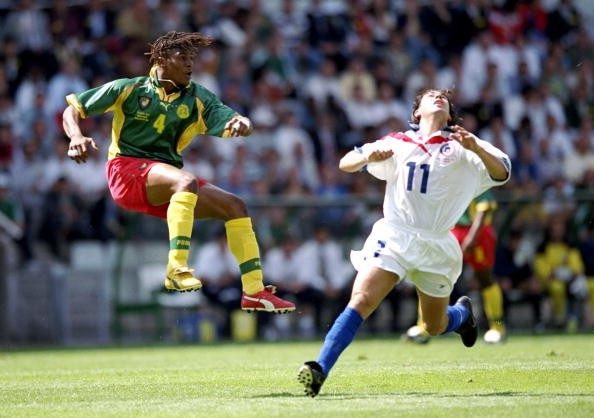
Rigobert Song (left) during Cameroon's match against Chile in 1998
“With the v1.06, PUMA was once again ahead of its time.”
– Tung Hoang
– Tung Hoang
PUMA v1.06 from 2006
In 2006, the v1.06 marked the next break: a woven upper, a carbon plate in the sole and a revolutionary weight below 200 grams — the lightest boot on the market at the time. The football boot had become a tool for speed. “With that, PUMA was once again ahead of its time,” says Tung. Later, PUMA pushed the idea even further with especially lightweight models, but also learned that weight is not everything. A boot also has to hold, protect and guide the foot. In the end, it’s all about striking the right balance.
That balance defines PUMA’s football boots today: FUTURE for creativity and control, ULTRA for speed, KING for touch, comfort and heritage. Three lines, three playing styles — all built to support players in the decisive moment.
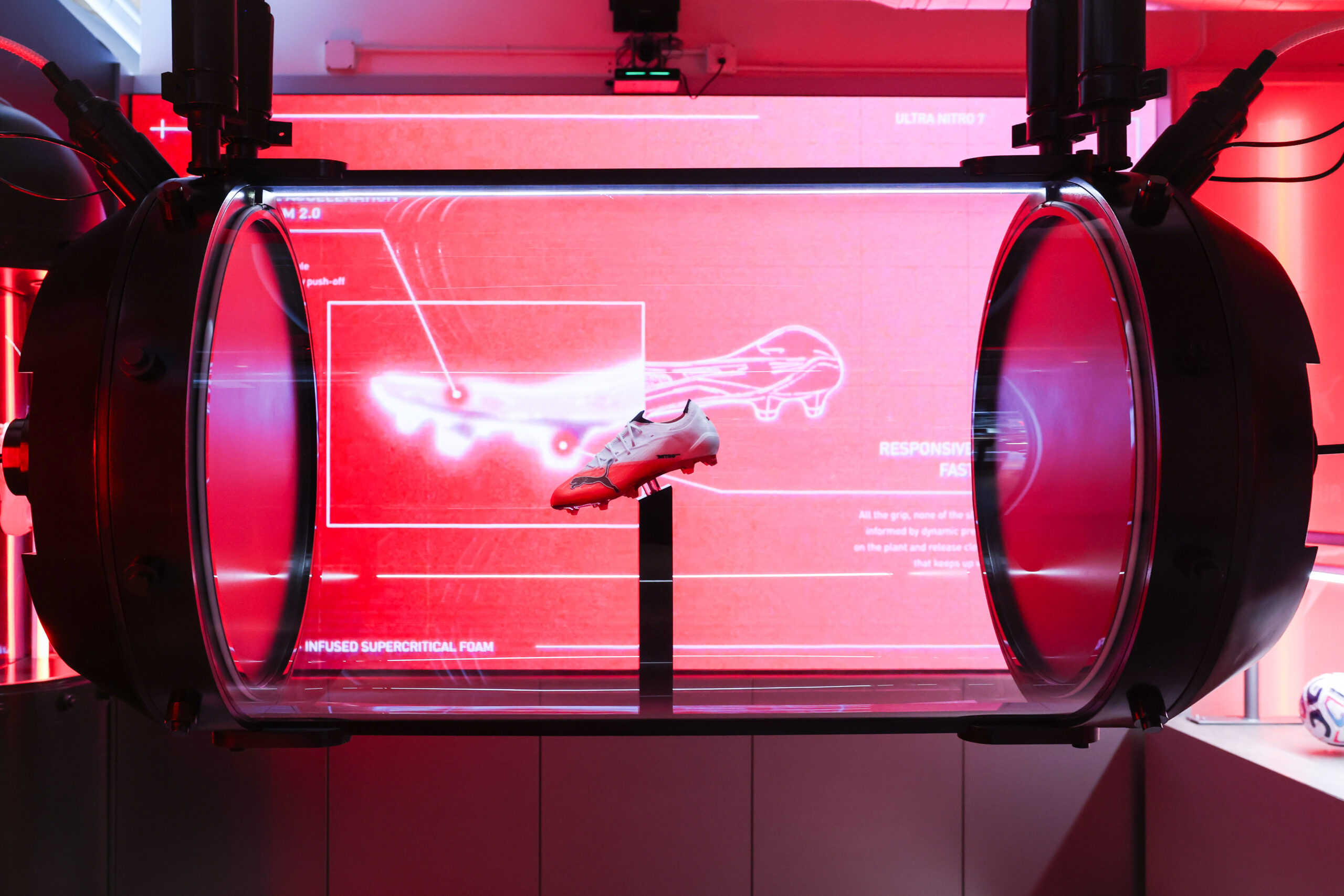
And the evolution continues: With the ULTRA NITRO 7, PUMA brings its leading running technology NITRO™ into a football boot for the first time.
And the evolution continues: With the ULTRA NITRO 7, PUMA brings its leading running technology NITRO™ into a football boot for the first time.
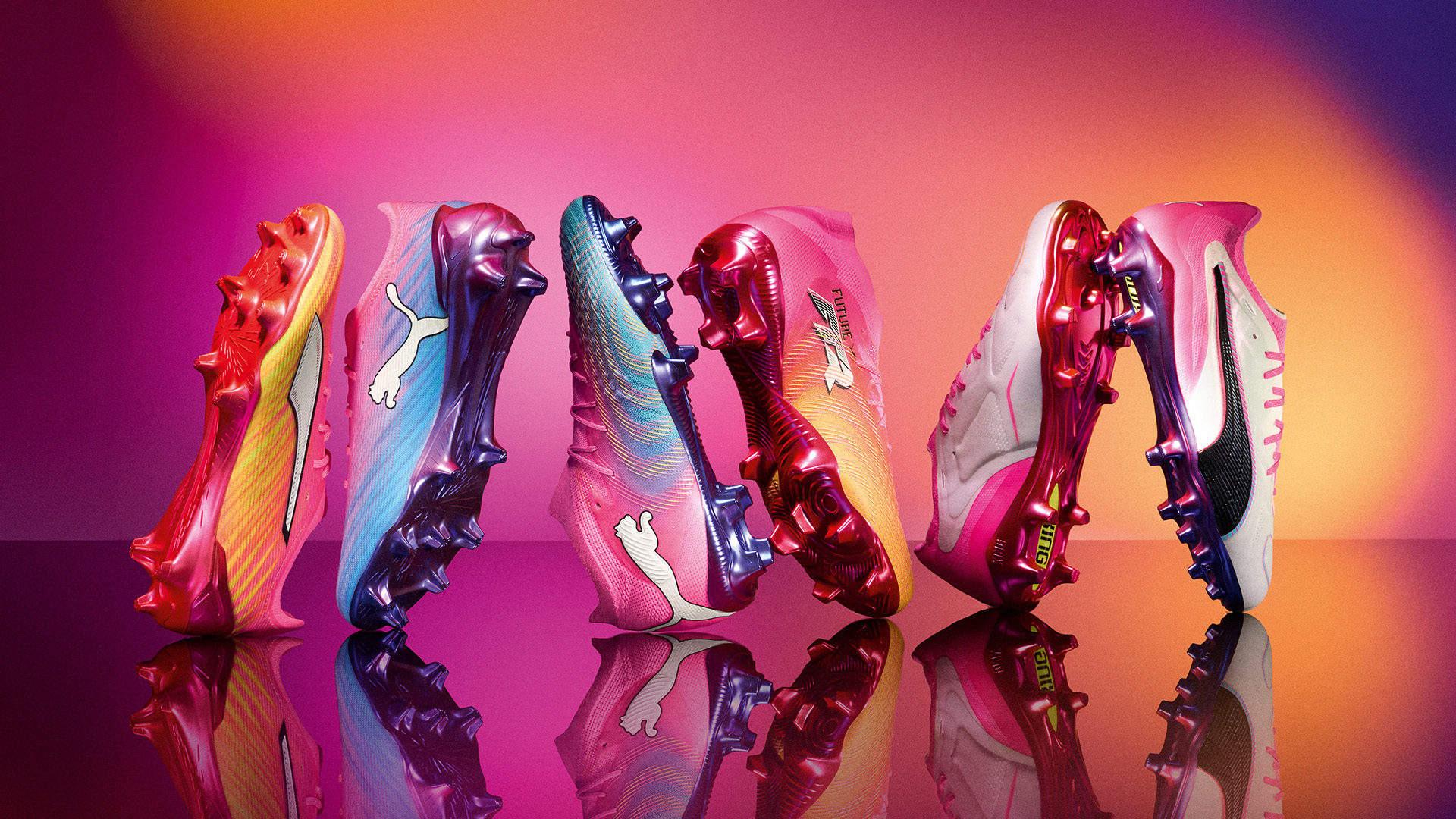
PUMA SHOWTIME Pack from 2026
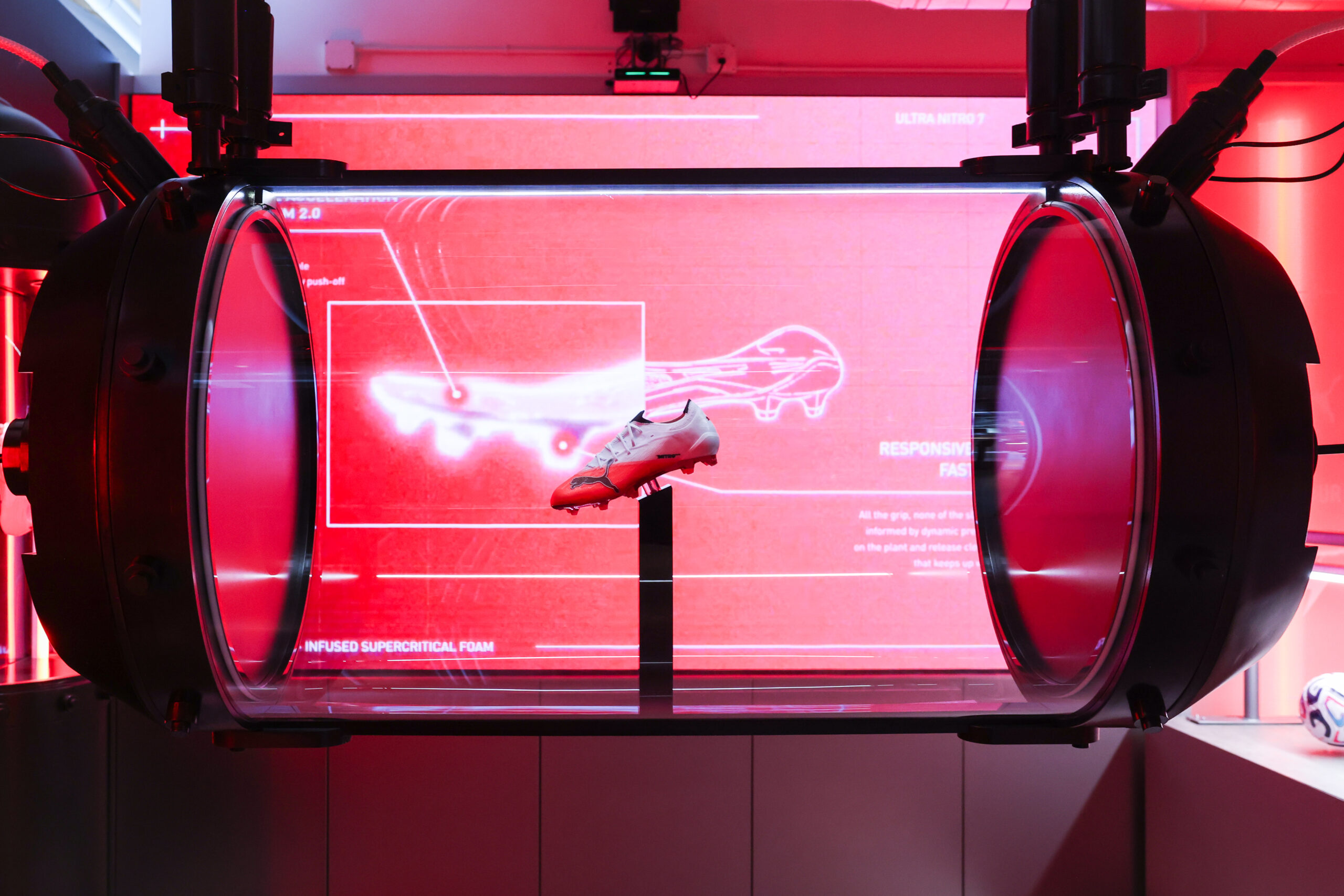
PUMA ULTRA NITRO 7
When our players accelerate, pick up speed or keep the ball close to their foot, the boot may flash up on screens for a split second. But for the player, it becomes something more: part of the movement.

Find out more about PUMAs’ football boot legacy:

Catch up now speaks more languages
To enable as many users as possible to connect with us and be part of our world, we offer CATch up in English, German, French, and Spanish. Please note that these translations are automated and may contain errors.