D'un petit atelier à Herzogenaurach à une marque de sport mondiale, voici les origines de PUMA.
Aujourd'hui, PUMA est l'une des marques de sport les plus reconnues au monde. Pourtant, son histoire a commencé dans une petite ville allemande avec deux frères, une idée audacieuse et une passion pour les performances sportives. Les racines de PUMA remontent à plus d'un siècle, bien avant que la marque n'existe.
Les premières années : 1919 - 1927
L'histoire commence en novembre 1919, lorsque les frères Rudolf et Adolf Dassler fondent la “Gebrüder Dassler Schuhfabrik” (fabrique de chaussures des frères Dassler) dans leur ville natale de Herzogenaurach, en Allemagne. Travaillant dans la maison de leurs parents, ils ont commencé à produire une gamme de chaussures, certaines de leurs premières chaussures de sport ayant été développées davantage comme un passe-temps ou un projet parallèle à leur production principale.En 1923, Rudolf Dassler s'est vu confier des responsabilités en matière de marketing et d'affaires pour aider l'entreprise à dépasser ses modestes débuts.
Un an plus tard, le 1er juillet 1924, l'entreprise est officiellement inscrite au registre du commerce sous le nom de “Gebrüder Dassler Sportschuhfabrik” (fabrique de chaussures de sport des frères Dassler). Herzogenaurach était déjà une ville de cordonniers, avec de nombreux habitants travaillant dans la production de chaussures, mais les frères Dassler se distinguaient.
Contrairement à d'autres qui fabriquaient des chaussures pour le grand public, ils avaient une ambition claire et se sont concentrés sur la fabrication de chaussures conçues spécifiquement pour les athlètes. À leur insu, il s'agissait d'une étape décisive qui allait contribuer à façonner l'industrie moderne de la chaussure de sport telle que nous la connaissons aujourd'hui.
L'innovation a suivi rapidement. À la fin des années 1920, les chaussures Dassler faisaient déjà leur apparition sur la scène mondiale. Lors des Jeux olympiques de 1928 à Amsterdam, l'athlète allemande Lina Radke portait des chaussures de course Dassler et a établi un nouveau record du monde sur 800 mètres.
À peu près à la même époque, l'entreprise a commencé à expérimenter l'image de marque et la publicité. Les premiers logos sont apparus en 1924 et 1927, et les exploits sportifs sont devenus un élément central de la promotion des produits de l'entreprise.
À peu près à la même époque, l'entreprise a commencé à expérimenter l'image de marque et la publicité. Les premiers logos sont apparus en 1924 et 1927, et les exploits sportifs sont devenus un élément central de la promotion des produits de l'entreprise.
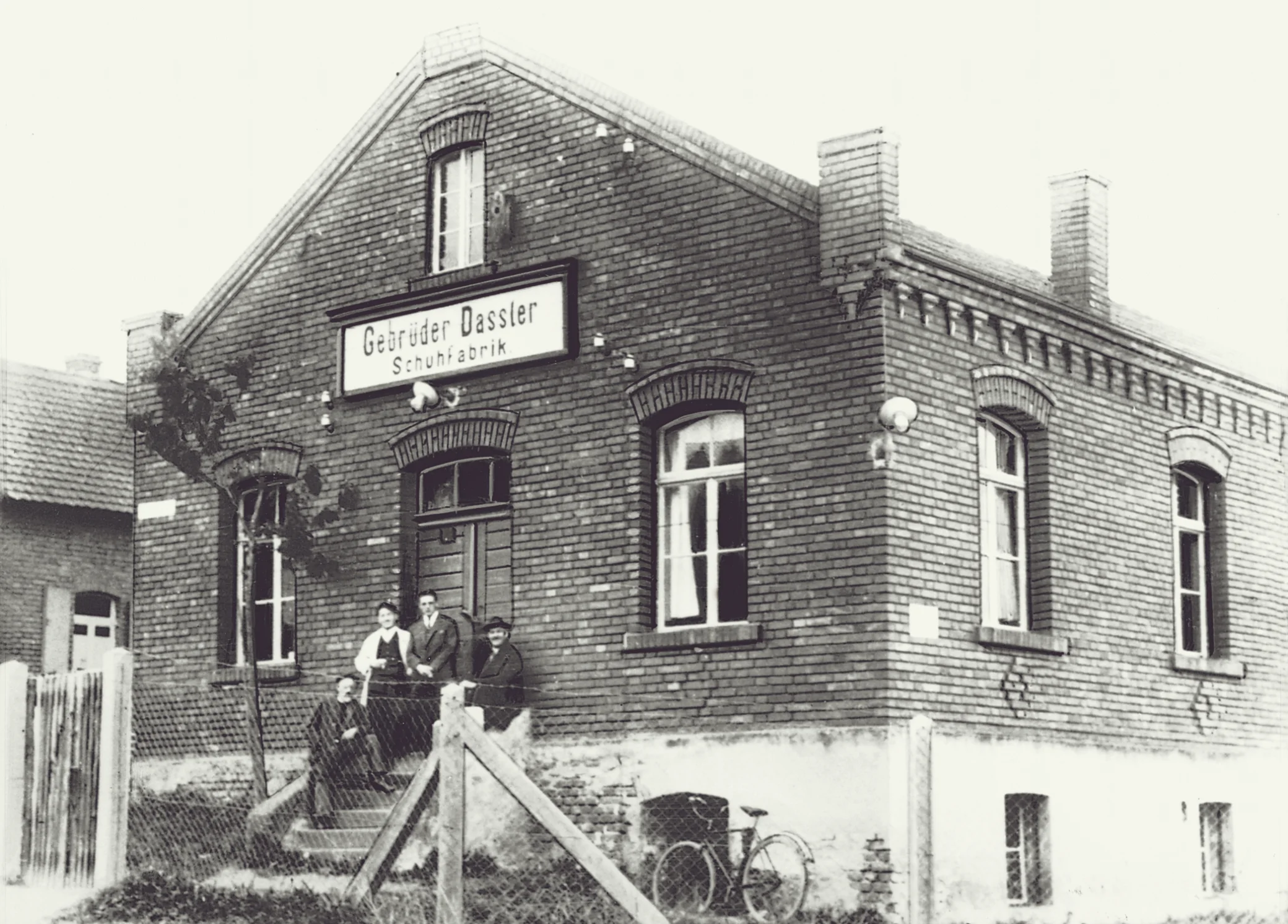
Gebrüder Dassler Schuhfabrik, 1927
Percée mondiale : années 1930
Dans les années 1930, les frères Dassler se sont imposés comme des spécialistes de la chaussure de sport. Leurs chaussures ont été portées par de nombreux athlètes d'élite, ce qui a permis au petit fabricant allemand d'acquérir une notoriété internationale. Josef Waitzer, un proche conseiller, a joué un rôle clé dans ce succès en mettant les frères en contact direct avec les athlètes et en leur fournissant des informations sur leurs performances, une approche qui continue de sous-tendre le mantra actuel de PUMA, à savoir l'amélioration des performances sportives par le biais d'une connaissance directe des athlètes. L'un des moments les plus célèbres s'est produit lors des Jeux olympiques de 1936 à Berlin, où l'athlète américain Jesse Owens a remporté quatre médailles d'or alors qu'il portait des pointes Dassler. Et la série de médailles ne s'est pas arrêtée là. Les athlètes portant des chaussures Dassler ont ensuite remporté sept médailles d'or et cinq médailles de bronze, tout en battant deux records du monde et cinq records olympiques. C'est la percée internationale des frères Dassler. Soudain, le monde entier a les yeux rivés sur les athlètes d'élite qui s'élancent sur les pistes en portant des chaussures Dassler.
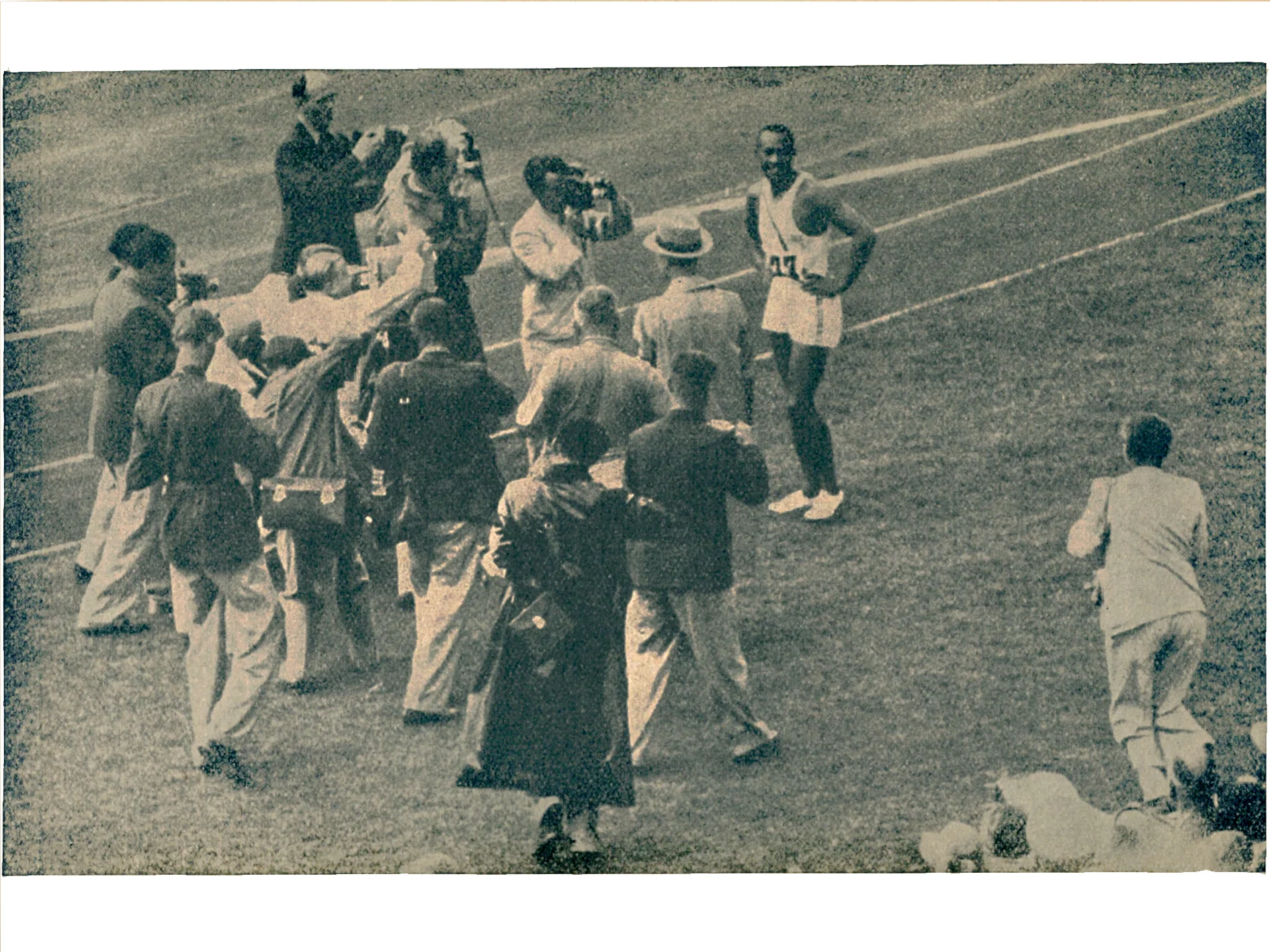
Jesse Owens photographié aux Jeux olympiques de Berlin en 1936
“Herzogenaurach est une ville de cordonniers depuis le XIXe siècle. Au fil des ans, elle est devenue la capitale mondiale de la chaussure de sport.’
- Helmut Fischer (fondateur des archives PUMA et connu sous le nom de M. PUMA)
- Helmut Fischer (fondateur des archives PUMA et connu sous le nom de M. PUMA)
Un tournant : 1948
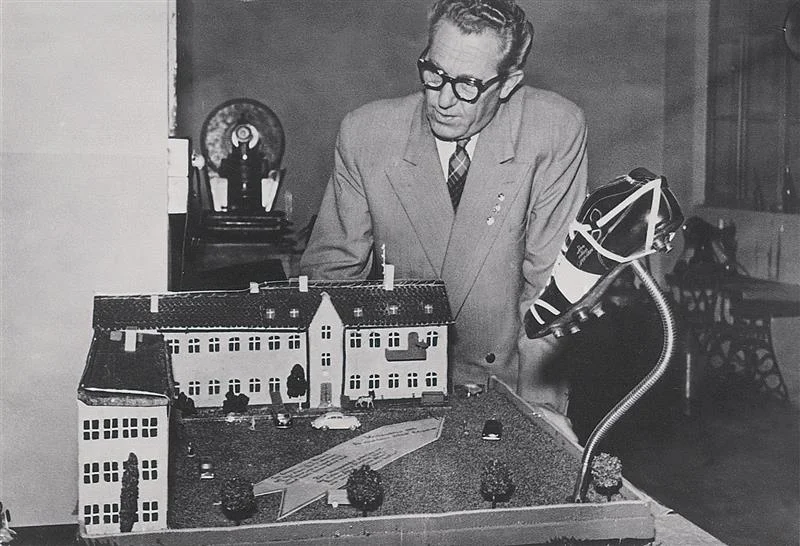
Après la Seconde Guerre mondiale, les tensions entre les deux frères s'intensifient. En 1947, 28 ans après avoir fondé leur entreprise ensemble, ils décident de se séparer. En janvier 1948, Rudolf Dassler a enregistré une nouvelle entreprise de fabrication de chaussures à la mairie de Herzogenaurach. L'entreprise s'appelle initialement “Sportschuhfabrik Rudolf Dassler (RUDA)”.
Avec seulement 15 employés, Rudolf a transformé un ancien entrepôt en une usine opérationnelle et a commencé à créer sa propre marque.
Plus tard dans l'année, à l'occasion du 1er octobre 1948, En décembre, le nom PUMA est officiellement enregistré en tant que marque. En décembre, Rudolf informe ses partenaires et ses clients que la société opérera sous le nom de ‘ PUMA ".‘PUMA Sportschuhfabrik Rudolf Dassler’Il s'agit d'un concept qui reflète sa vision selon laquelle chaque produit doit capturer l'essence d'un puma, en combinant vitesse, force, flexibilité, endurance et agilité, les qualités essentielles à la performance athlétique.
C'est ainsi qu'est née une marque mondiale de sport.
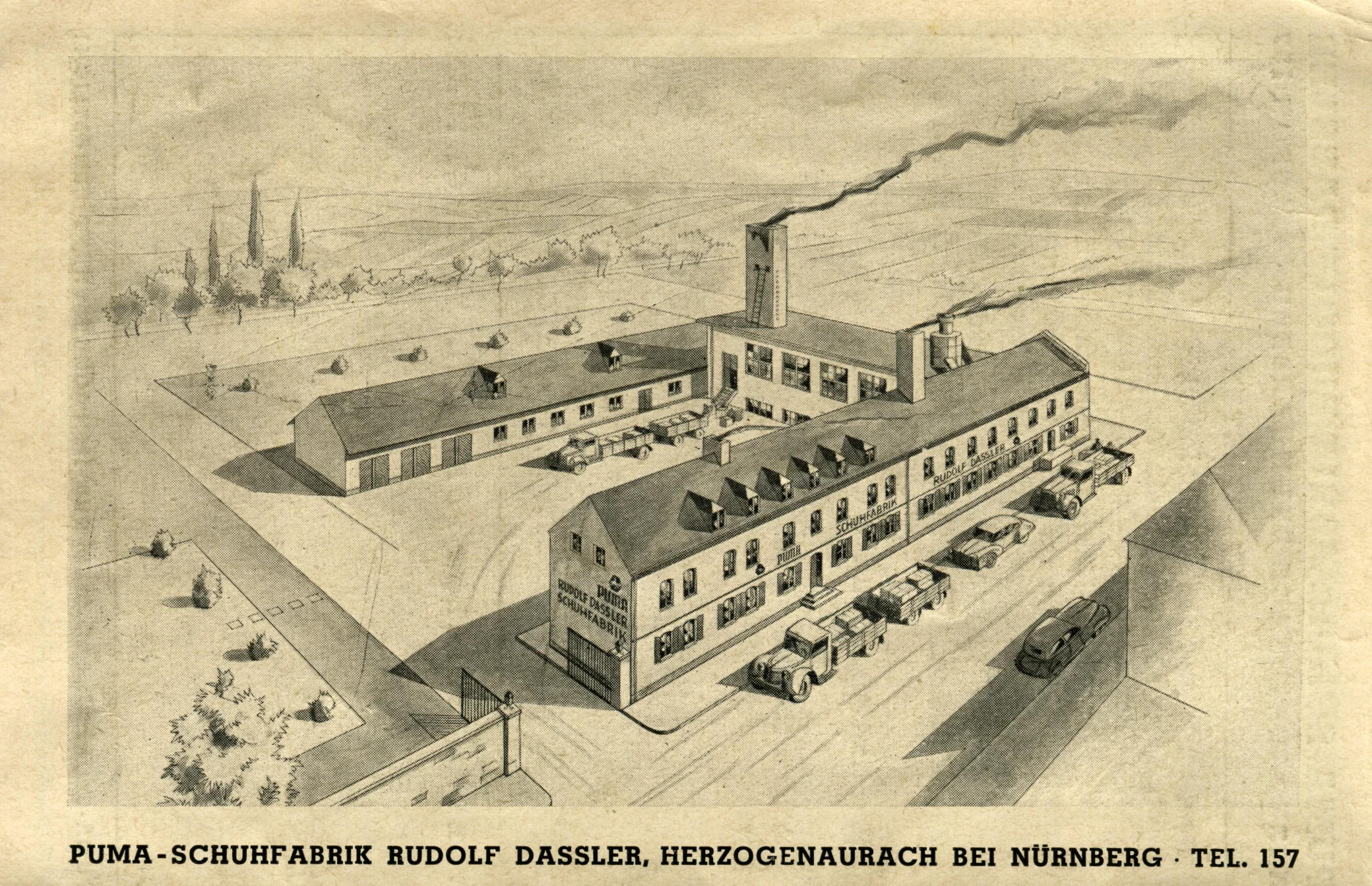
PUMA Sportschuhfabrik Rudolf Dassler, 1950
L'innovation sur le terrain : les années 1950
La volonté d'innovation de PUMA s'est rapidement traduite par des produits révolutionnaires. Avant même le lancement de ses modèles les plus emblématiques, PUMA avait déjà commencé à collaborer étroitement avec l'équipe nationale de football d'Allemagne de l'Ouest et son entraîneur Sepp Herberger, jetant ainsi les bases d'une innovation axée sur la performance. En 1952, la société a lancé la SUPER ATOM, La première chaussure de football au monde à crampons vissés est la chaussure de sport PUMA, largement reconnue comme la première chaussure de football au monde à crampons vissés. Ce développement, basé sur une collaboration antérieure, a fait sensation et a marqué le début de la longue histoire de PUMA dans le domaine du football.
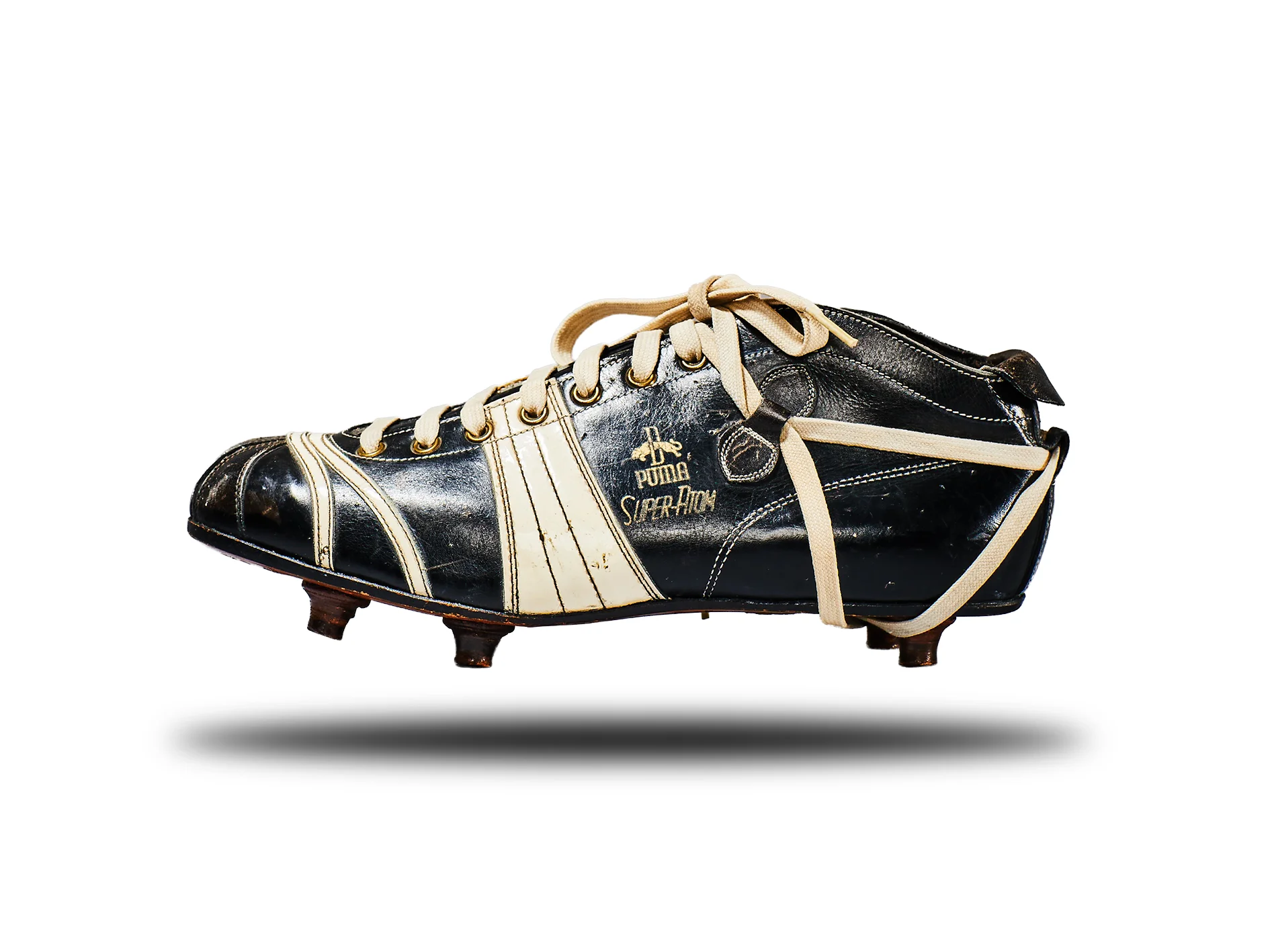
Chaussures de football SUPER ATOM de PUMA
Les moments gagnants entrent en scène
Il n'a pas fallu longtemps à PUMA pour monter sur le podium des vainqueurs. Lors des Jeux Olympiques d'Helsinki en 1952, les athlètes portant des vêtements PUMA ont réalisé des performances remarquables, comme la médaille d'or de Josy Barthel sur 1500 mètres et la victoire de l'équipe féminine américaine du relais 4×100 mètres. Et l'élan se poursuit. En 1954, Heinz Fütterer a égalé le légendaire record du monde du 100 mètres de Jesse Owens à Yokohama en 10,2 secondes, le tout avec des chaussures de course PUMA.
La bande qui colle : La bande de forme
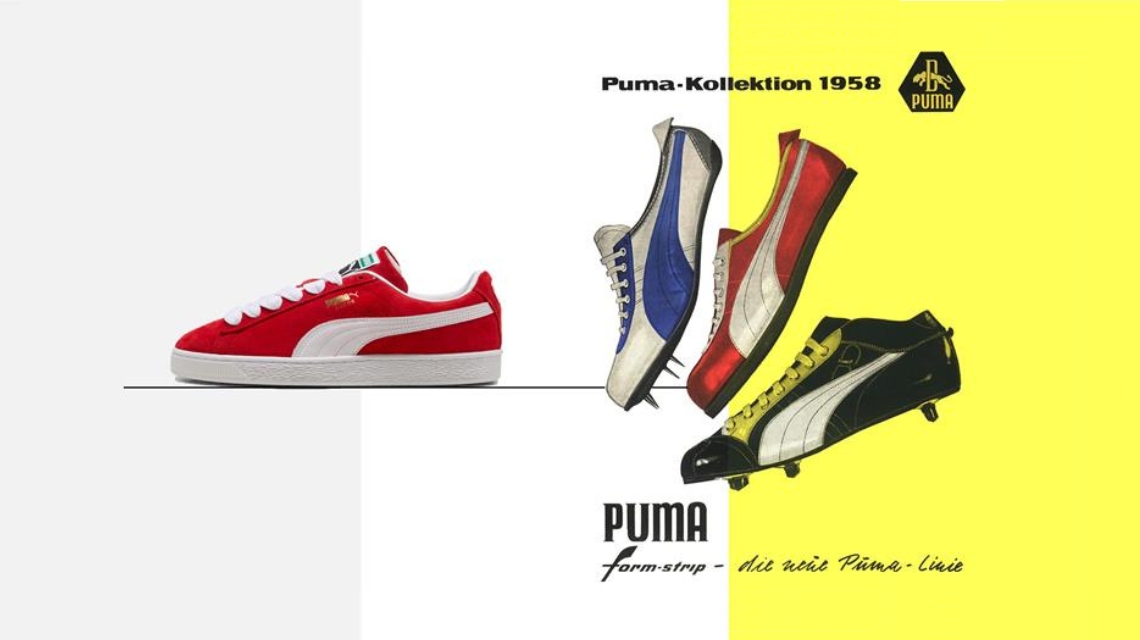
En 1958, PUMA a introduit un petit détail de design qui allait devenir incontournable : la fiche de renseignements. Créé à l'origine pour stabiliser le pied, il a rapidement prouvé qu'il avait autant de style que de substance. Le sport étant de plus en plus médiatisé, la bande de forme a commencé à apparaître partout, devenant une signature qui a permis à PUMA d'être instantanément reconnaissable. Ce qui n'était au départ qu'une caractéristique fonctionnelle est rapidement devenu une icône, montrant que la performance et le design pouvaient aller de pair, tout en restant esthétiques.
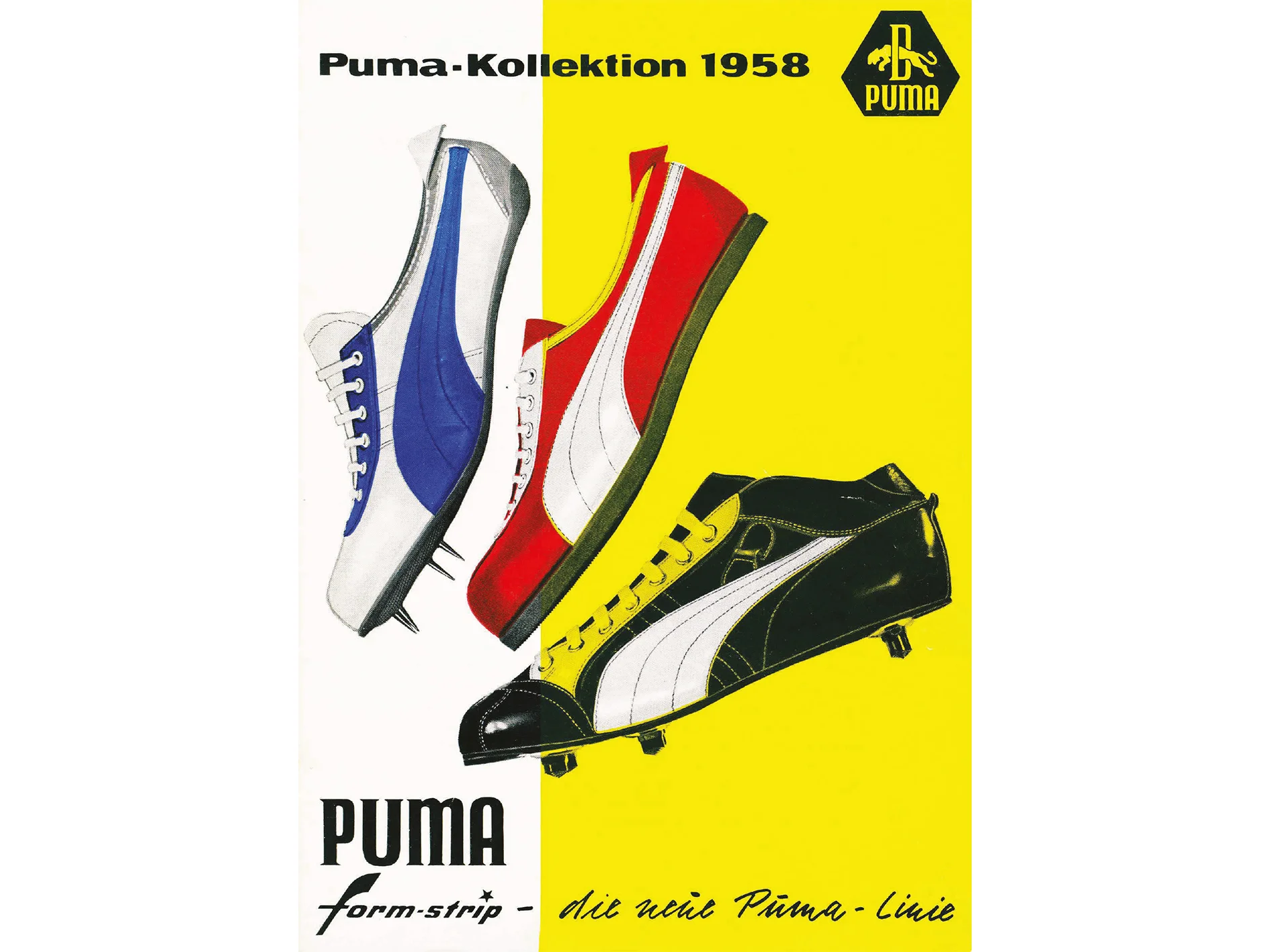
Bande de forme PUMA, 1958
Un siècle de vitesse
Ce qui a commencé en 1919 avec deux frères expérimentant des chaussures de sport est devenu une marque portée par des athlètes du monde entier. Aujourd'hui, PUMA continue de s'appuyer sur cet héritage en associant l'innovation en matière de performances, la culture sportive et le design pour façonner l'avenir du sport. Tout a commencé dans la petite ville franconienne de Herzogenaurach.
Plus d'histoires sur l'héritage de PUMA
CATch up est désormais disponible en plusieurs langues
Pour permettre au plus grand nombre d'utilisateurs possible de se connecter à notre plateforme et de faire partie de notre univers, nous proposons CATch up en anglais, allemand, français et espagnol. Veuillez noter que ces traductions sont automatisées et peuvent contenir des erreurs.