Comentarios desde el interior de la cabina: La primera zapatilla de carreras de PUMA
Cómo PUMA y el piloto Christian Danner dieron forma a un calzado para las exigencias reales de las carreras en la década de 1980
15 de mayo de 2026
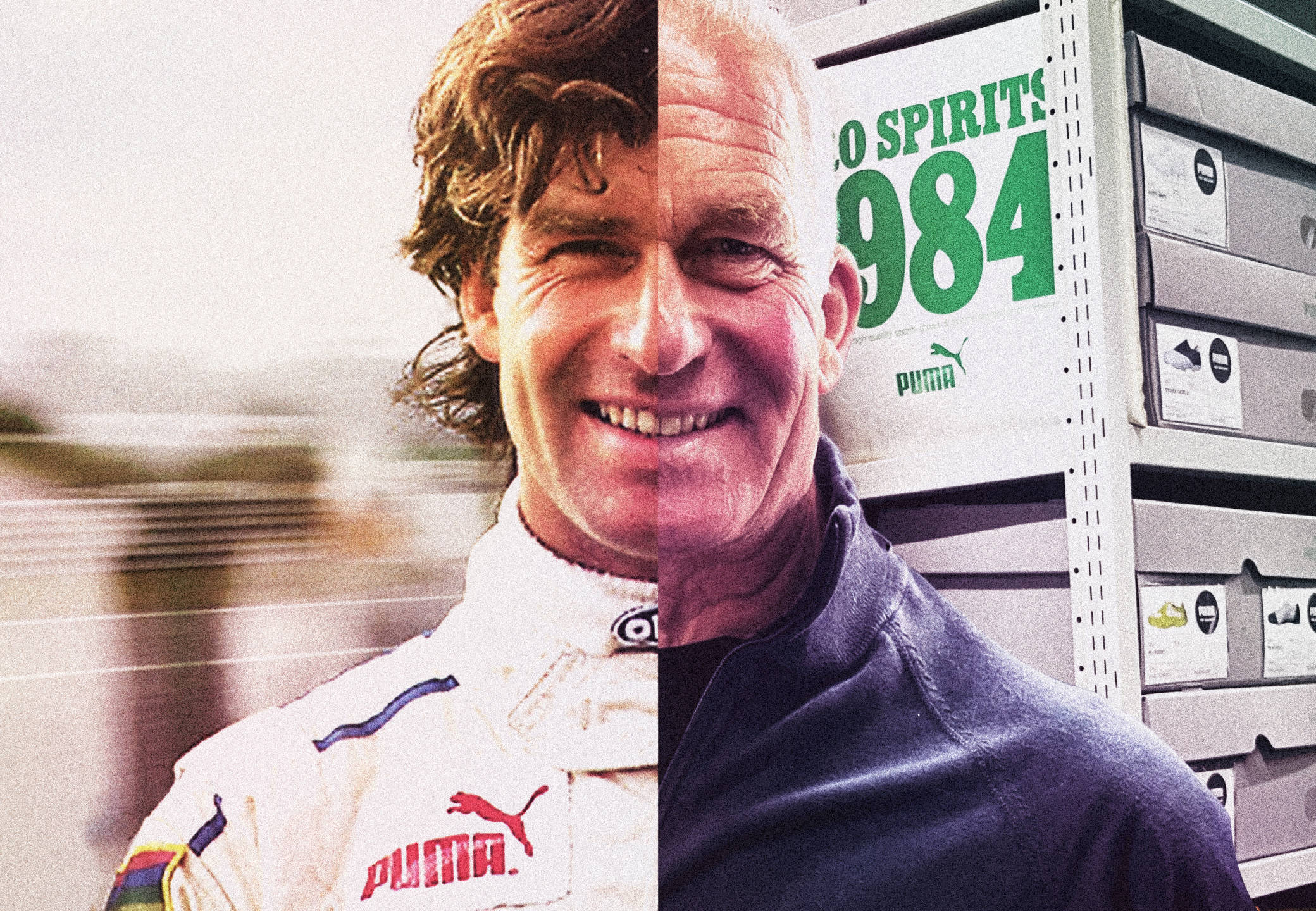
Christian Danner es uno de los pilotos alemanes más polifacéticos de su generación: Fue el primer campeón europeo de F3000, entró en la Fórmula 1 y más tarde compitió en la serie alemana de turismos DTM y en la IndyCar estadounidense. En los años 80 trabajó con PUMA, que le suministraba sus zapatillas y más tarde también sus monos. Durante una visita a Herzogenaurach a principios de este año, habló de su carrera en el automovilismo y de cómo desarrolló el calzado de carreras con PUMA.
Christian se dio cuenta muy pronto de que los zapatos de conductor solían ser demasiado blandos. Para un pie normal, eso podría haber sido un detalle menor. Para un piloto de carreras en un monoplaza en los años 80, era un problema, ya que los coches estaban muy lejos de las máquinas altamente automatizadas que vemos hoy en día. En aquella época, al frenar antes de una curva, había que reducir de marcha, pisar el embrague, pisar el acelerador, ordenar la caja de cambios y estabilizar el coche, todo ello en apenas unos centímetros de espacio en el reposapiés. Por eso, el zapato era una de las herramientas más importantes del conductor.
Christian sólo tarda unas frases y, de repente, ya no estás en una sala de reuniones de Herzogenaurach, sino en la cabina de un monoplaza de los años ochenta. Tres pedales, un habitáculo estrecho, un freno que exige mucha fuerza, un acelerador que hay que pisar brevemente en el momento exacto. “Blip, blip”, dice Christian, colocando las manos una encima de la otra para mostrar el poco espacio que había entre freno, embrague y acelerador.
”Necesitabas un zapato con una suela realmente estable“.“
“Hoy sólo tienes dos pedales, acelerador y freno, y el resto ocurre aquí arriba”, dice. “Nosotros teníamos tres pedales y una caja de cambios en condiciones. Primera, segunda, tercera, cuarta marcha... y luego bajaba y volvía a subir”. Al principio, parece una explicación técnica. Con Danner, se convierte en un movimiento físico.
Y precisamente por eso Christian necesitaba un zapato que le acompañara. “Necesitaba un zapato con una suela realmente estable”, dice. Al pisar el acelerador, el pie derecho trabaja en el mismo punto una y otra vez, enviando la carga directamente a la suela. “Prácticamente hacías un agujero en medio del zapato”. El pie izquierdo lo tenía más fácil: pisaba el embrague. El pie derecho tenía que frenar y acelerar, trabajando constantemente al límite.
Y precisamente por eso Christian necesitaba un zapato que le acompañara. “Necesitaba un zapato con una suela realmente estable”, dice. Al pisar el acelerador, el pie derecho trabaja en el mismo punto una y otra vez, enviando la carga directamente a la suela. “Prácticamente hacías un agujero en medio del zapato”. El pie izquierdo lo tenía más fácil: pisaba el embrague. El pie derecho tenía que frenar y acelerar, trabajando constantemente al límite.
“Quería participar. Porque no se puede conducir con cualquier zapato”.”
En 1983 comenzó la colaboración con PUMA. Christian sabía exactamente lo que necesitaba: una zapatilla que se ajustara bien, se mantuviera estable y transmitiera directamente el contacto con el pedal. En un coche de fórmula de los ochenta, esto formaba parte del control. Para PUMA, fue una entrada directa en el automovilismo. Durante mucho tiempo, los zapatos de los pilotos de carreras procedían principalmente de talleres especializados, a menudo hechos a mano, pero rara vez se desarrollaban sistemáticamente desde la perspectiva del piloto: ¿Qué ocurre en las frenadas? ¿Dónde trabaja el pie? ¿Cuánto espacio hay entre los pedales? ¿Qué rigidez debe tener la suela? ¿Qué ajuste debe tener el zapato?
“Por aquel entonces, no había nada parecido a los materiales modernos. Había cuero, goma y cordones”.”
Antes y ahora, las opiniones son cruciales en PUMA para desarrollar los mejores productos posibles que ayuden a los atletas a rendir al máximo. Christian aportó valiosas ideas desde el interior del habitáculo, algo que los diseñadores sólo podían entender a través del intercambio con el conductor: sintiendo el pedal. Explicó cómo se comporta la suela en el coche, dónde se carga, por qué tiene que permanecer estable. PUMA aportó su experiencia en el desarrollo de calzado: corte, material, construcción, ajuste. Como las opciones de materiales eran limitadas en aquella época -cuero, goma, cordones-, la construcción de la zapatilla tenía que ser la adecuada.
El primer prototipo era agradable de llevar: suave, de corte generoso... pero, en definitiva, demasiado de todo. En el coche de carreras, el zapato ofrecía poca precisión. Así que se afiló. Más ajustado. Más estable. Más directa.
Aquí fue exactamente donde se puso de manifiesto la importancia de la colaboración con el conductor: como un bucle de retroalimentación entre el conductor y el fabricante. Christian probó, explicó, criticó. PUMA se adaptó. El conocimiento experto se convirtió en desarrollo. Una zapatilla con un logotipo se convirtió en una herramienta construida para soportar las exigencias del coche.
El primer prototipo era agradable de llevar: suave, de corte generoso... pero, en definitiva, demasiado de todo. En el coche de carreras, el zapato ofrecía poca precisión. Así que se afiló. Más ajustado. Más estable. Más directa.
Aquí fue exactamente donde se puso de manifiesto la importancia de la colaboración con el conductor: como un bucle de retroalimentación entre el conductor y el fabricante. Christian probó, explicó, criticó. PUMA se adaptó. El conocimiento experto se convirtió en desarrollo. Una zapatilla con un logotipo se convirtió en una herramienta construida para soportar las exigencias del coche.
”Tenía dos pares de zapatos para todo el año. Y eso era suficiente”.”
Cuando Christian Danner empezó a trabajar con PUMA en 1984, el logotipo de PUMA estaba estampado en sus zapatos y, más tarde, también en los monos, algo imposible de pasar por alto. Pero entonces el equipamiento era muy valioso. Un mono de competición tenía que durar toda una temporada, se lavaba después del fin de semana y se volvía a poner en la siguiente carrera. Los zapatos también eran material de trabajo. “Tenía dos pares de zapatos para todo el año”, dice Danner. “Y eso era suficiente. Un par rojo y otro azul, creo”. En lugar de cambiar de color en cada carrera, una cosa importaba por encima de todo: tenía que funcionar en la cabina.
Christian permaneció fiel a PUMA durante todos sus años en la Fórmula 1. Corrió con PUMA en Japón, en la Fórmula 1 y en otras series de carreras. Llevó las zapatillas, los monos y también la ropa deportiva informal de la marca: polos, jerseys, ropa deportiva. A día de hoy, este atleta excepcional sigue activo en el mundo del motor: como experto, comentarista, consultor y creador de redes.
El zapato adecuado no cambia la física. Pero sí ayuda a determinar lo directamente que el piloto puede sentir el coche. Por eso PUMA sigue trabajando con pilotos de automovilismo hasta el día de hoy para ayudarles a rendir al máximo.
El zapato adecuado no cambia la física. Pero sí ayuda a determinar lo directamente que el piloto puede sentir el coche. Por eso PUMA sigue trabajando con pilotos de automovilismo hasta el día de hoy para ayudarles a rendir al máximo.
CATch up ahora habla más idiomas
Para dar la posibilidad al mayor número de personas de conectar con nosotros y formar parte de nuestro mundo, ahora ofrecemos CATch up también en alemán, francés y español. Ten en cuenta que las traducciones son automatizadas y, por lo tanto, pueden contener errores.