Performance Innovation: Bringing NITRO™ to Football
Romain Girard, Vice President Innovation, on the challenge of bringing a running innovation to the world’s biggest game
July 16, 2026
Running is linear. Football is anything but. Bringing PUMA’s NITRO™ technology to the pitch required far more than simply adding a new foam. We spoke with Romain Girard, Vice President Innovation, about the challenges behind the ULTRA NITRO™ 7 — and why this is only the beginning.
Romain, with the ULTRA NITRO 7, PUMA is bringing NITRO™ into a football boot for the first time. When was the moment you realized this technology could also work on the pitch?
There wasn’t a single moment — it emerged from ongoing conversations with players. They kept describing the same feeling they wanted: something more explosive, a sense of getting off the ground instantly. NITRO™ was the obvious answer, since we’d already spent six years refining it in running. Those football conversations started around three years ago, and the direction became clear almost immediately.
There wasn’t a single moment — it emerged from ongoing conversations with players. They kept describing the same feeling they wanted: something more explosive, a sense of getting off the ground instantly. NITRO™ was the obvious answer, since we’d already spent six years refining it in running. Those football conversations started around three years ago, and the direction became clear almost immediately.
Romain Girard, Vice President Innovation
Who was asking for it?
It came from across the football community, not just the top tier. We talk constantly with players like Neymar Jr., but just as importantly with younger athletes at clubs like SpVgg Greuther Fürth and RB Leipzig. Their feedback was strikingly consistent: they wanted a boost, a turbo, that explosive first step. That clarity — coming from both ends of the talent pipeline — is what convinced us to commit to developing NITRO™ specifically for football.
It came from across the football community, not just the top tier. We talk constantly with players like Neymar Jr., but just as importantly with younger athletes at clubs like SpVgg Greuther Fürth and RB Leipzig. Their feedback was strikingly consistent: they wanted a boost, a turbo, that explosive first step. That clarity — coming from both ends of the talent pipeline — is what convinced us to commit to developing NITRO™ specifically for football.
What was the biggest challenge in transferring NITRO™ from running and track to football?
Running is essentially a straight line; football is chaos in every direction — acceleration, deceleration, turning, dribbling, running backwards. The foam structure had to be re-engineered to absorb and return energy regardless of the direction force comes from, which running foam was never built for.
Compounding that, football demands a much lower stack height than running, handball, or basketball shoes allow. Players won’t accept a running shoe with studs — they want the low, direct, close-to-ground feel of a speed boot. So, the real engineering problem was fitting genuine energy to return into an ultra-low-profile construction without sacrificing ball control, direct feel, or confidence in tight changes of direction.
Running is essentially a straight line; football is chaos in every direction — acceleration, deceleration, turning, dribbling, running backwards. The foam structure had to be re-engineered to absorb and return energy regardless of the direction force comes from, which running foam was never built for.
Compounding that, football demands a much lower stack height than running, handball, or basketball shoes allow. Players won’t accept a running shoe with studs — they want the low, direct, close-to-ground feel of a speed boot. So, the real engineering problem was fitting genuine energy to return into an ultra-low-profile construction without sacrificing ball control, direct feel, or confidence in tight changes of direction.
“This is the opening chapter of something much larger for PUMA Football — not an isolated product.”
What does “faster” actually mean in football?
It comes down to the first five to ten metres — the difference between reaching a ball first or arriving a half-step late. NITRO™ works on a compression-release cycle: the player’s push into the ground compresses the foam, and on the next step, that stored energy is released back to aid push-off.
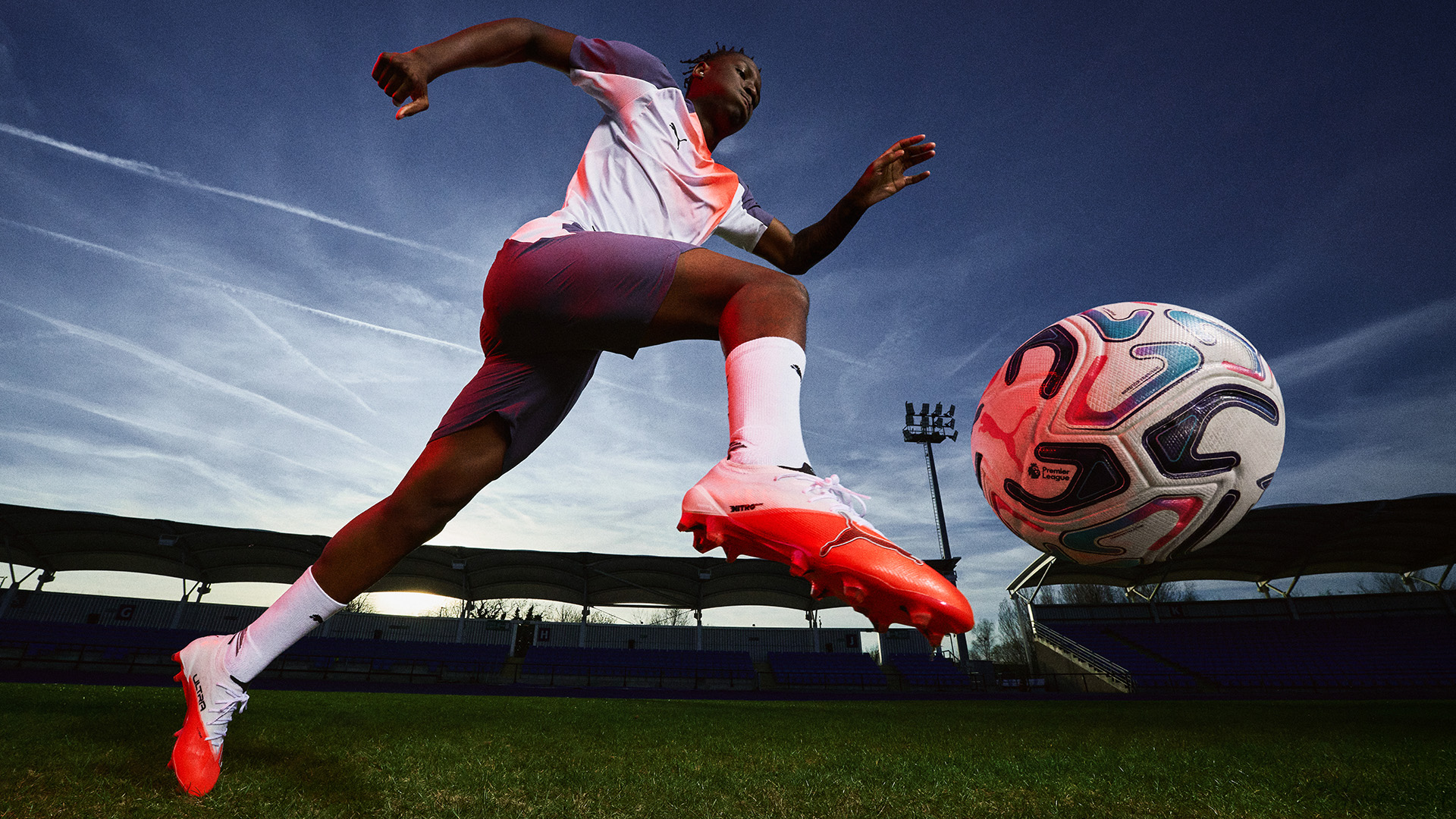
Crucially, NITRO™ operates strictly in the foot-to-ground zone, not near the upper. The moment extra material sits between foot and ball; players lose the precision and touch they rely on. That’s a line we don’t cross — which is exactly why NITRO™ lives in the sole of the ULTRA NITRO™ 7 and nowhere else.
It comes down to the first five to ten metres — the difference between reaching a ball first or arriving a half-step late. NITRO™ works on a compression-release cycle: the player’s push into the ground compresses the foam, and on the next step, that stored energy is released back to aid push-off.
Crucially, NITRO™ operates strictly in the foot-to-ground zone, not near the upper. The moment extra material sits between foot and ball; players lose the precision and touch they rely on. That’s a line we don’t cross — which is exactly why NITRO™ lives in the sole of the ULTRA NITRO™ 7 and nowhere else.
You also test how football boots are treated in real life – in cars, in the sun or in cold conditions. Why is that so important?
PUMA ULTRA NITRO™ 7
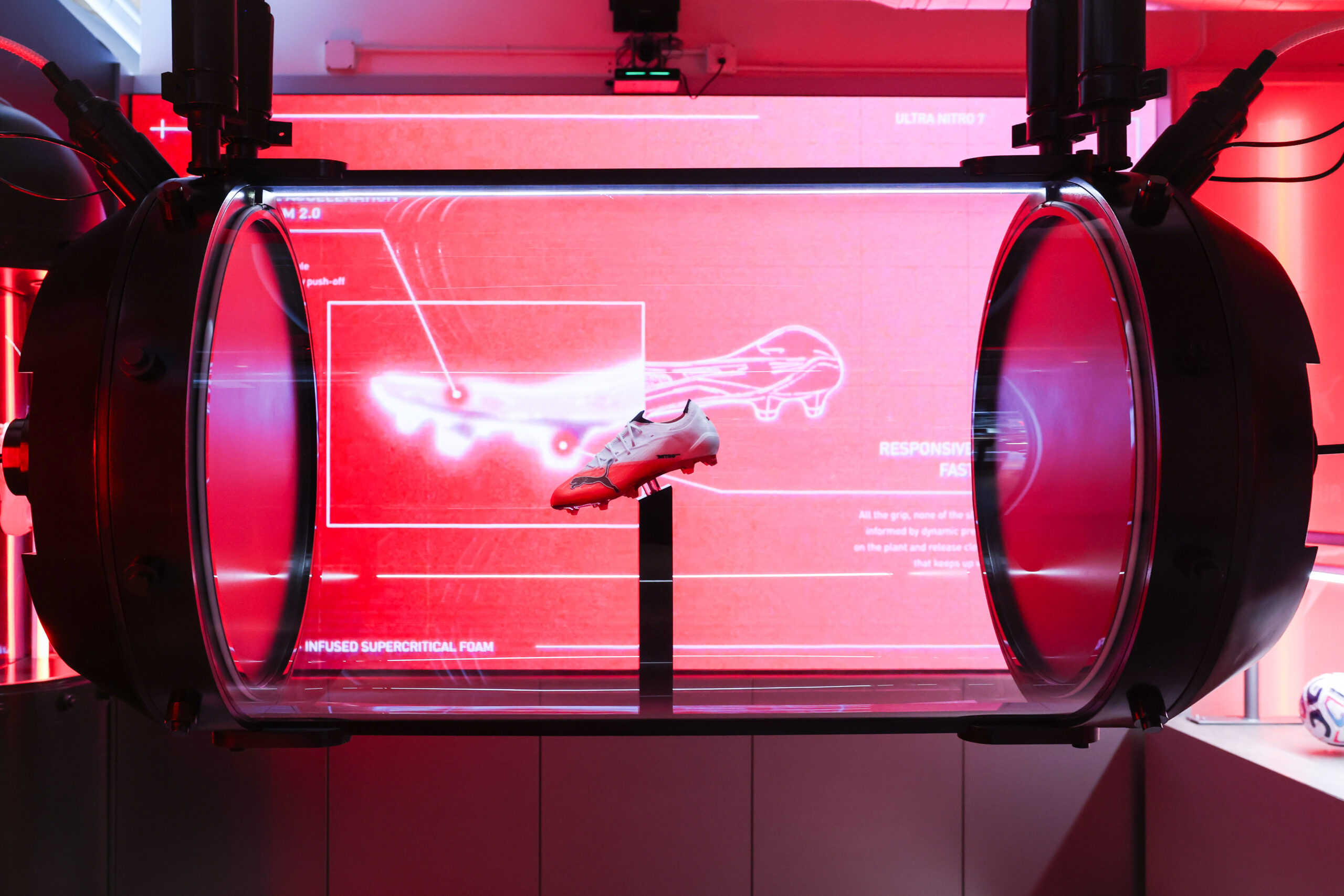
Because a boot’s real test isn’t the lab — it’s a player’s actual routine. Boots get soaked on wet pitches, then thrown on a heater, left in a hot car, or baked in direct sun to dry. Some players even ice their boots before kickoff. So instead of only validating under controlled conditions, we tell athletes to treat test boots exactly as they normally would, because that’s where failure actually shows up.
At 70°C, the adhesives must still hold, the materials can’t warp, and NITRO™’s performance can’t degrade. A football boot doesn’t just need to perform for 90 minutes on the pitch — it needs to survive the unpredictable life around it.
At 70°C, the adhesives must still hold, the materials can’t warp, and NITRO™’s performance can’t degrade. A football boot doesn’t just need to perform for 90 minutes on the pitch — it needs to survive the unpredictable life around it.
Is the ULTRA NITRO™ 7 a single innovation, or the beginning of a bigger platform?
This is the opening chapter of something much larger for PUMA Football — not an isolated product. We’re already developing further concepts and architectures that build NITRO™ into future boots, extending well beyond speed silhouettes into agility-focused designs as well.
NITRO™’s potential stretches across the ULTRA line and likely beyond it. Right now, we’re delivering 93% energy return in an exceptionally lightweight package, but that figure is a starting point, not a ceiling. Expect PUMA to keep pushing both energy return and weight reduction simultaneously in the seasons ahead.
This is the opening chapter of something much larger for PUMA Football — not an isolated product. We’re already developing further concepts and architectures that build NITRO™ into future boots, extending well beyond speed silhouettes into agility-focused designs as well.
NITRO™’s potential stretches across the ULTRA line and likely beyond it. Right now, we’re delivering 93% energy return in an exceptionally lightweight package, but that figure is a starting point, not a ceiling. Expect PUMA to keep pushing both energy return and weight reduction simultaneously in the seasons ahead.
“The real question we’re chasing is how to help players become the sharpest version of themselves.”
Where do you see the greatest innovation potential for football boots in general – materials, sole plates, fit, data, sustainability or individual construction?
Genuine innovation never comes from one lever — it’s the interplay of all of them. But the underlying purpose is always the same: give players something that functions almost like a hidden advantage. Elite athletes have already optimized nutrition, training, coaching, and recovery to the margins. Our job as their equipment partner is to find whatever fraction of performance is left on the table.
Sometimes that’s a full percentage point, sometimes half of one — but in football, that sliver can be the entire difference between scoring and not, between the pass that finds its target and the one that doesn’t. Performance always comes first; the real question we’re chasing is how to help players become the sharpest version of themselves.
Performance is always the priority. The question is: how can we help players become a better version of themselves?
Genuine innovation never comes from one lever — it’s the interplay of all of them. But the underlying purpose is always the same: give players something that functions almost like a hidden advantage. Elite athletes have already optimized nutrition, training, coaching, and recovery to the margins. Our job as their equipment partner is to find whatever fraction of performance is left on the table.
Sometimes that’s a full percentage point, sometimes half of one — but in football, that sliver can be the entire difference between scoring and not, between the pass that finds its target and the one that doesn’t. Performance always comes first; the real question we’re chasing is how to help players become the sharpest version of themselves.
Performance is always the priority. The question is: how can we help players become a better version of themselves?
learn more about nitro™ and puma’s football boots:


media interview
Romain Girard about innovation in football boots
For our German-speaking audience: Take a look at the recent interview that Romain Girard gave to national media outlet Bayerischer Rundfunk about the development and innovation in football boots.
watch the interview