Speed, Style and the Power of Authenticity
PUMA’s Motorsport legacy, from elite drivers to everyday culture
March 6, 2026
As Formula 1 prepares for the start of a new season in Melbourne, motorsport once again takes center stage – not just on the grid, but far beyond it.
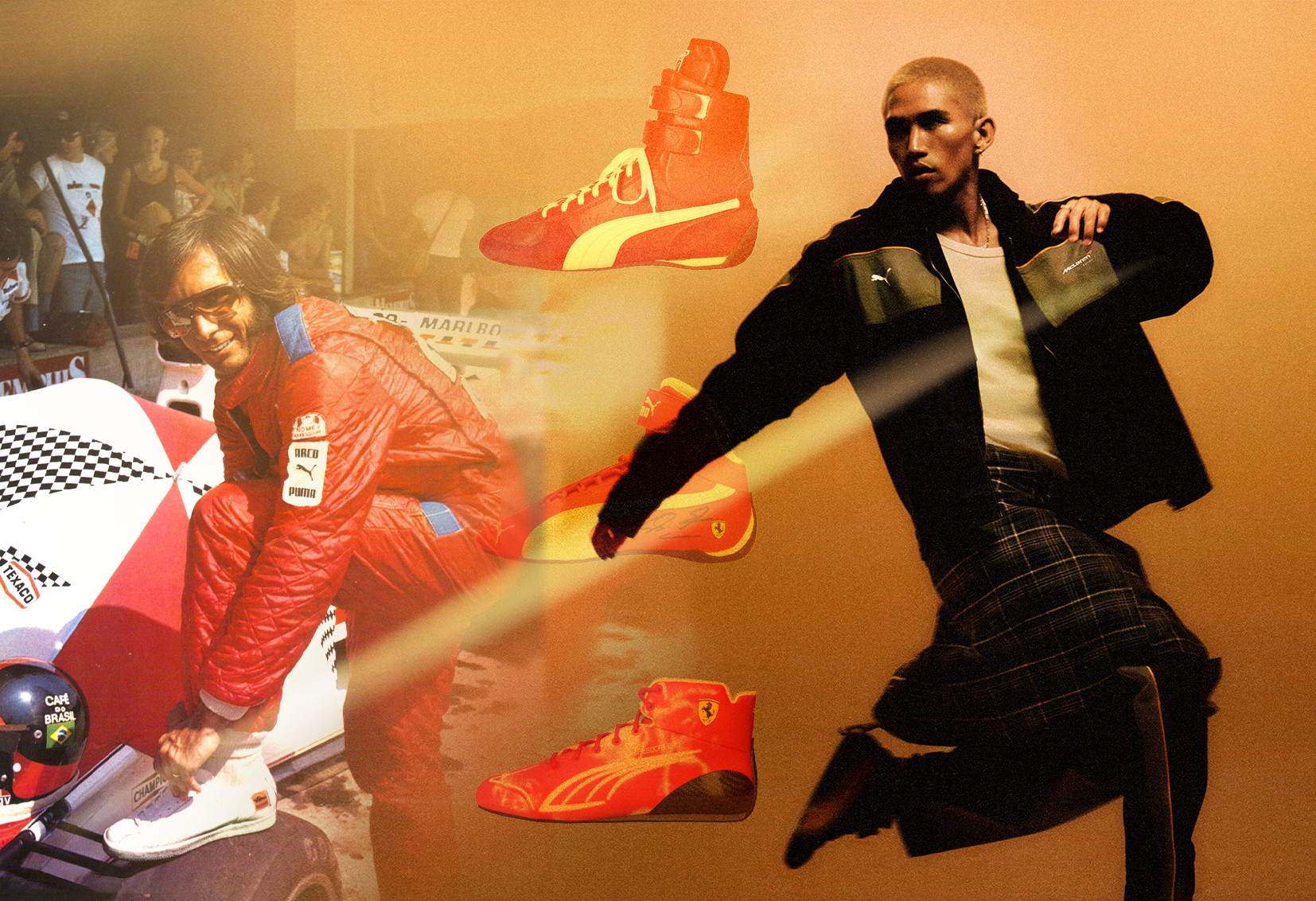
PUMA has a long history in motorsport with several important milestones: an early lifestyle shoe collection in the late 1970s with Emerson Fittipaldi, the precisionfocused race boots worn by Stefan Bellof in the 1980s, the birth of the Speedcat in the early 2000s, the longstanding partnerships with icons like Scuderia Ferrari and, most recently, McLaren Racing and Aston Martin F1. Find out more about our legacy in motorsport and how what PUMA developed for the pinnacle of performance also earned its place well beyond the track.
Late 1970s: An Early Connection
PUMA’s connection to Formula 1 reaches back much further than many realize. In the late 1970s, the brand launched a lifestyle shoe collection in Brazil together with two‑time Formula 1 World Champion Emerson Fittipaldi – an early expression of racing culture that marked one of PUMA’s first touchpoints with the sport.1980s: Motorsport as a Performance Laboratory
PUMA athlete Stefan Bellof never chased attention – he chased fractions of a second. In the early 1980s, motorsport was already becoming a game of microscopic margins, where precision, control and trust in your equipment could define an entire career. When Stefan set his legendary Nürburgring Nordschleife lap record in 1983, it was not the result of one dramatic breakthrough, but of countless marginal gains coming together in perfect harmony – including what connected driver and machine.PUMA worked relentlessly with its athletes, like Stefan Bellof, Christian Danner, Manfred Winkelhock and Gerhard Berger, to create shoes that would perform in these uncompromising conditions. Rounded heels enabled smoother throttle transitions, slim silhouettes reduced cockpit interference, and fire-resistant materials delivered confidence at extreme speeds. Motorsport had evolved into a highpressure laboratory –and PUMA was right there shaping it.
Christian Danner
PUMA racing shoe created for Gerhard Berger
Manfred Winkelhock
Stefan Bellof
1999: A Defining Moment
By the end of the 1990s, PUMA’s motorsport ambitions were about to step onto a much bigger stage. Formula 1 was exploding into global cultural phenomenon at breathtaking speed. Global television audiences were soaring into the tens of millions, and the sport’s leading drivers were becoming cultural icons, rivaling football superstars in visibility and influence. Formula 1 was no longer just racing, it was theatre, energy and aspiration rolled into one.
Around that time, PUMA took the decision to translate the concepts it forged on the track into products that would make an impact on the streets.
Around that time, PUMA took the decision to translate the concepts it forged on the track into products that would make an impact on the streets.
Gregor Hübner, Head of Sports Marketing Motorsport & Racewear at PUMA, describes that moment as a turning point.
“When we re-entered motorsport in 1999, we didn’t just think about race boots. We saw the potential to connect performance and consumer culture in a structured way. Drivers would wear performance footwear and apparel developed to the highest standards, and at the same time fans could access lifestyle versions. It was the first time motorsport became a fully integrated category for us, not just a sponsorship, but part of our DNA.”
2000s: Speedcat – The birth of a PUMA icon
PUMA Speedcat from 2000
Designed for performance, not fashion, the sneaker’s silhouette was born in the cockpit: thin, low and uncompromising. PUMA brought that exact form to the street. The Speedcat was born and over decades became one of PUMA’s most enduring icons.
When it entered the retail space in the early 2000s, it stood apart from the bulkier sneakers that dominated the market at the time. Its streamlined profile communicated precision and control. Consumers were not responding to a generic racing look, but to a sneaker that clearly came from motorsport. Authenticity, not decoration, was the appeal – from back then until today.
When it entered the retail space in the early 2000s, it stood apart from the bulkier sneakers that dominated the market at the time. Its streamlined profile communicated precision and control. Consumers were not responding to a generic racing look, but to a sneaker that clearly came from motorsport. Authenticity, not decoration, was the appeal – from back then until today.
2005: Ferrari – our longest partnership in motorsport
When PUMA began working with Scuderia Ferrari HP in 2005, it marked more than a new partnership. It was a meeting of two names synonymous with racing passion. Ferrari represented speed, emotion and history at the highest level of Formula 1. And PUMA was already deeply embedded in motorsport. Over the course of their 20year partnership, PUMA and Ferrari shared many defining moments on the racetrack, working alongside iconic drivers from Michael Schumacher, Kimi Räikkönen, Fernando Alonso, Sebastian Vettel, Lewis Hamilton and PUMA athlete Charles Leclerc, while also creating products that resonated with consumers around the world.
Ferrari autograph card from 2005
Florian Wein, Head of Sports Marketing Motorsport & Operations at PUMA Group, explains why continuity mattered.
“A partnership like Ferrari over two decades shows that motorsport is not a short-term activation. It demonstrates trust and continuity at the highest level of motorsport. When consumers see lifestyle products connected to teams and drivers with that kind of history, it reinforces authenticity. That credibility is what allows motorsport-inspired Sportstyle to resonate far beyond race weekends.”
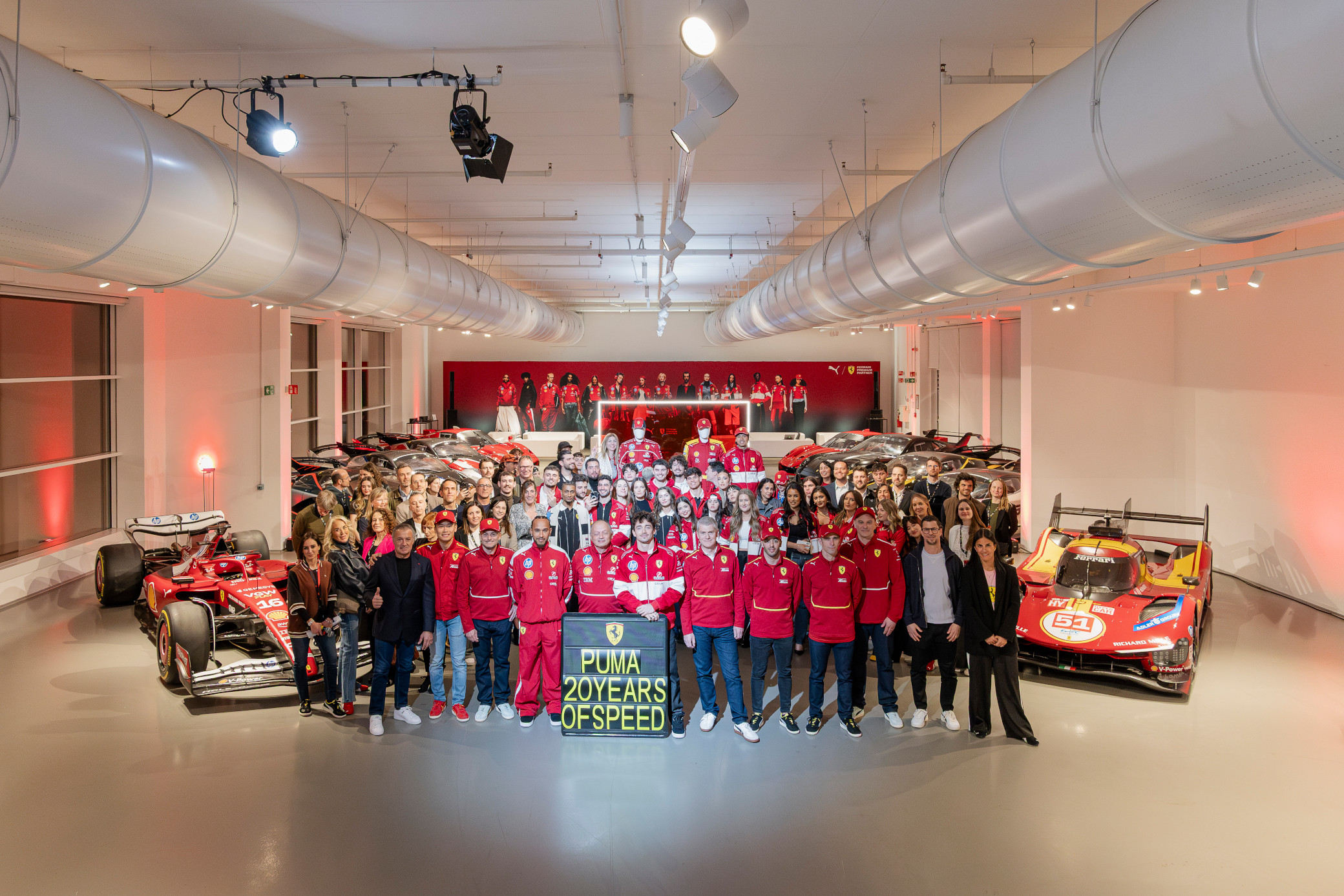
20 years of PUMA x Ferrari partnership event in 2025
Beyond Formula 1: Where Racing Runs Deep
For years, PUMA’s motorsport story has gone far beyond Formula 1, driven by partnerships with icons like BMW M Motorsport and Porsche Motorsport. From endurance racing to GT competition and Formula E, PUMA outfits teams with race and teamwear built for real conditions. Different disciplines, same mindset: performance born on the track.2026: McLaren – The Next Chapter on and off the Grid
That momentum now carries PUMA into its next chapter in motorsport. This year, the brand signed a multiyear partnership with McLaren Racing, supplying team kit for the teams in Formula 1, IndyCar, F1 Academy, Sim Racing and, from 2027, the McLaren United AS WEC Hypercar Team. The collaboration reflects the same belief that has guided PUMA’s journey in racing for decades: that performance, innovation and culture belong together.
From 2026 onwards, PUMA partners with McLaren racing
For PUMA CEO Arthur Hoeld, the partnership represents a natural continuation of the story.
“At PUMA, we are very proud of our long and successful history in motorsports and having worked with some of the greatest drivers and teams in the industry over the past decades. It is a great honour to write the next chapter by welcoming McLaren Racing”
Thomas Josnik, PUMA Vice President Motorsport, recalls the long road that led to the partnership. “Signing the 2025 Drivers’ and Constructors’ World Champions from 2026 onwards was a massive team effort across different functions,” he says. “We went beyond the usual pitch process, which impressed McLaren and ultimately convinced them.”
Looking at PUMA’s current presence on the Formula 1 grid, Thomas sees the result of that longterm commitment.
“With McLaren, Ferrari and Aston Martin, this is the strongest portfolio we’ve ever had. We’re working with the most iconic teams in Formula 1 – and that speaks for itself.”
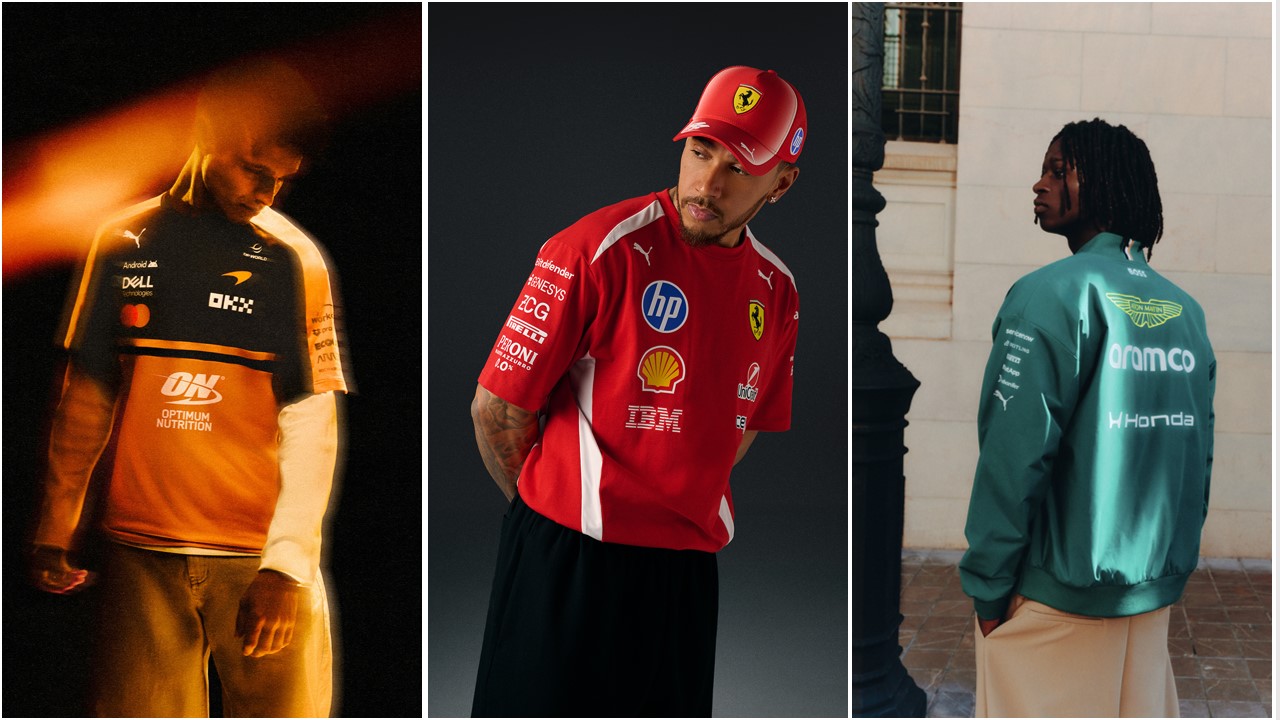
PUMA teams in Formula 1: McLaren Racing, Scuderia Ferrari HP and Aston Martin Aramco Formula One