Una historia de primicias: cuatro décadas de innovación en PUMA
From the pitch to the track, explore PUMA’s iconic legacy
29 de julio de 2026
In nearly 80 years of sporting history, PUMA has proven time and time again to be a technology pioneer. Surprising innovations have propelled sports to new heights and helped countless athletes use their untapped potential.
Newness is in PUMA’s nature. In the first of this two-part series, we look back at the brand’s first few formative decades.
Newness is in PUMA’s nature. In the first of this two-part series, we look back at the brand’s first few formative decades.
The fifties and sixties – super studs and speedy spikes
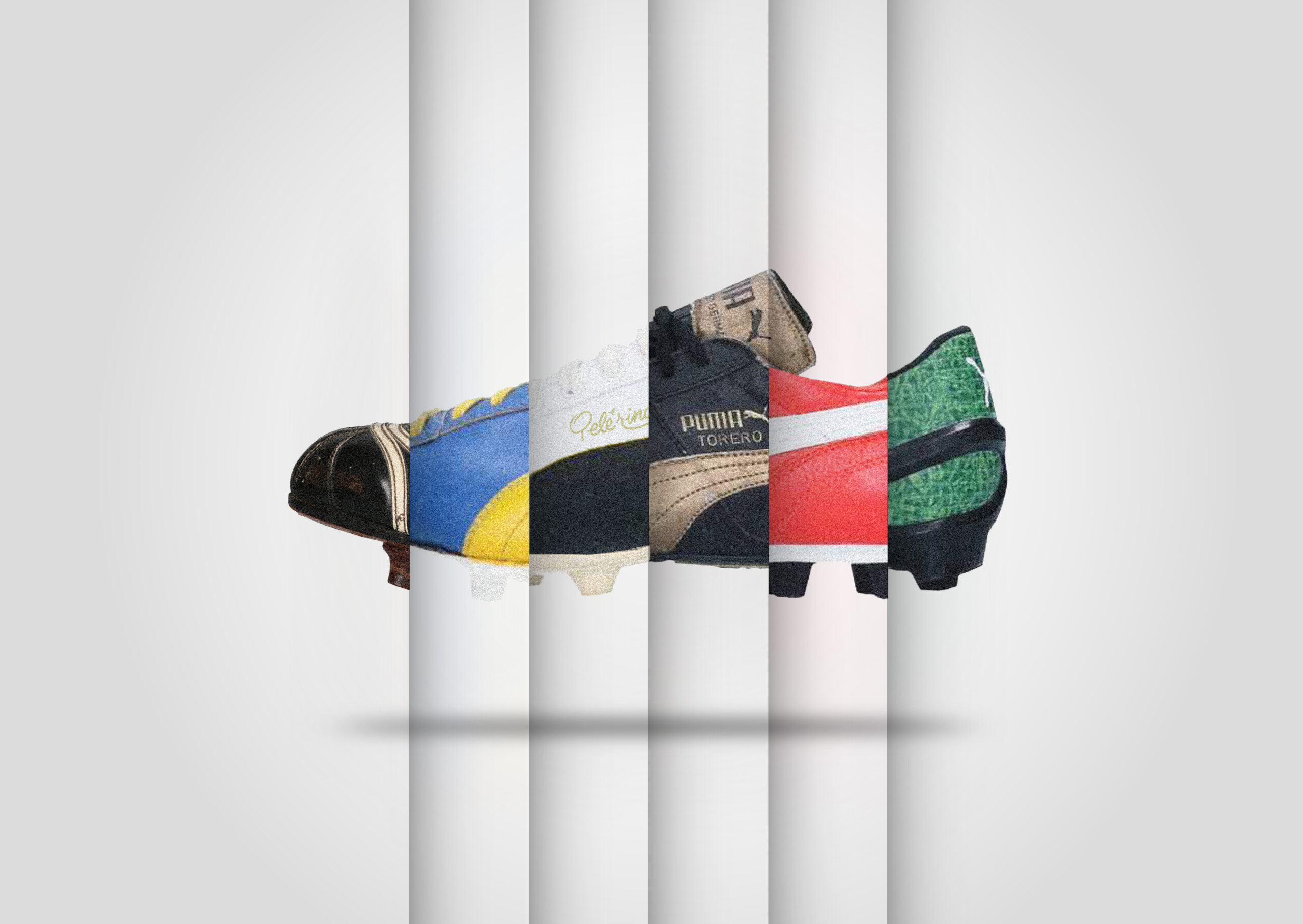
PUMA’s reputation for game-changing football boots kicked off in 1950. Its first major release was the ATOM and the brand was already keen to go one step further. Rudolf Dassler teamed up with top experts, including West Germany’s coach Sepp Herberger.
In 1952, the SUPER ATOM hit the pitch. It had an anatomical footbed and interchangeable, screw-in studs. For the first time, players could adapt their footwear directly to match changing pitch conditions.
In 1952, the SUPER ATOM hit the pitch. It had an anatomical footbed and interchangeable, screw-in studs. For the first time, players could adapt their footwear directly to match changing pitch conditions.
PUMA SUPER-ATOM de 1952
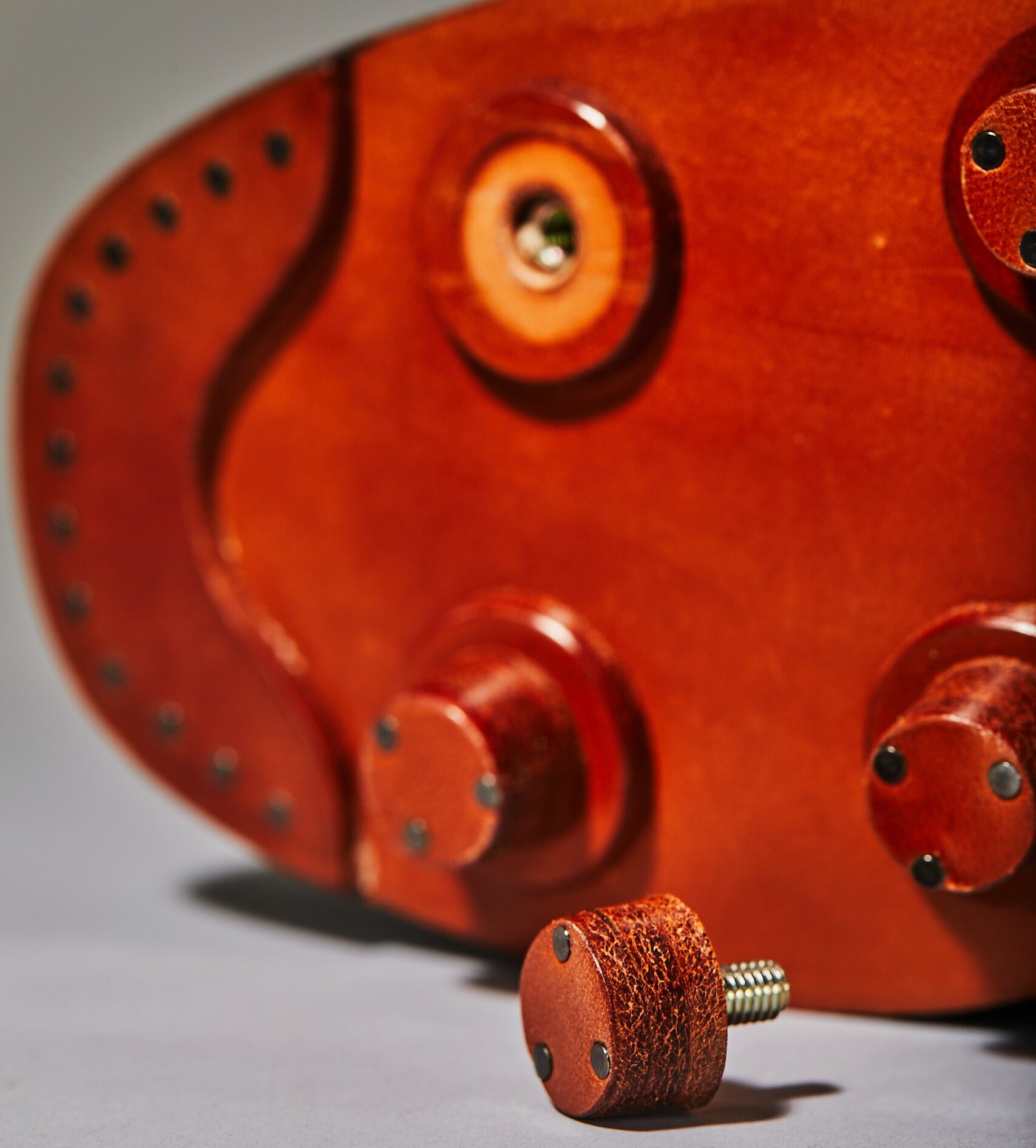
Tacos atornillables en las PUMA SUPER-ATOM de 1952
Built differently: material breakthroughs
PUMA was the first to shatter the unspoken rule that football boots had to be made purely from traditional leather. The late fifties and sixties ushered in an era of relentless experimentation for the brand.In 1958, the ‘Weltmeister’ boot hit the world stage. It was also the first boot to use kangaroo leather, known for being extra thin yet flexible and durable.
In 1960, PUMA went one step further and wrapped an aggressively textured rubber across the vamp (the covering of the foot). Raised dimples across the toe box and strike area increased friction and the area that was in contact with the ball.
PUMA had gifted players more grip – and laid the groundwork for the ‘power boots’ concept popularised in the nineties.
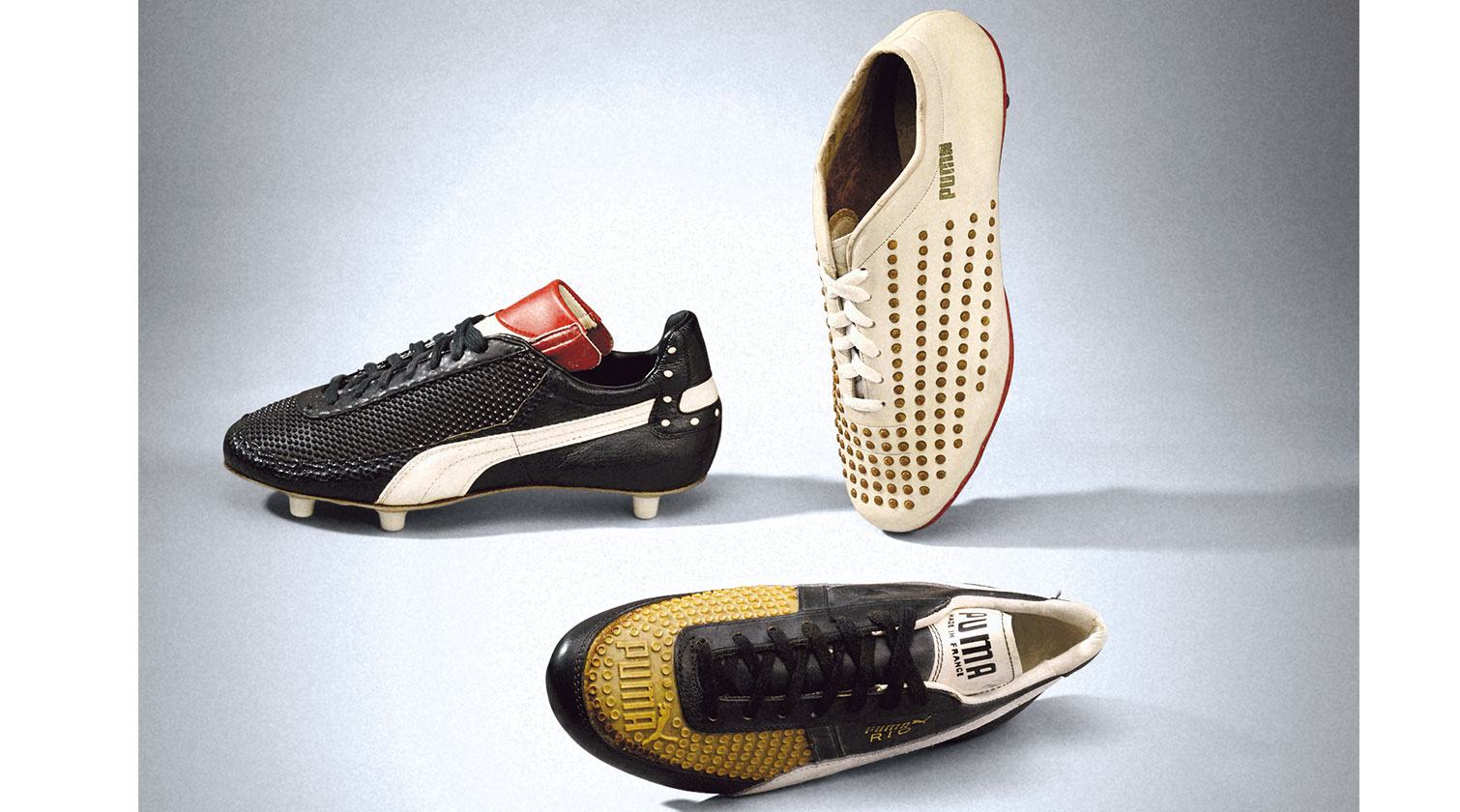
PUMA football boots with grip elements from the 1960s and 1970s
Three years later, PUMA became the first sports brand to use vulcanisation (a chemical process using heat) to bond the upper with the sole. Eliminating the need for additional studs, rivets, and stitching reduced the number of potential weak points.
The PUMA KING hit the market in 1966, following Eusébio’s legendary World Cup performance. The model was the very first to use nylon materials in the outsole, marking the beginning of ultra-light footwear.
The PUMA KING hit the market in 1966, following Eusébio’s legendary World Cup performance. The model was the very first to use nylon materials in the outsole, marking the beginning of ultra-light footwear.
Rudolf Dassler, Eusébio and his wife Flora (f.l.t.r.)
PUMA KING Eusébio de 1966
Rule-breaking speed
PUMA was the first to rethink the approach to speed on the track with a radical approach to racing spikes.In the late sixties, track and field hit a turning point: traditional, soft cinder tracks were replaced by rubbery, synthetic Tartan surfaces engineered for better performance. Athletes no longer needed long, sturdy spikes. Sports brands raced to keep up.
PUMA seized the moment with the TAHOE brush spike. The design ditched traditional laces, added a fast, adjustable Velcro strap for the first time on a PUMA shoe, and replaced standard spikes with 68 tiny, 4mm-long bristles. Grip maximised; resistance minimised.
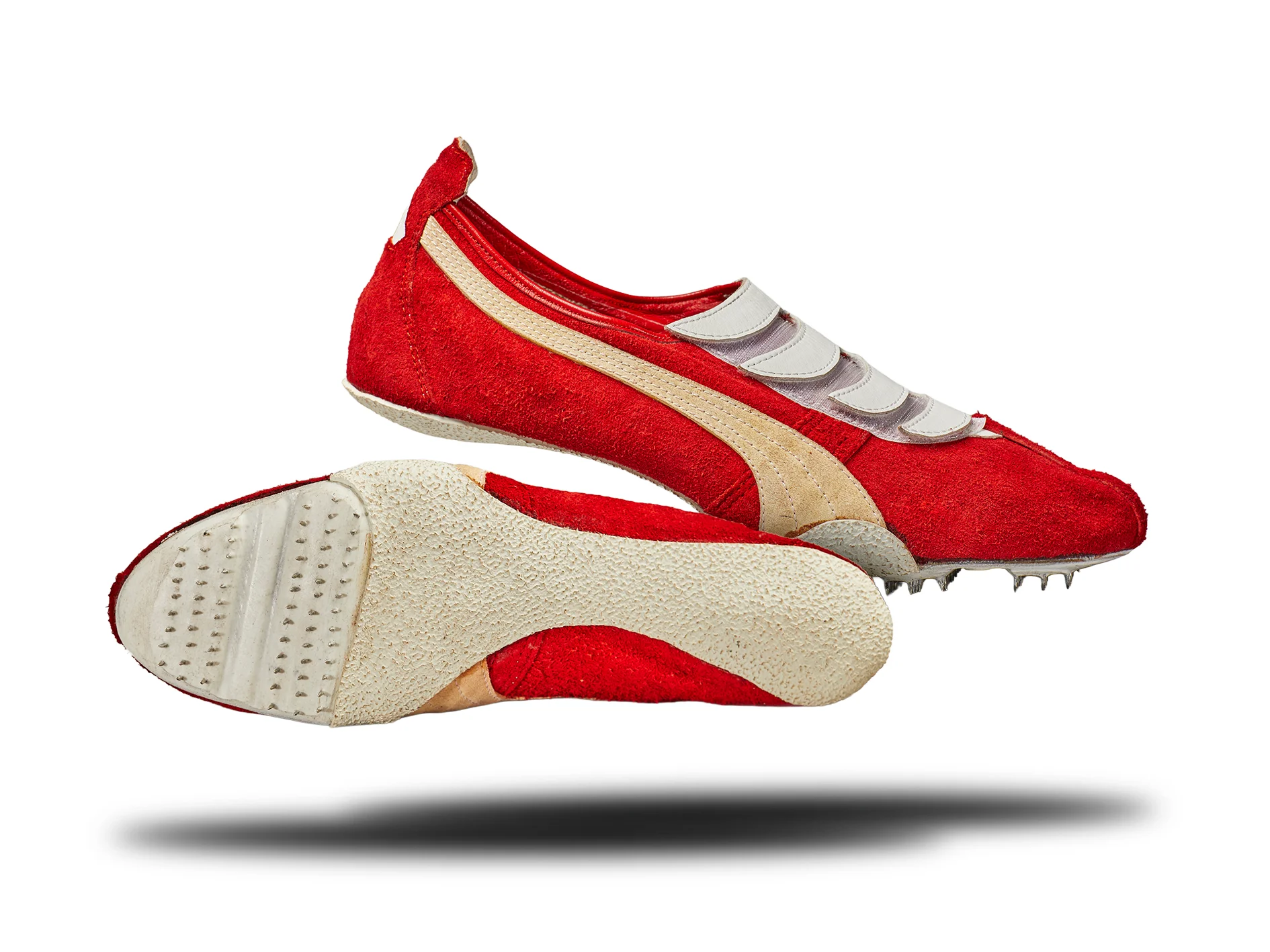
PUMA TAHOE brush spike from 1968
In the weeks leading up to the 1968 Mexico City Olympics, American sprinters shattered multiple world records wearing the shoe. This included the first sub-20 second 200m ever run.
Shortly before the event, organizers declared the spikes illegal and, in a very controversial decision, cancelled the records that had already been set wearing the TAHOE.
Though stripped of its official titles, the Brush Spike cemented PUMA’s reputation: a brand willing to challenge the rulebook in pursuit of speed.
Shortly before the event, organizers declared the spikes illegal and, in a very controversial decision, cancelled the records that had already been set wearing the TAHOE.
Though stripped of its official titles, the Brush Spike cemented PUMA’s reputation: a brand willing to challenge the rulebook in pursuit of speed.
Taking the pressure off the achilles tendon
PUMA was the first to engineer footwear around the delicate mechanics of the achilles tendon in 1968. Traditional shoes tend to add friction and increase pressure on the vulnerable spot where the tendon fibers branch out into the heel bone. PUMA’s response: less is more. The result: the Fers-O-Til (which translates as the Achilles Tendon Pad, or ATP).Material was cut out of the back of the shoe, reducing pressure at the insertion point – while protective cushioning safeguarded the heel against external impacts. Precise engineering maintained a glove-like fit.
What started in 1968 as a purely anatomical change to prevent injury has since evolved into a piece of brand history. Today, the white cutout on the heel of many PUMA shoes is a nod to the iconic vent that first set the Achilles tendon free.
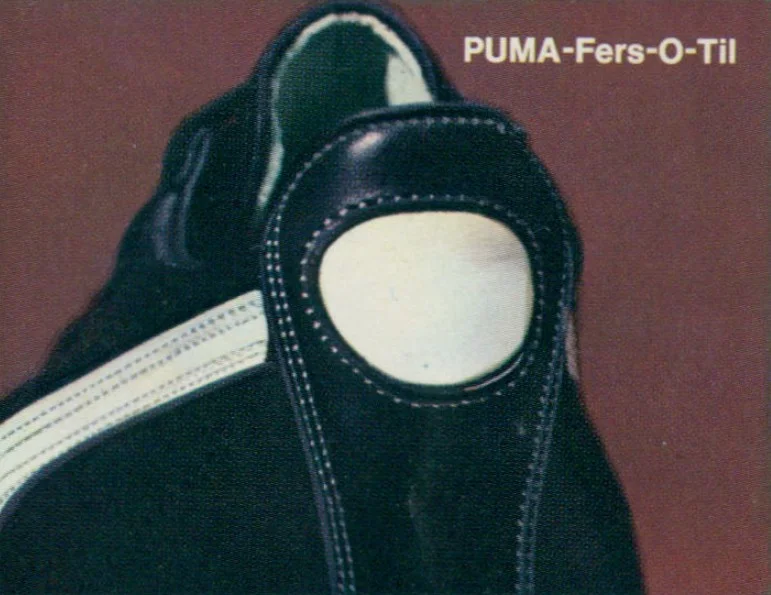
PUMA Fers-O-Til from 1968
The seventies and eighties – from biomechanics to digital pioneers
Signature style and female firsts
On the court, PUMA teamed up with NBA icon Walt “Clyde” Frazier in 1971 to create the first-ever signature basketball shoe: the PUMA CLYDE.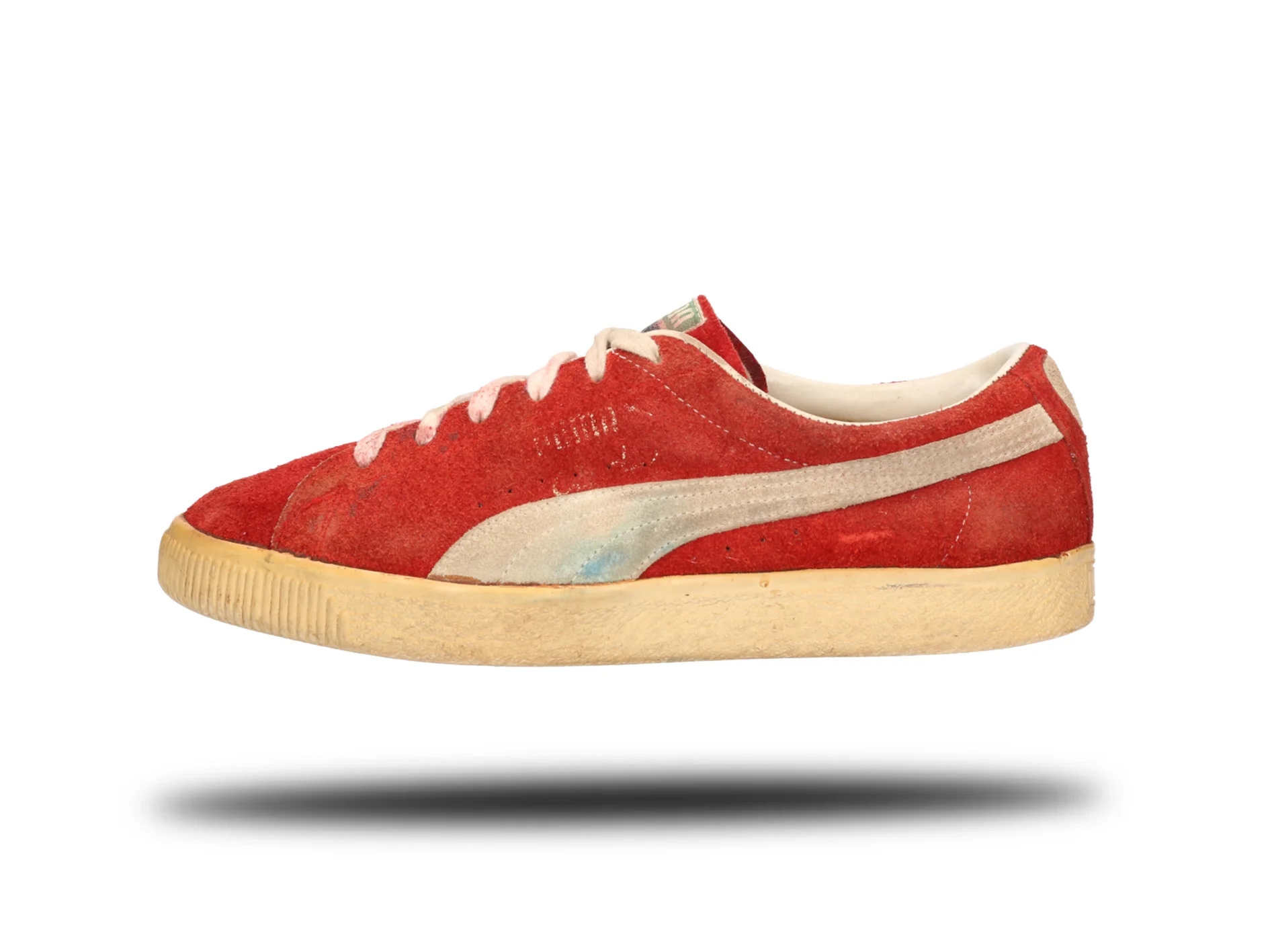
PUMA CLYDE from 1971
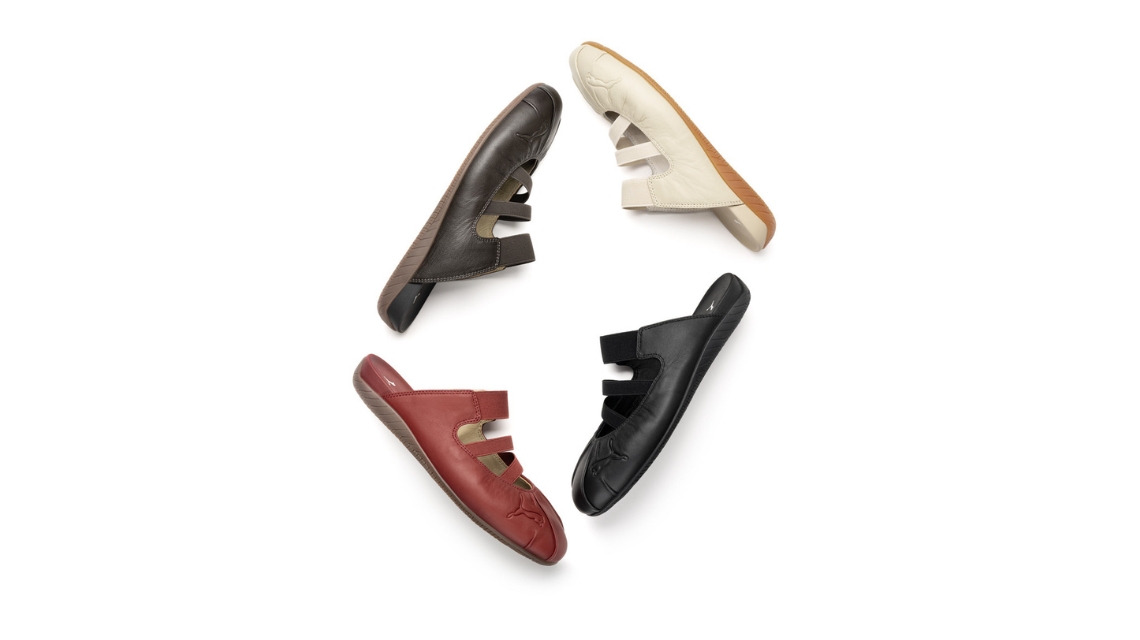
That same year, PUMA made history on the pitch with the Pelérina: the world’s first football boot engineered specifically for women. Decades before female-dedicated performance footwear became mainstream, PUMA was already taking the specific needs of female athletes into account.
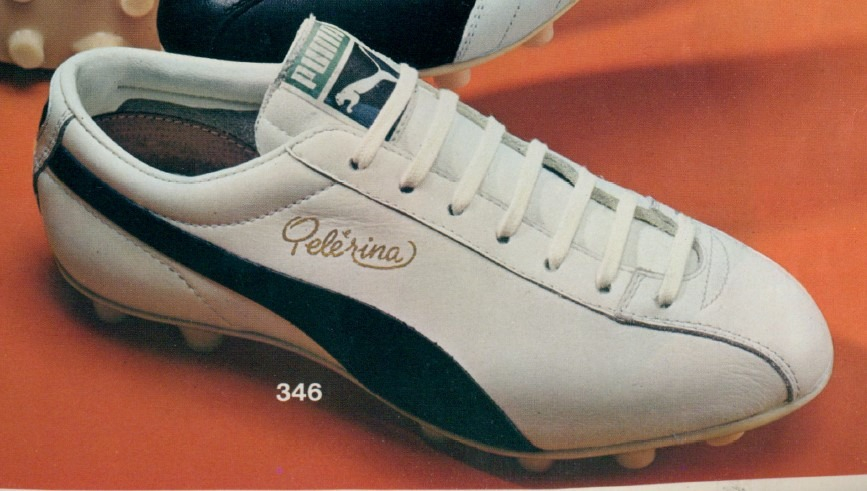
PUMA Pelérina de 1971
Elevating safety with the Sportabsatz
1978 saw a new footballing standard set with the Sportabsatz (translated as “sports heel”), making PUMA the first manufacturer to elevate the heel with specific padding.Building directly on the anatomical insights of the Fers-O-Til, PUMA’s raised heel lowered the risk of muscle overextension, safeguarding players’ Achilles tendons during high-impact play.
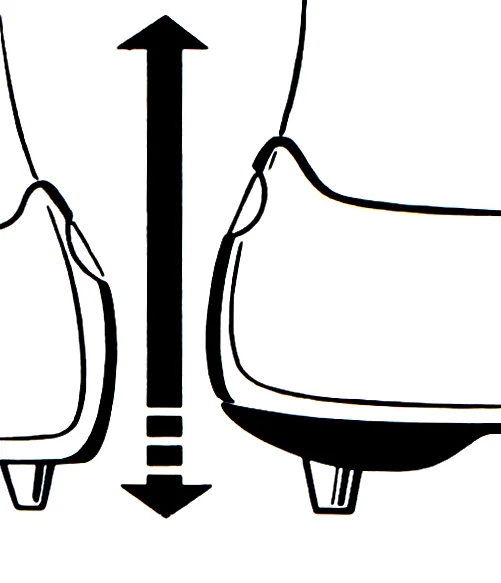
PUMA Sportabsatz from 1978
From bendy straw to trendy sole
PUMA was the first to prove that elite sports engineering could come from the most everyday objects. In 1982, CEO Armin Dassler took inspiration from a bendy straw to bring flexibility to the pitch.The result was the Torero Duoflex Sole: a groundbreaking design featuring molded flex zones that mirrored the foot’s natural movement. By giving players fluid agility without sacrificing structural support, it laid the blueprint for the high-tech, responsive soleplates used in modern football boots today.
Anuncio de PUMA del modelo PUMA TORERO con tecnología DuoFlex, de 1982
Imagen de la tecnología DuoFlex de PUMA de 1982
Armin Dassler with the new PUMA Torero in 1982
Personalised leverage on centre court
PUMA was the first brand to bring custom control to the hands of athletes when it disrupted tennis in 1985 with the Power Control System (PCS) racket.Featuring an adjustable handle that allowed players to lengthen or shorten their grip for tailored torque and control, the technology powered 17-year-old Boris Becker to his historic first Wimbledon championship.
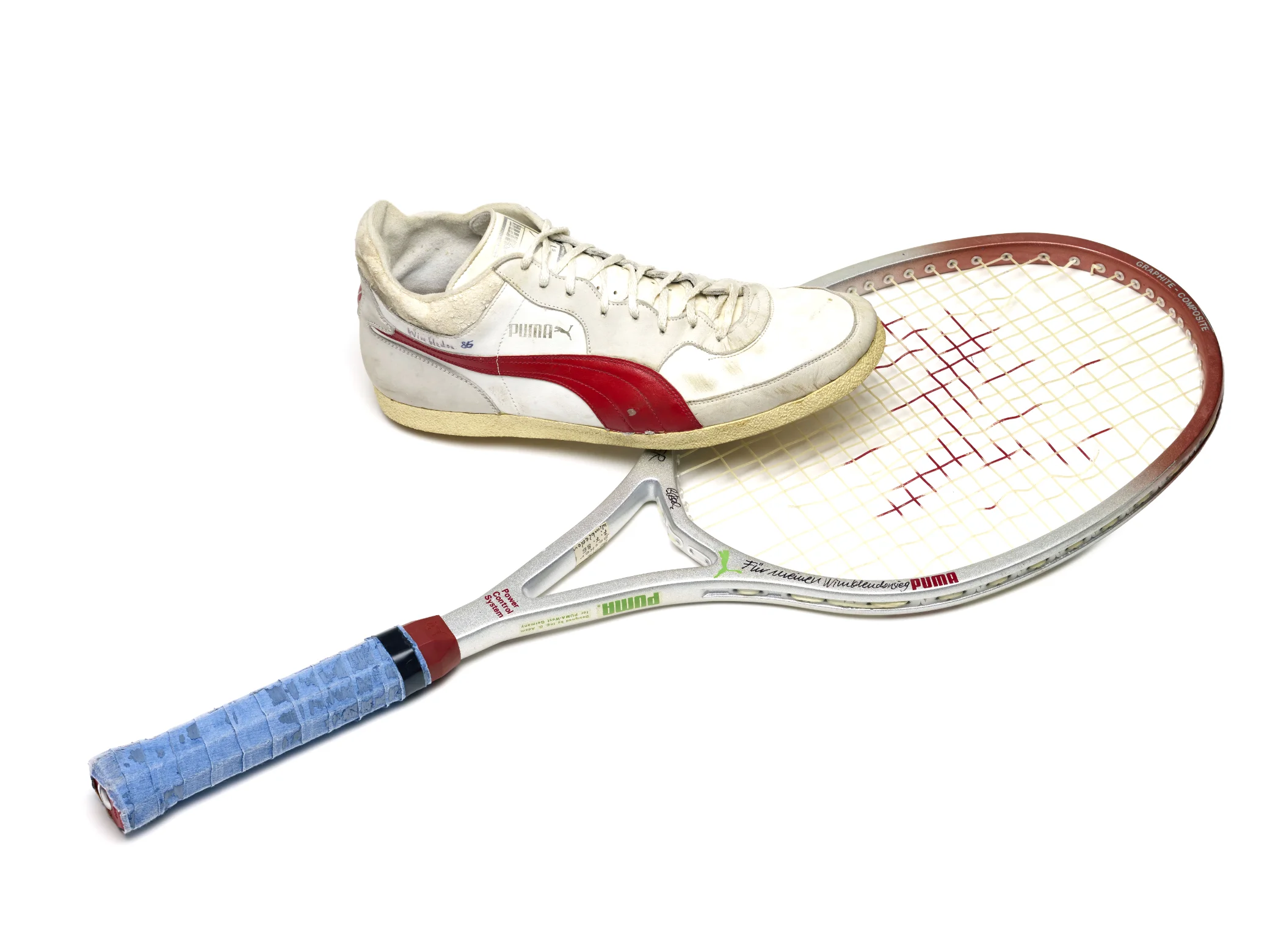
Boris Becker's tennis racket and shoes from his Wimbledon victory in 1985
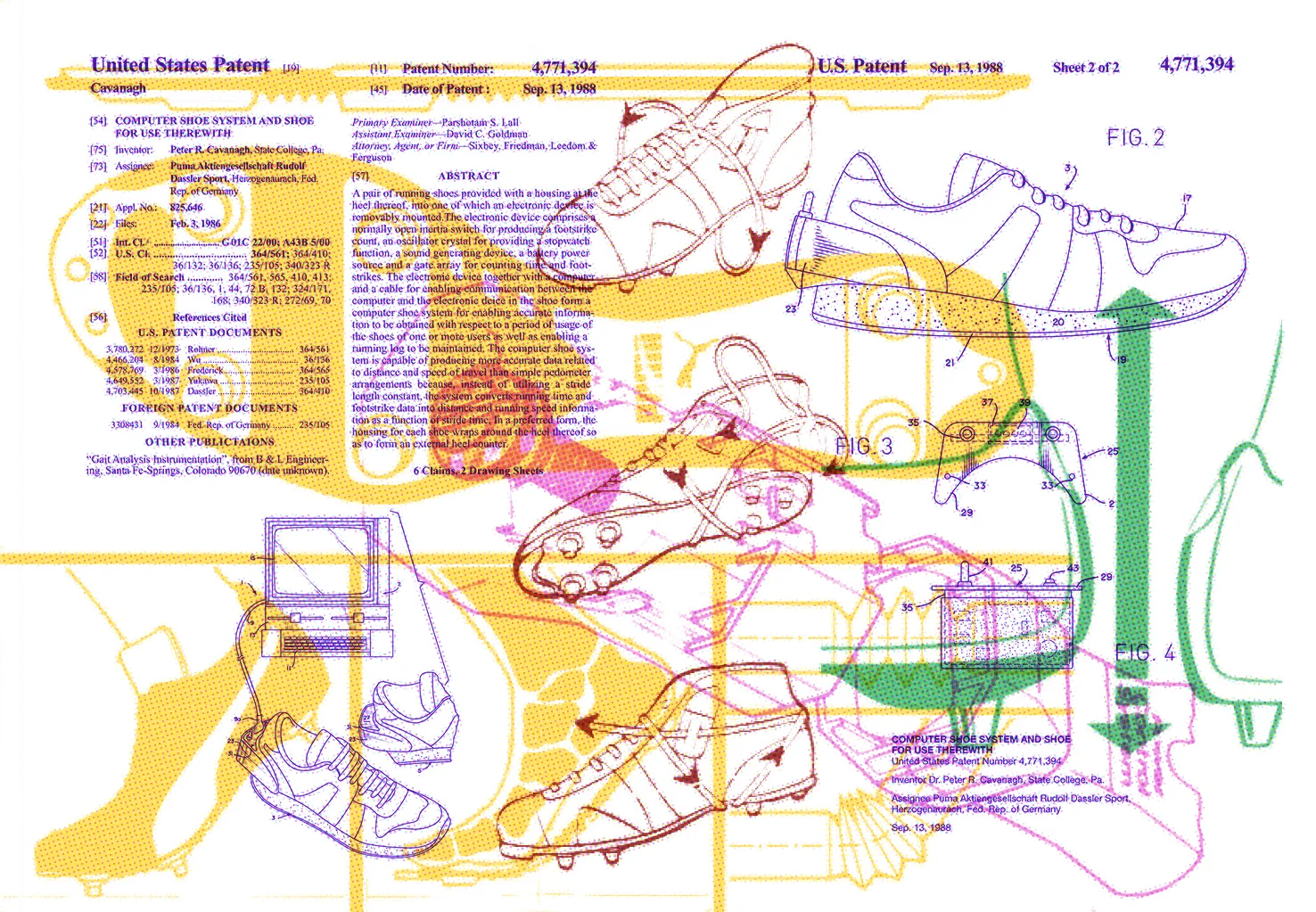
The world’s first smart shoe
PUMA was the first to introduce wearable fitness tracking to the world when it built a tracker directly into the heel of a running shoe in 1985.Decades before smartwatches and fitness trackers became everyday items the PUMA RS (Running System) Computer tracked speed, distance, and calories burned using an onboard microchip.
Plugging the shoe into a desktop allowed runners to break down their stats in real time, proving PUMA was thinking about wearable tech long before anyone else.
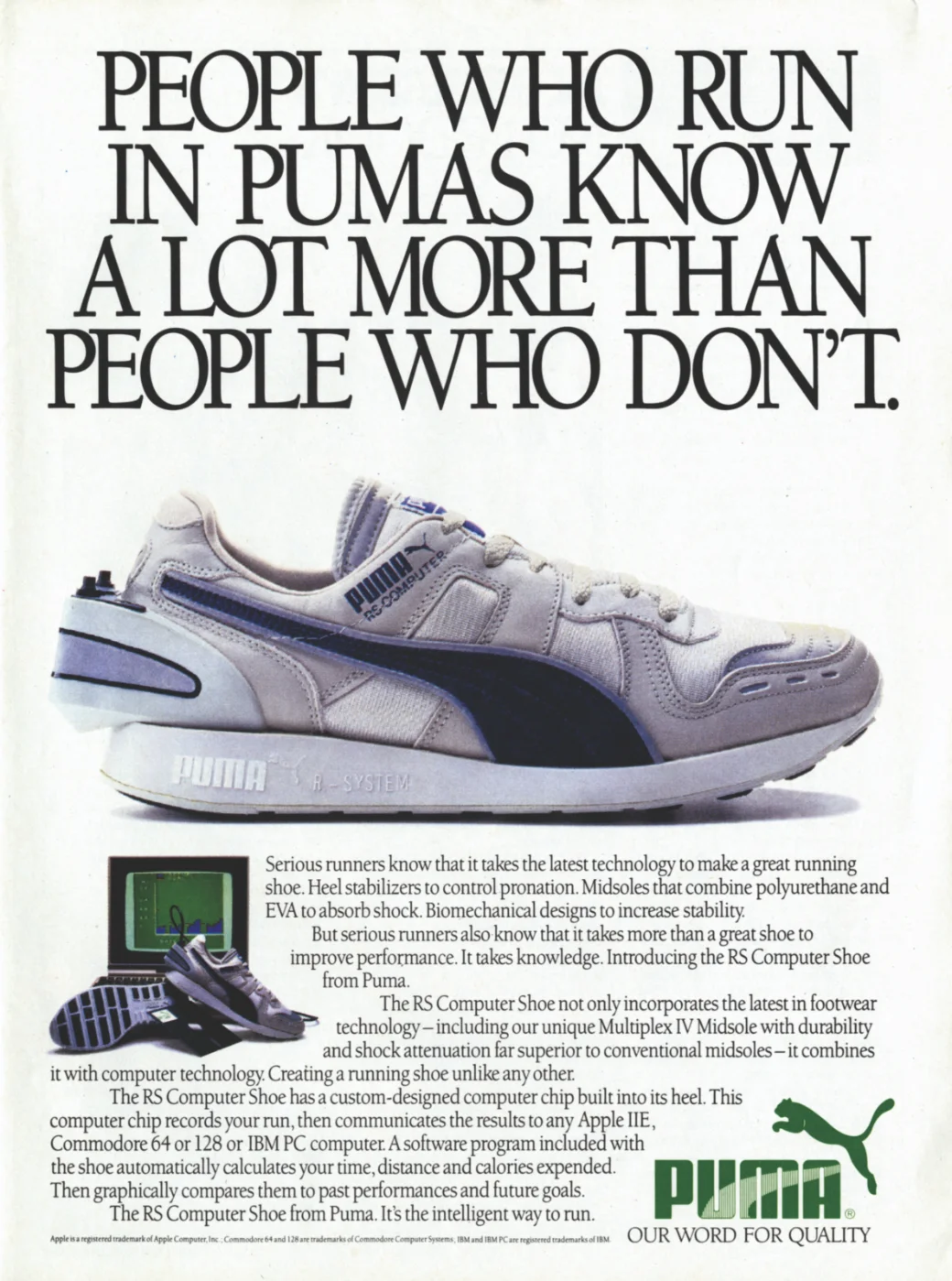
PUMA ad of the RS Computer from 1985
From the pitch to the track, PUMA proved that performance and progress go hand in hand. But the brand’s drive to rip up the rulebook had only just begun. Part 2 explores the iconic milestones that defined PUMA in the nineties and beyond. Stay tuned.

CATch up ahora habla más idiomas
Para dar la posibilidad al mayor número de personas de conectar con nosotros y formar parte de nuestro mundo, ahora ofrecemos CATch up también en alemán, francés y español. Ten en cuenta que las traducciones son automatizadas y, por lo tanto, pueden contener errores.