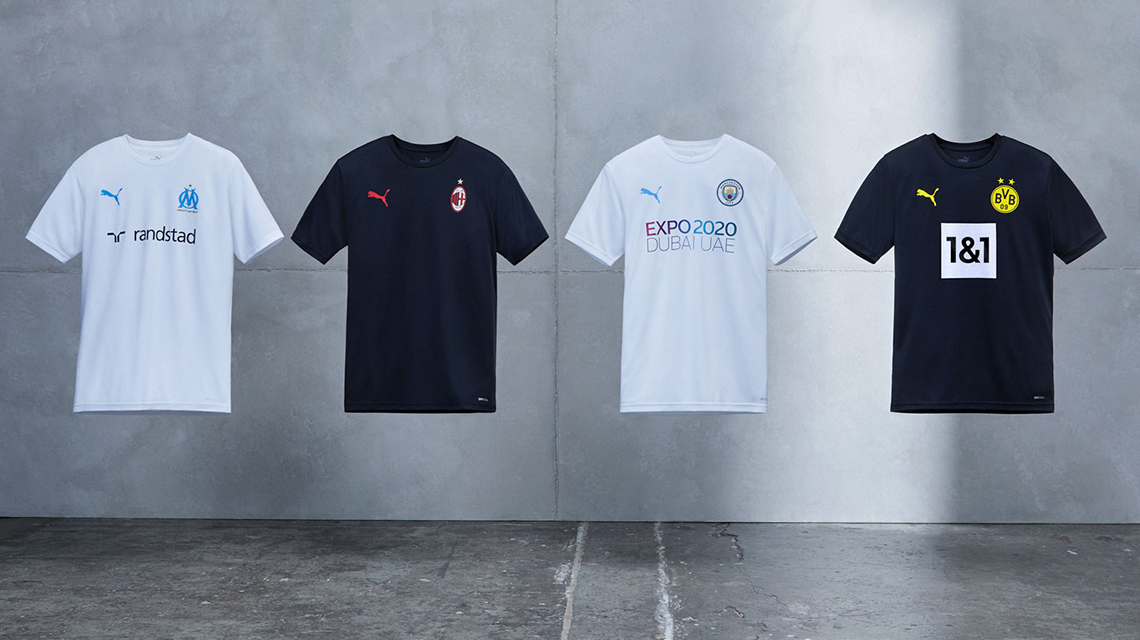
Our RE:JERSEY pilot experiment
PUMA trials Garment-to-Garment Recycling in Circularity Project, using old Football Kits to produce new ones
March 23, 2022
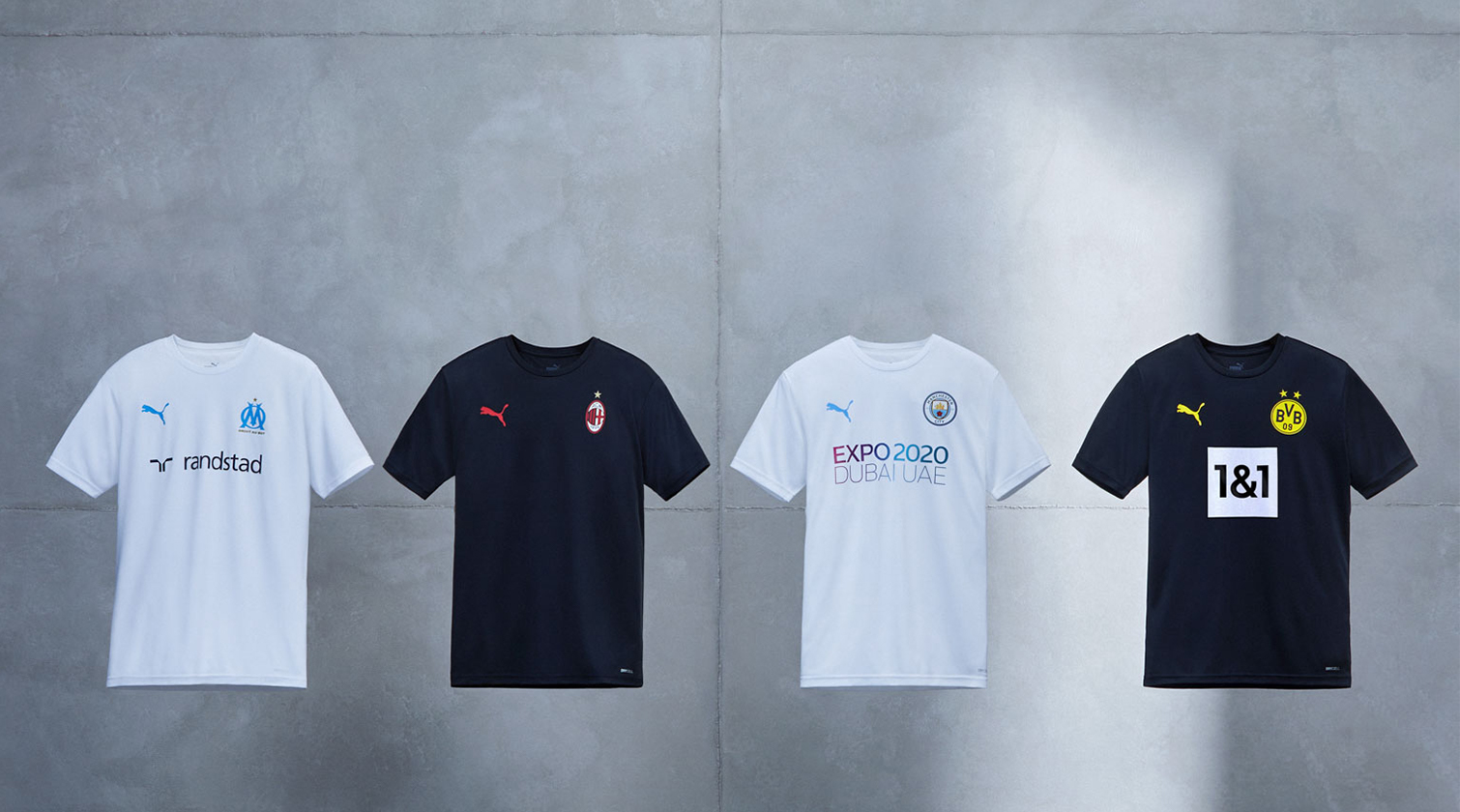
We will pilot an innovative production process to use existing football jerseys to produce new ones. This initiative is aimed at reducing waste and paving the way towards more circular production models in the future. The process used in RE:JERSEY means that old garments that feature logos, embroideries and club badges, which previously hindered recycling efforts to turn old garments into new ones, can now be used. The RE:JERSEY project takes football kits as the major ingredient to create yarn for new jerseys. The products made in the RE:JERSEY project will be worn on-pitch during pre-match warm-ups by PUMA Clubs Manchester City, AC Milan, Borussia Dortmund and Olympique de Marseille. The teams will wear the jerseys ahead of their respective league fixtures in late April and May, starting with Manchester City on April 23. Check them out!
The recycling process
In the recycling process used for our RE:JERSEY project, the garments are chemically broken down into their main components (depolymerization). Colors are then filtered out and the material is chemically put back together to create a yarn (repolymerization) that has the same performance characteristics as virgin polyester.
While our football kits on the market today are already made from 100% recycled polyester, RE:JERSEY kits are made with 75% repurposed football jerseys. The remaining 25% comes from SEAQUAL ® MARINE PLASTIC1.
In the recycling process used for our RE:JERSEY project, the garments are chemically broken down into their main components (depolymerization). Colors are then filtered out and the material is chemically put back together to create a yarn (repolymerization) that has the same performance characteristics as virgin polyester.
While our football kits on the market today are already made from 100% recycled polyester, RE:JERSEY kits are made with 75% repurposed football jerseys. The remaining 25% comes from SEAQUAL ® MARINE PLASTIC1.
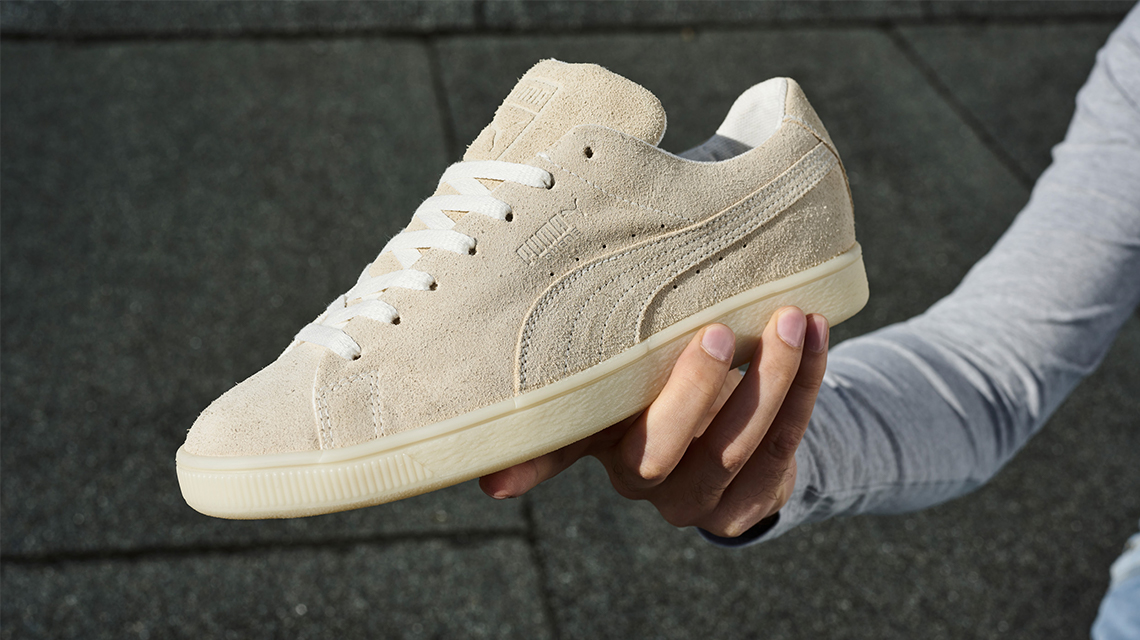
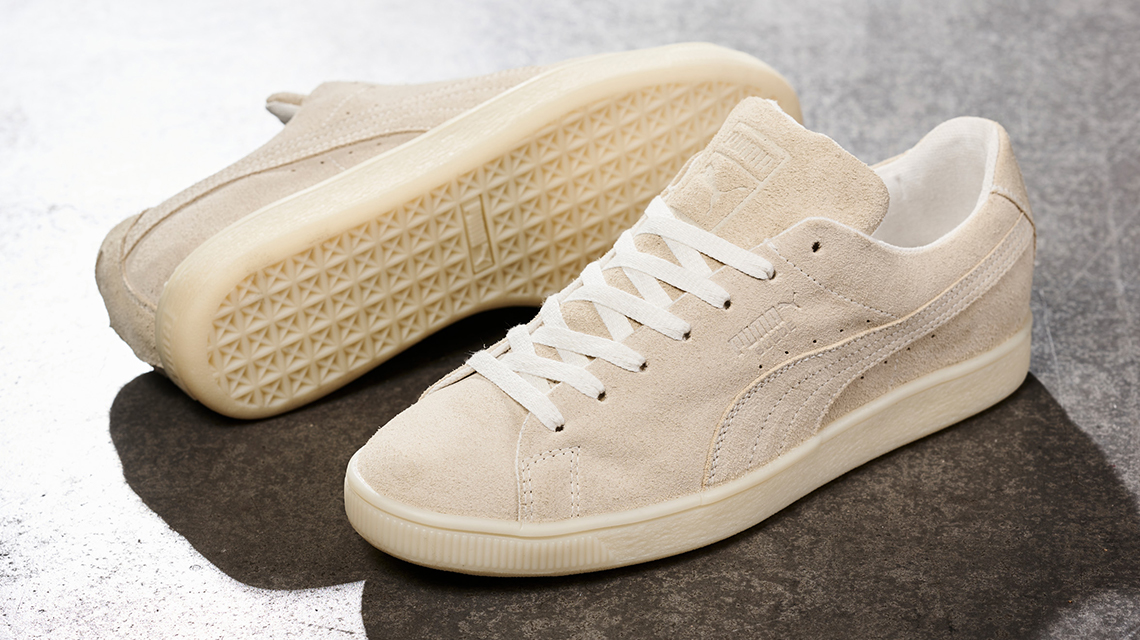
The RE:JERSEY pilot experiment is part of PUMA’s Circular Lab and its Forever Better sustainability platform. As part of Circular Lab, we announced the RE:SUEDE program last year, which tests, whether the company can make a biodegradable version of our iconic SUEDE sneaker.
We aim to share the results and insights gained from this experiment within the industry to achieve an even bigger impact when it comes to addressing the challenge of waste management in the footwear industry in general. Circularity is one of the pillars of PUMA’s FOREVER BETTER sustainability strategy. By 2025, PUMA aims to reduce waste by increasing the level of recycled polyester in its products to 75%, setting up product takeback schemes in its major markets and developing recycled material options for leather, rubber, cotton and polyurethane.
Read more
Catch up now speaks more languages
To enable as many users as possible to connect with us and be part of our world, we offer CATch up in English, German, French, and Spanish. Please note that these translations are automated and may contain errors.