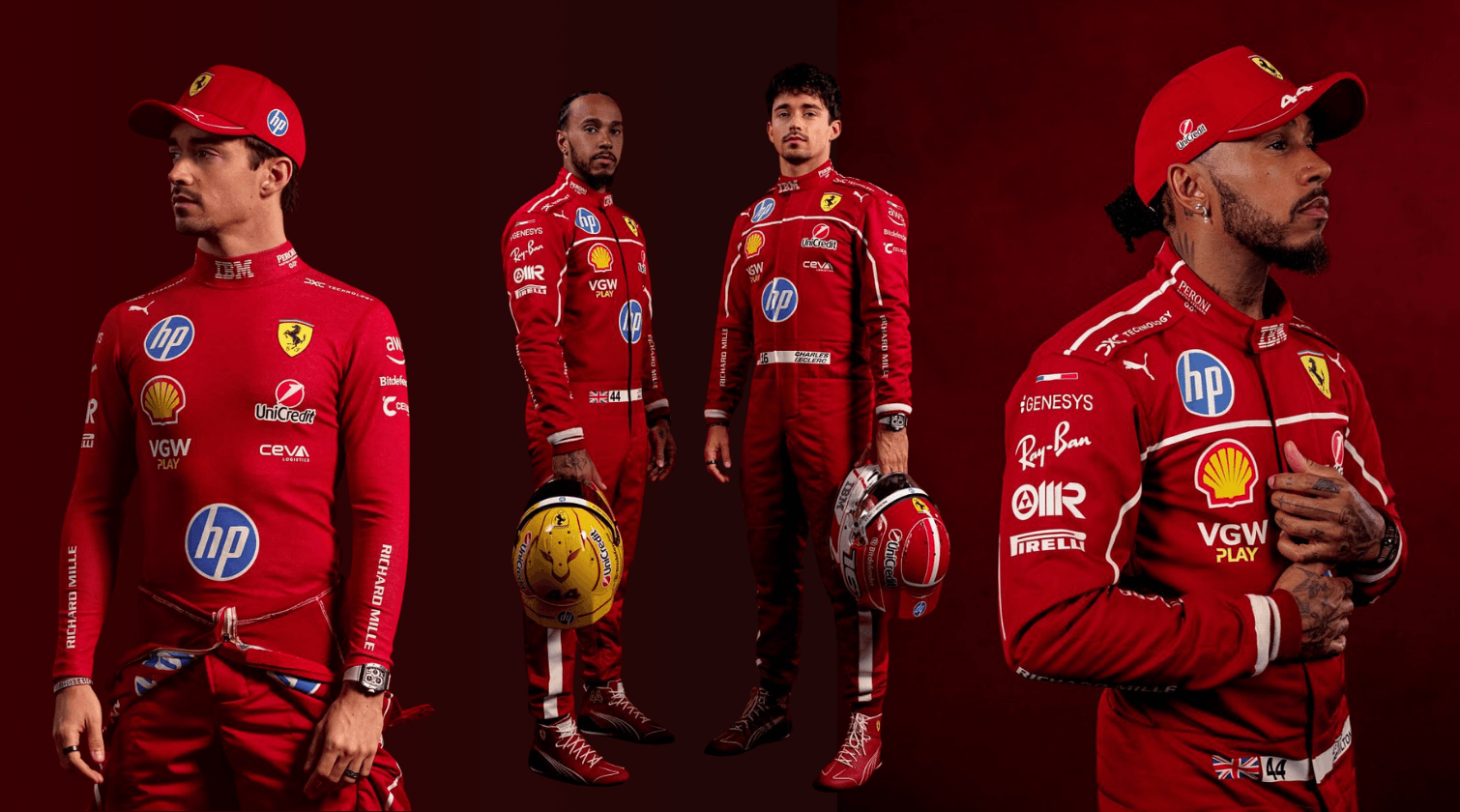
While the Formula 1 drivers are still fighting for points in the current season, PUMA is already running the next race. What is decided in seconds on the track takes months in development. In these weeks, the final designs for the 2026 race suits must be completed – color combinations, seam layouts, sponsor placements. Everything with absolute precision. But often a new sponsor comes on board in January. Then things get tight for the motorsport team.
Anyone holding a Formula 1 race suit from PUMA will feel a lightweight, flexible garment. Anyone wearing it knows: this is pure precision. Every gram counts, every seam is carefully thought out, every surface strategically used – from the choice of material to the placement of logos. What looks like fabric on the outside is science on the inside. And a feat of strength for everyone involved.
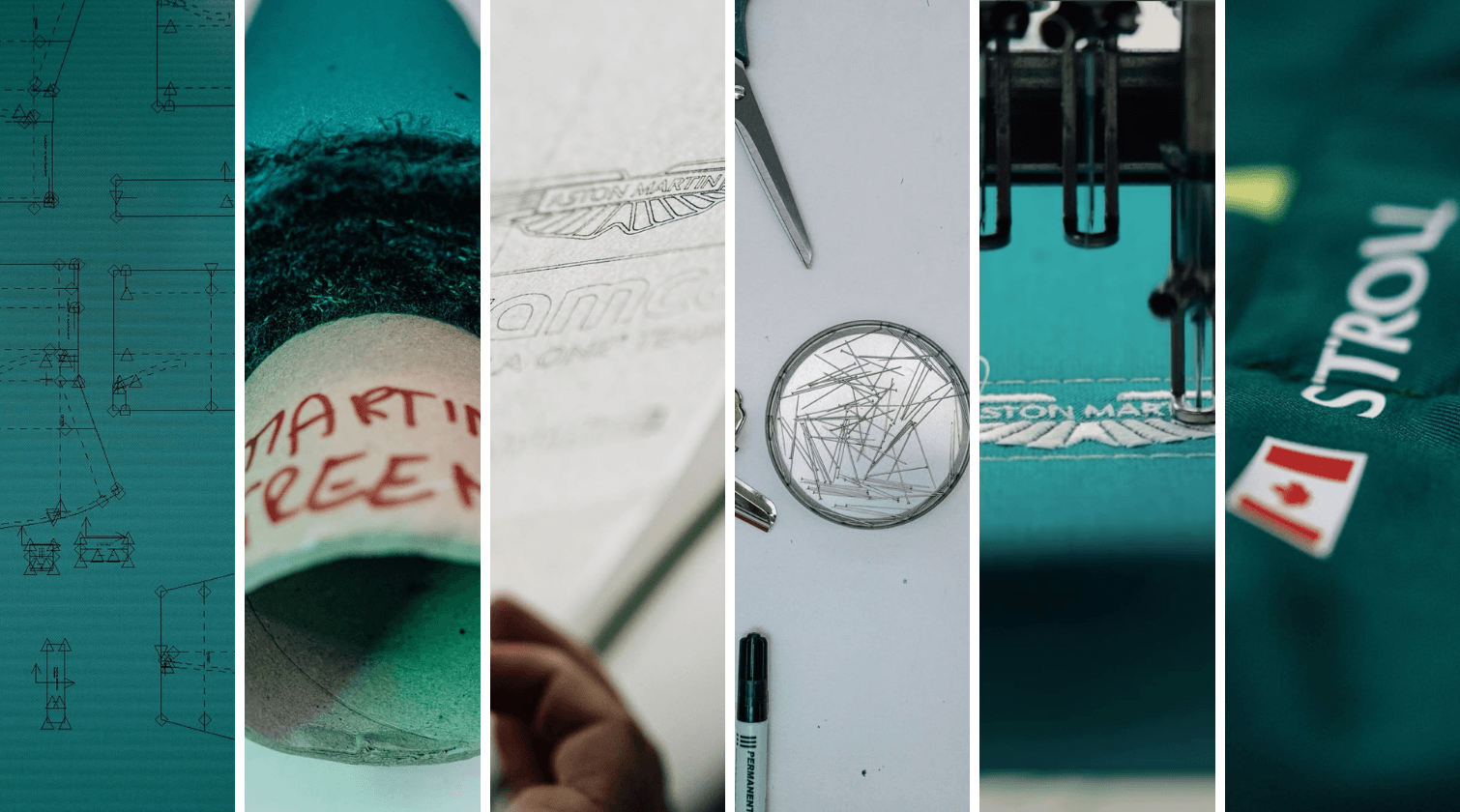
From the first prototype to the start signal
Gregor Hübner knows this world better than most. As Head of Sports Marketing Motorsport & Racewear at PUMA, he and his team ensure that drivers like Charles Leclerc, Lewis Hamilton or Fernando Alonso are perfectly equipped – with suits, gloves, shoes and underwear. All, of course, fireproof. And that means not only quick coordination between design, production and logistics, but also a fine instinct for driver preferences and technical innovations or adjustments.Before a suit is worn on track for the first time, it goes through many phases. Up to four prototypes are not uncommon – especially when working with a new driver. Fit, material and logo prints are checked again and again. When PUMA partnered with Red Bull Racing in 2016, the team had to test 16 rounds of so-called “heat transfer prints” for the stripes on the sides of the suit before the perfect “Fluo Red” was achieved. “Some designs and colors look great on screen – but completely different under real or artificial light,” says Hübner.
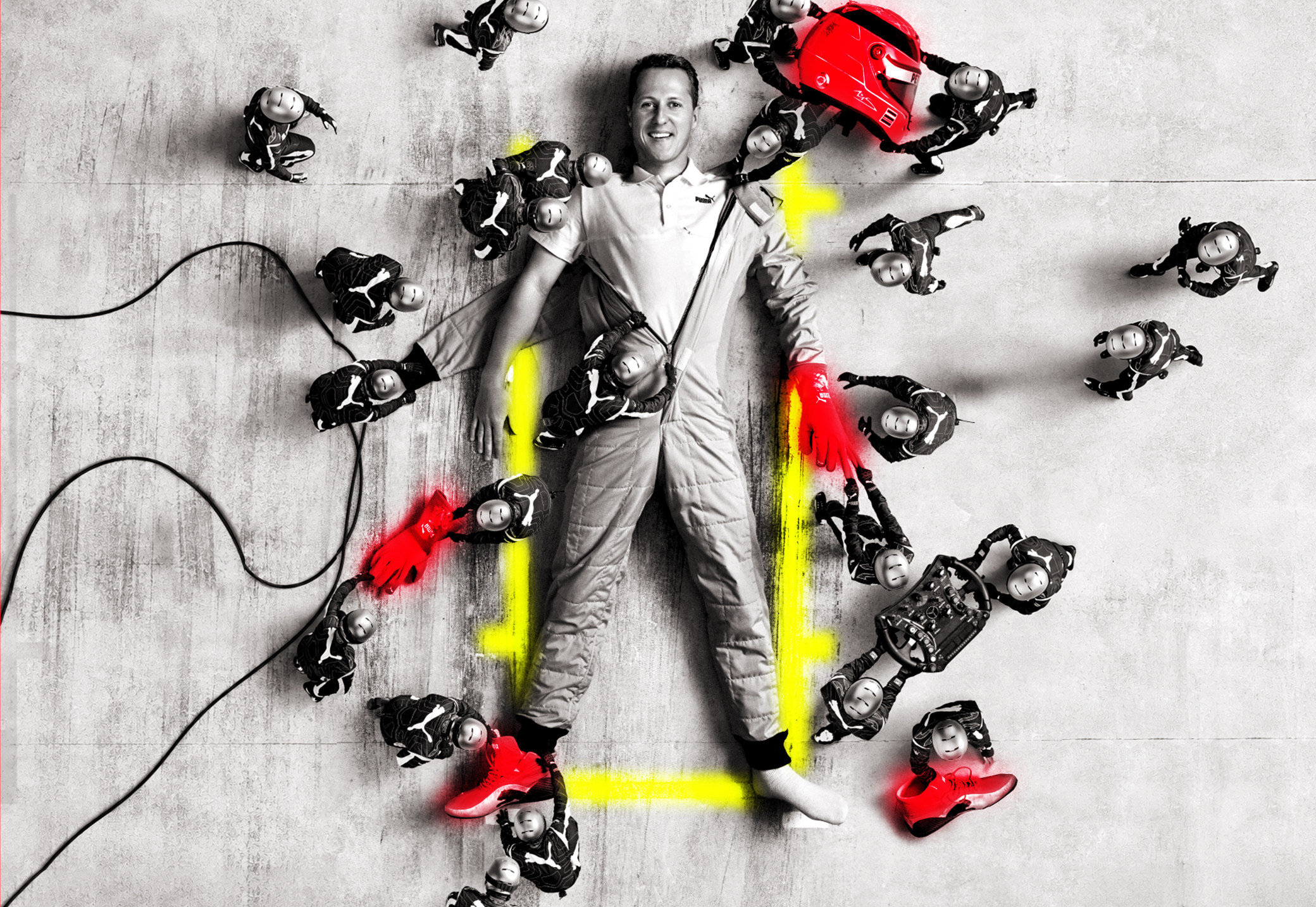
Each driver receives six complete kits per race weekend – five in use, one in reserve. After the race, everything is washed, inspected and restocked. Before the next race, delivery begins – coordinated globally. And in between, there’s always more fine-tuning.
Safety vs. mobility
The technical challenge is enormous. A race suit must be both: highly protective and highly comfortable. It has to withstand extreme heat, pass strict safety tests and meet FIA homologation standards. The FIA (Fédération Internationale de l’Automobile) is motorsport’s governing body, setting and enforcing safety regulations. At the same time, the suit must allow full freedom of movement in the cockpit. Stretch materials were once used for this – under the arms, in the crotch or lower back – but they added weight and required extra seams. Today, intelligent pattern making takes over. “Comfort now comes from precise measurements and meticulous cuts – without added weight and with a perfect fit in driving position,” says Hübner. Seams are placed to avoid pressure points, for example on the back or under the seat belts. And every layout is customized: “Each pattern is truly individual – there’s no such thing as a standard size.”2025 PUMA F1 Designs
“A suit is not a uniform. It’s a tool. And it has to work down to the last millimeter.”
Gregor Hübner, Marketing Manager Motorsport Head of Sports Marketing Motorsport & RacewearHow critical even the smallest adjustments can be was clearly demonstrated in the 2016 season. Nico Rosberg was on course for the title when he felt slight rubbing between his index finger and the steering wheel at the start in Singapore. The cause was soon identified: a glove with external seams that twisted in the humid conditions and pressed exactly between finger and wheel. The team moved the seam to the top of the fingers – relieving pressure points and improving steering feel. “We changed the construction and improved the steering feel together with Rosberg and his detailed feedback,” Hübner recalls. Rosberg went on to win the World Championship in 2016 and later said: “I believe this was an important building block for the title.”
Every detail counts
Every detail counts when it comes to the shoes as well. A modern race shoe weighs about 180 grams in its textile version – depending on the shoe size, of course – while still offering full heat protection, comfort and perfect grip. The demands are extreme: over 100 kilograms of pedal pressure in certain situations, no slipping, no play between foot and car. “The shoes need to fit so perfectly that the driver isn’t consciously aware of them, like a second skin – but still must not give way under full load,” says Hübner.The choice of material and fit is highly individual. Lewis Hamilton, for example, prefers extremely tight-fitting suits and textile shoes – maximum control, zero distraction. Charles Leclerc prefers a similarly tight suit fit but uses the leather version of the shoes. Kimi Räikkönen in the past sometimes chose a much looser cut, “in which he could almost have fitted twice.” It is the personal preference of each driver that determines the perfect fit. “If everything matches those personal preferences,” says Hübner, “ideally the driver doesn’t even think about the suit or the shoes.”