What PUMA Learned from Working with 1,000 Runners
How PUMAs’ PROJECT3 showed the power of NITRO™ and shattered PBs
October 20, 2026
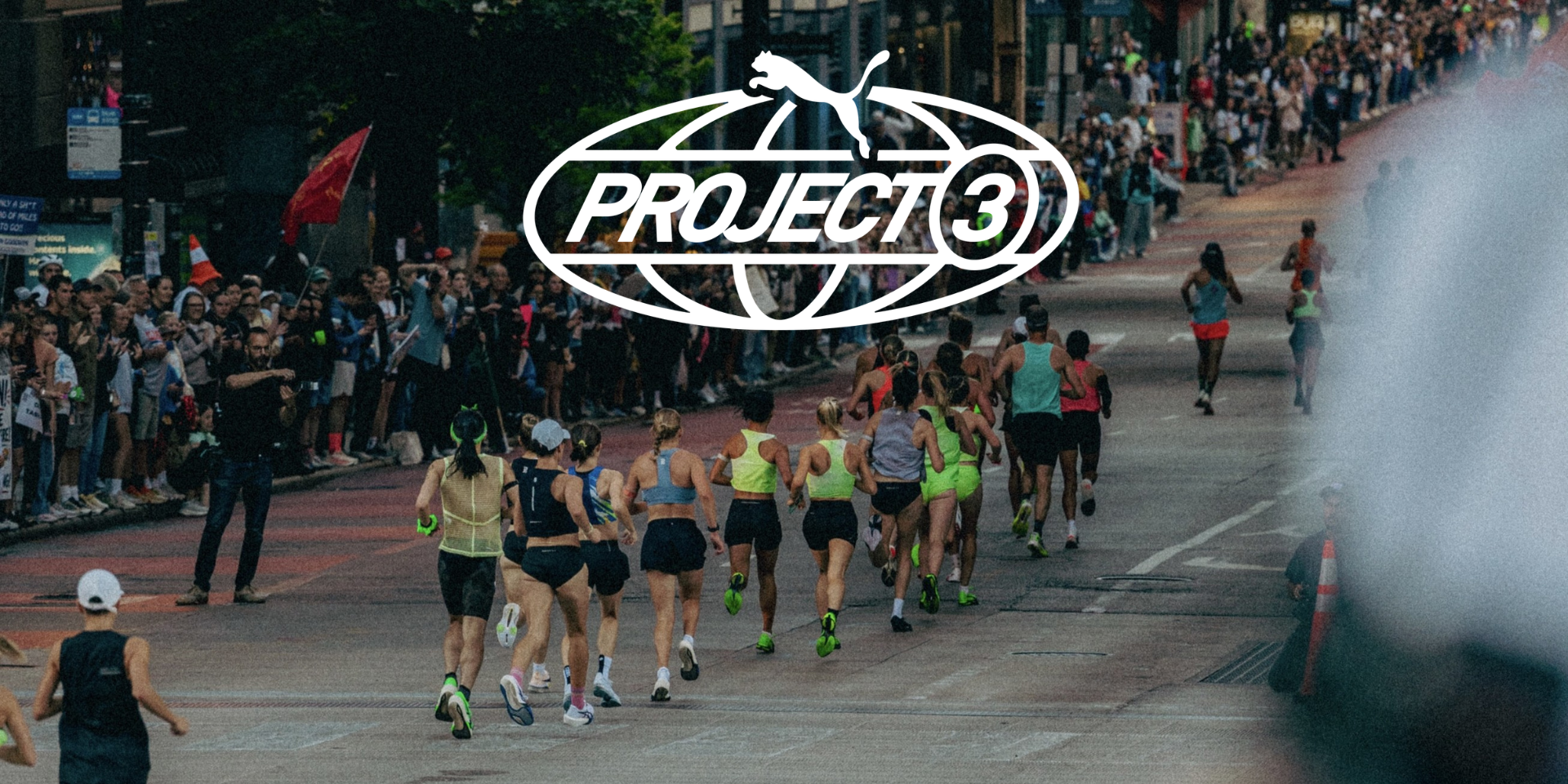
20 hours, 28 minutes and 37 seconds. That’s how much time PROJECT3 runners have collectively shaved off their personal bests. Around 1,000 ambitious amateur athletes have taken part in PUMA’s initiative since 2025. What began as an unconventional approach to launch the Fast-R NITRO™ Elite 3 running shoe has grown into an international running program. But PROJECT3 has become about much more than faster marathon times. For Lucas Maher, Lead Marketing of Running Athletes at PUMA, it has also opened up new perspectives on the running community, performance and product development.
Lucas, PROJECT3 originally started with the launch of the Fast-R NITRO™ Elite 3. What was the idea behind it?
We wanted to increase our presence at the major marathons while connecting with a group that plays an important role in running: sub-elite athletes. They’re not professionals, but they train and compete at an incredibly high level.
For Boston and London in 2025, we provided a group of these athletes with our best NITRO™ technology racing shoes and PUMA training gear. We also gave them access to nutrition experts and sports psychologists. We wanted to give them a taste of what it’s like to be supported in the same way as professional athletes are.
Runners can still apply to join PROJECT3. They need to meet certain marathon time requirements and already have a confirmed entry for the race they want to participate in.
“Running is often an individual sport, but PROJECT3 gives these athletes a sense of belonging to a team.”
Lucas Maher
Lucas Maher
PROJECT3 has now reached around 1,000 runners. What has surprised you most about its development?
Definitely the community that has emerged. We knew we’d created an interesting program, but we didn’t expect the athletes to identify with it so strongly. They feel part of something bigger than themselves. Running is often an individual sport, but PROJECT3 gives these athletes a sense of belonging to a team – even if they’ve never met before.
Some have told us about difficult moments during a marathon when they spotted another PROJECT3 runner in a PUMA kit ahead of them. That gave them the motivation to dig a little deeper, catch up and get through that tough stretch together.
And those connections continue long after race day?
Absolutely! During race weekends, we have WhatsApp groups with 100 or even 200 athletes. And months later, they’re still messaging each other. Someone might say, “I’m going to be in Amsterdam next week – anyone up for a run?” Or, “I’m signing up for the Frankfurt Marathon. Who else is going?”
They stay connected, arrange runs and share experiences long after their particular PROJECT3 event has ended. That’s been remarkable to see.
PROJECT3 runners at Berlin Marathon 2026
“Some of these athletes run 180 kilometers a week while holding down a full-time job.”
What makes these amateur athletes so remarkable in your eyes?
They bring incredible passion and discipline to what they do. Some of these athletes run 180 kilometers a week while holding down a full-time job. On top of that, they have families and other commitments. They don’t normally have daily access to physiotherapists, nutritionists or private coaches. Yet they invest an enormous amount of effort in their sport. I find that just as impressive as some of the achievements of our professional athletes.
What has PROJECT3 taught you about influence within the running community?
That’s one of the most interesting things we’ve learned. Today, there’s so much talk about influencers, creators and social media reach. But many of our athletes aren’t Instagram or TikTok stars. They might be the fastest runner in their hometown or someone who’s involved in a local run club. People in those communities listen to them because they’re credible and they know their sport.
They might not have huge social media followings, but they’re influential voices in their own running communities. In a way, that turns the traditional idea of an influencer on its head.
PROJECT3 runners at Chicago Marathon 2026
“Our athletes are authentic validators of our products.”
How does the feedback from PROJECT3 runners contribute to PUMA’s product development?
These athletes are deeply interested in training data, science and how running shoes work. They can tell us exactly how many kilometers they’ve run in a particular shoe, how it suits their running style and what their experience has been. We share that feedback with our product teams.
When you work on a product every day, you can sometimes find yourself in a bubble. Then people from outside come along and tell you how things actually work in practice. That’s where those valuable light-bulb moments happen. Our athletes are authentic validators of our products.
With the Fast-R NITRO™ Elite 3 and the Deviate NITRO™ Elite 4, PUMA now offers two different race-day shoes. Why is it important to offer runners different options?
I like to describe them as two different tools. Every runner is different. Depending on their running style and individual needs, the Deviate NITRO™ Elite 4 might work better for one athlete, while the Fast-R NITRO™ Elite 3 might be the better choice for another.
Both are designed to help athletes get the most out of themselves on race day and achieve new personal bests.
PROJECT3 will continue to grow in 2027, with Mumbai already confirmed as a new destination. What’s next for the program?
We want to give even more ambitious runners the opportunity to be part of PROJECT3, with more races and cities to follow. We’re also constantly looking for ways to improve the experience. There are exciting developments ahead in 2027, both for our products and for PROJECT3 itself.