In running, performance is often decided in a moment that is barely visible. The foot strikes the ground, the body brings weight and speed, forces act on materials, muscles, and joints. What happens in this fraction of a second determines how a step feels — and how much energy is retained. Foams are designed for exactly this moment. They deform under load, absorb forces, and respond immediately. This energy has a name: NITRO™.
At PUMA, the term stands for a foam technology that has fundamentally changed the running shoe. Lighter, more responsive, more direct – this is how runners describe what they feel with every step. NITRO™ foam absorbs energy, stores it briefly, and releases it at precisely the right moment. “The major advantage is that it allows us to create ultra-light foams that absorb significantly more energy and return it,” says Matthias Hartmann, Head of Material Engineering Innovation Footwear. It’s the combination of new foam formulations and a unique production process that makes this possible. Their quality lies in the return of energy. Cushioning becomes motion.
NITRO™ is a combination of novel foams and a process innovation. Their quality lies in the return of energy. Cushioning becomes motion.
In the process known as supercritical foaming, nitrogen penetrates the plastic under heat and pressure. When pressure and temperature are reduced, the gas expands within the material. “That foams the material from the inside out,” says Matthias. “You can think of the process a bit like making popcorn.” A compact preform is transformed into a highly expanded midsole inside a pressure chamber.
How our NITRO™ foam is made
The real performance is created inside the material. The foam structure determines how the shoe responds under load. NITRO™ foams feature a particularly uniform cell structure. They can be highly compressed, build up tension, and release that energy again. “These soles can be deformed by up to 70 percent — like squeezing a balloon,” explains Matthias. This is where the difference to traditional EVA foams becomes clear, which have dominated the market for decades. EVA foams are primarily designed for cushioning and have a much slower response, making them fundamentally different from the high‑energy return behaviour of NITRO™.A running step consists of several phases. The foot strikes, the foam compresses, the body rolls over the midfoot and pushes off through the forefoot. Throughout this sequence, the foam is continuously loaded. “I can put a lot of energy into the system,” says Matthias Hartmann. What matters is that this energy is retained and released again. “That energy doesn’t dissipate. What I put into the material in terms of energy, I get back to a large extent.”
The effect is independent of running style. “It doesn’t matter whether you’re a heel striker or a forefoot striker. This foam technology offers an improvement for every type of runner.” Speed also plays a secondary role. “This is a technology for everybody.” Both elite athletes and recreational runners notice the difference. “Runners can describe very precisely which foam performs better — and that matches our mechanical tests.” They describe it as a spring-like, propulsive feeling.
Early sketches of the PUMA Deviate 4 running shoes with our NITRO™ foam feature
Interaction with carbon
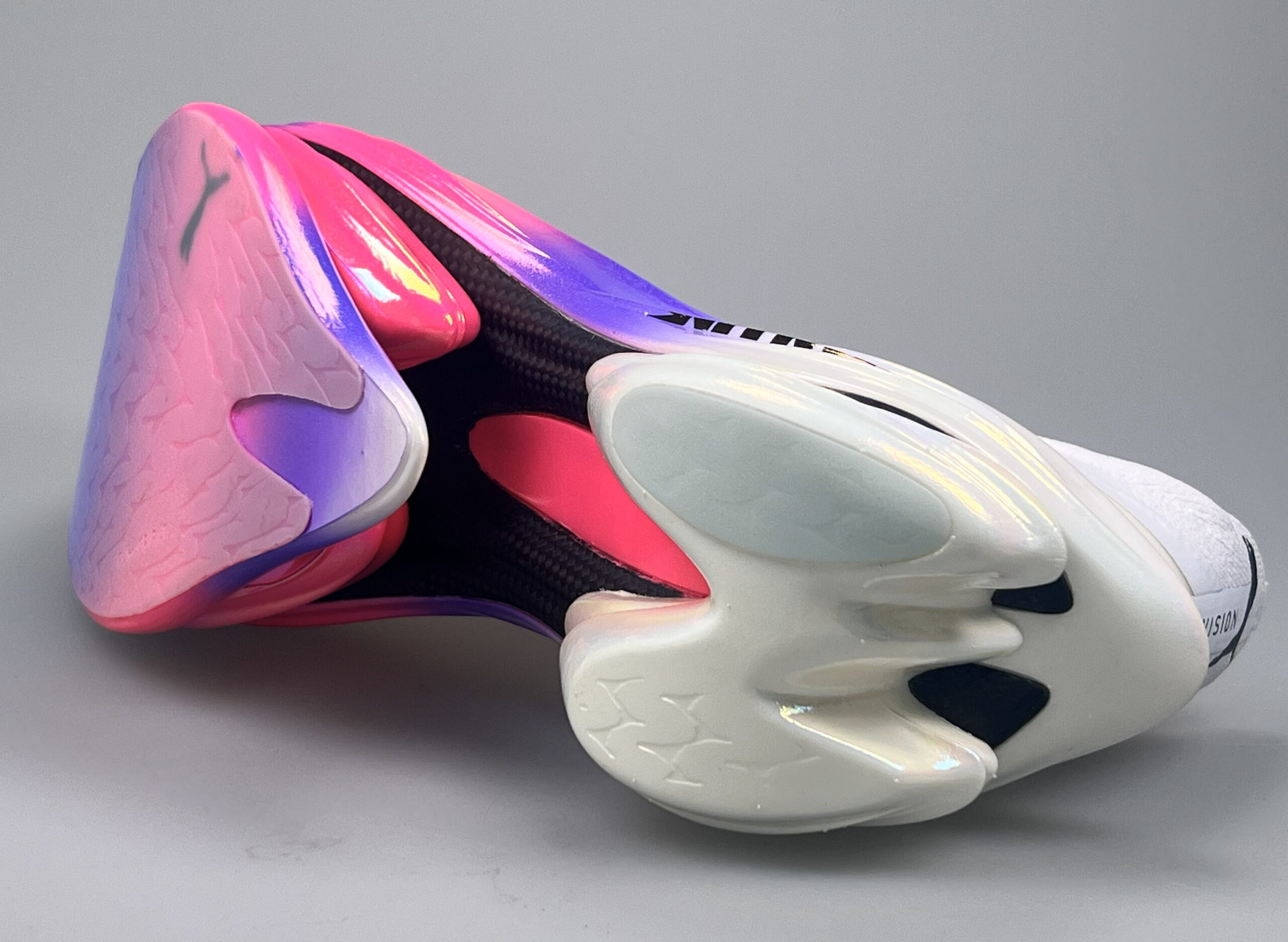
The foam reaches its full potential in combination with the overall construction. The carbon plate plays a central role here. “It has a stiffening effect,” explains Matthias. It creates leverage and guides the movement. The foam takes on a different function. “It’s there to absorb forces and return energy. This combination of a carbon plate and foams makes it possible for the shoe to actually make you faster.” ”This combination of a carbon plate and foams makes it possible for the shoe to actually make you faster.”
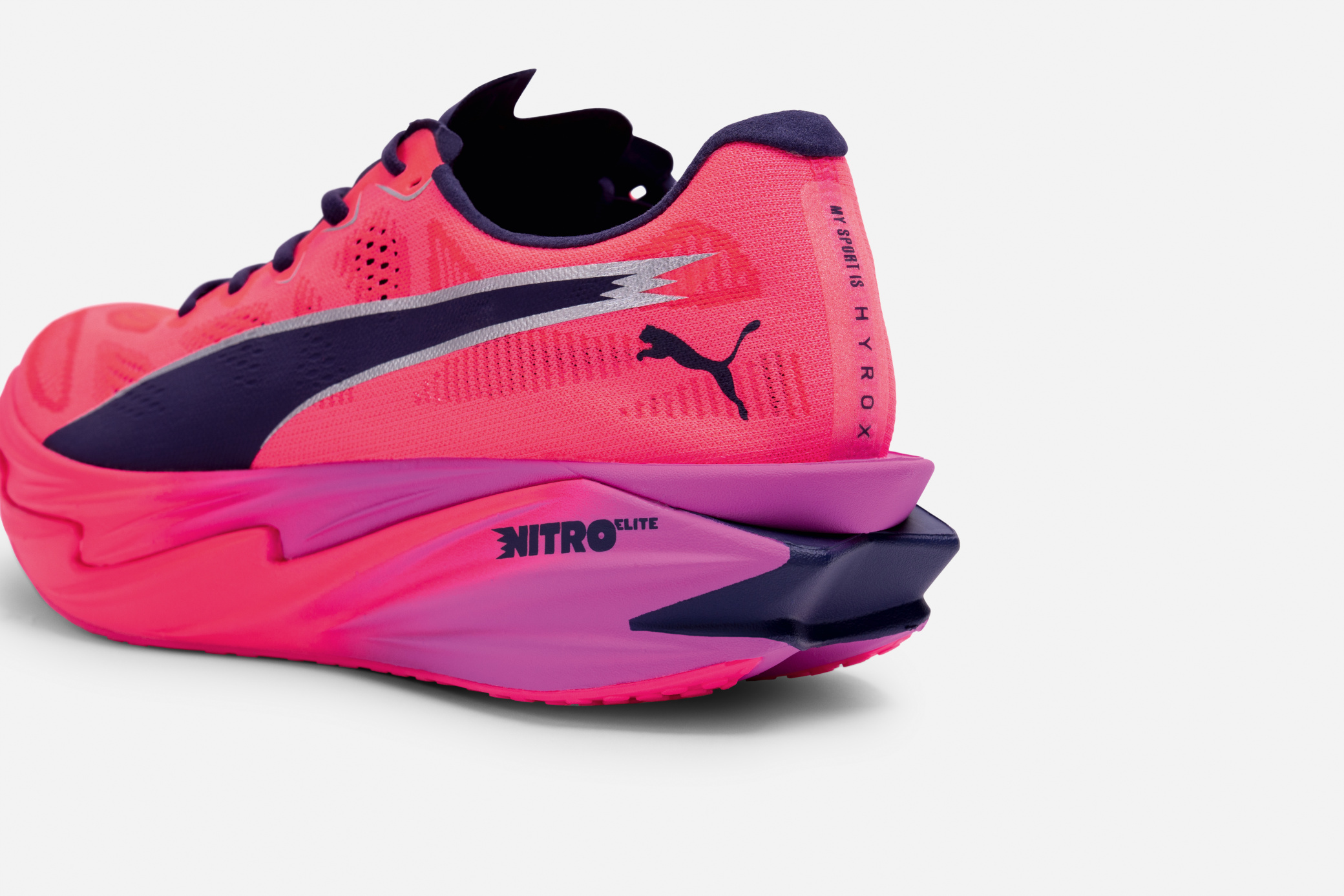
Today, the technology is used across a wide range of applications — from sprinting to marathon running, as well as training shoes for formats like HYROX. “It’s always the same manufacturing process, but with different raw materials,” says Matthias. Over longer distances, the effect becomes particularly noticeable: fatigue can be reduced.
NITRO™ is not just an elite performance story. The technology also benefits everyday runners and can even make sense in lifestyle footwear, combining energy return with comfort.
NITRO™ is not just an elite performance story. The technology also benefits everyday runners and can even make sense in lifestyle footwear, combining energy return with comfort.
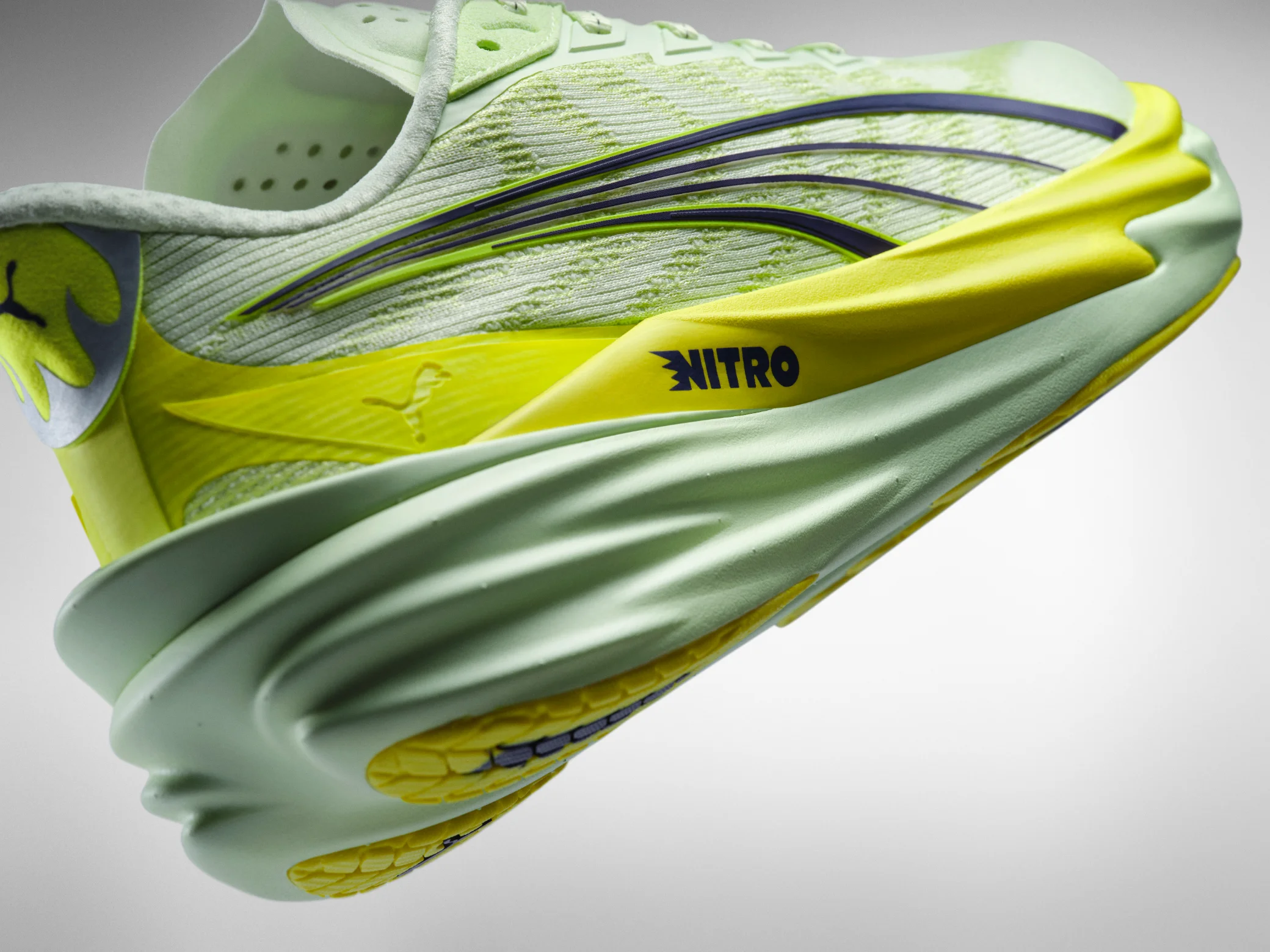
PUMA Deviate NITRO™ 4
Development and outlook
Even though PUMA has already achieved significant success with NITRO™, the development of these materials is still in its early stages. Further progress depends not only on material understanding and manufacturing processes, but also on developing the right testing methods for each specific application.PUMA’s footwear innovation team analyzes foam structures using CT scans, optimizes processes in autoclaves, and develops new material combinations. “We’re learning step by step how to tune materials to achieve specific effects.” At the same time, testing methods continue to evolve. Lab measurements need to translate into real-world running feel.
A key element is collaboration with partners. PUMA has further expanded its cooperation with foam manufacturer Shincell to drive the development of new materials.
The direction is clear: foams are becoming more precise, more responsive, more specialized – and increasingly central to what defines a running shoe.
More NITRO™-related stories

CATch up spricht jetzt mehrere Sprachen
Damit wir so viele Menschen wie möglich erreichen und ihr in die PUMA Welt eintauchen könnt, bieten wir CATch up jetzt auf Englisch, Deutsch, Französisch und Spanisch an. Die Übersetzungen werden automatisch erstellt und können deswegen Fehler enthalten.