“Our commitment to women’s football goes beyond the pitch.”
For the opening weekend of the Women’s World Cup, we hosted a special edition of PUMA’s Accelerator Program, bringing together a select group of next-generation players on Cockatoo Island, Sydney. The initiative’s goal is to honour the legacy of ground-breaking players from the 1975 Asia Cup and fast-track the careers of aspiring female athletes. Aside from celebrating the OG teams of New Zealand and Australia, and iconic rematch, and supporting the next generation of female athletes, we used the event to share our commitment to exploring ACL injuries in women’s football through research studies.

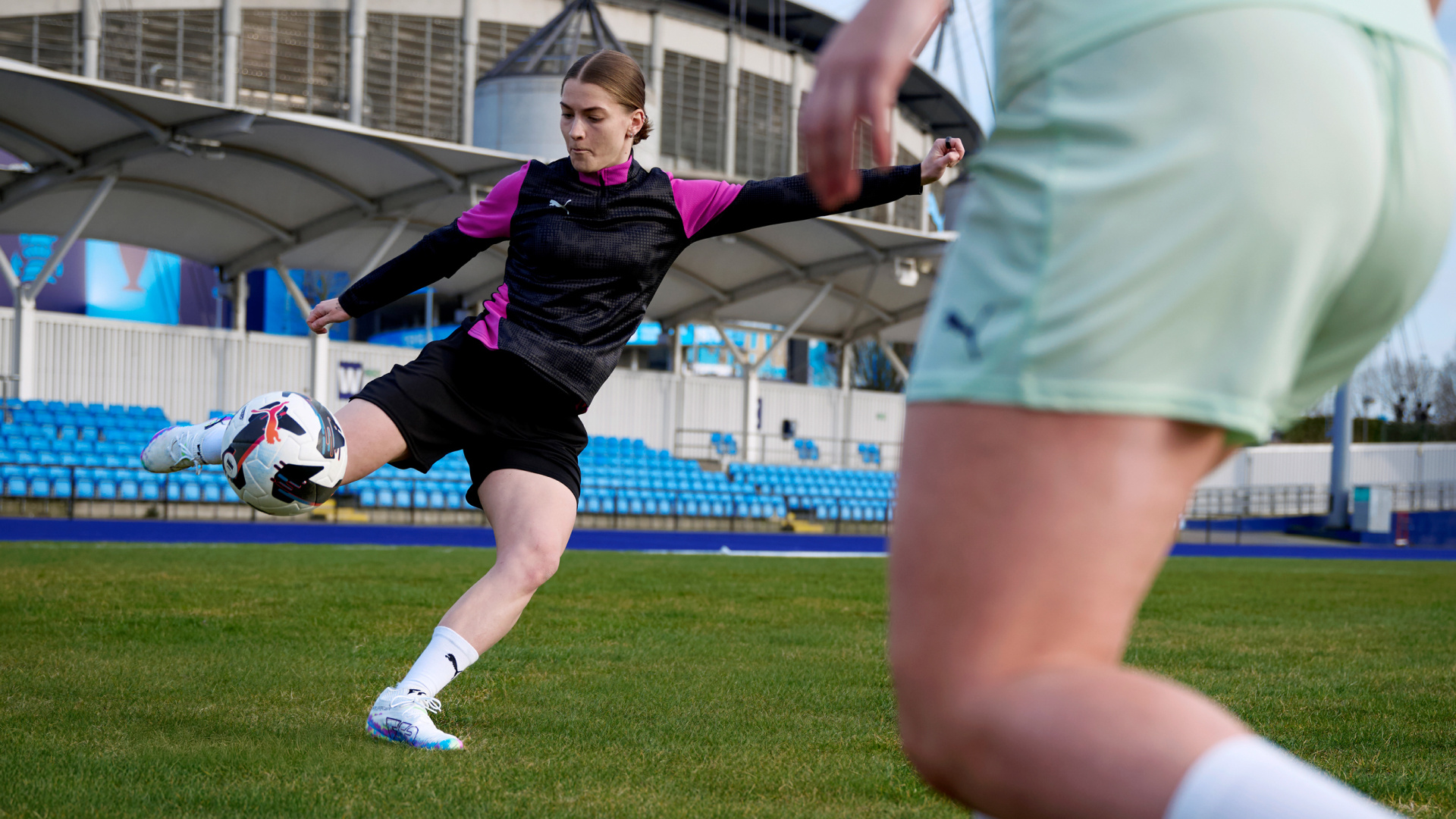
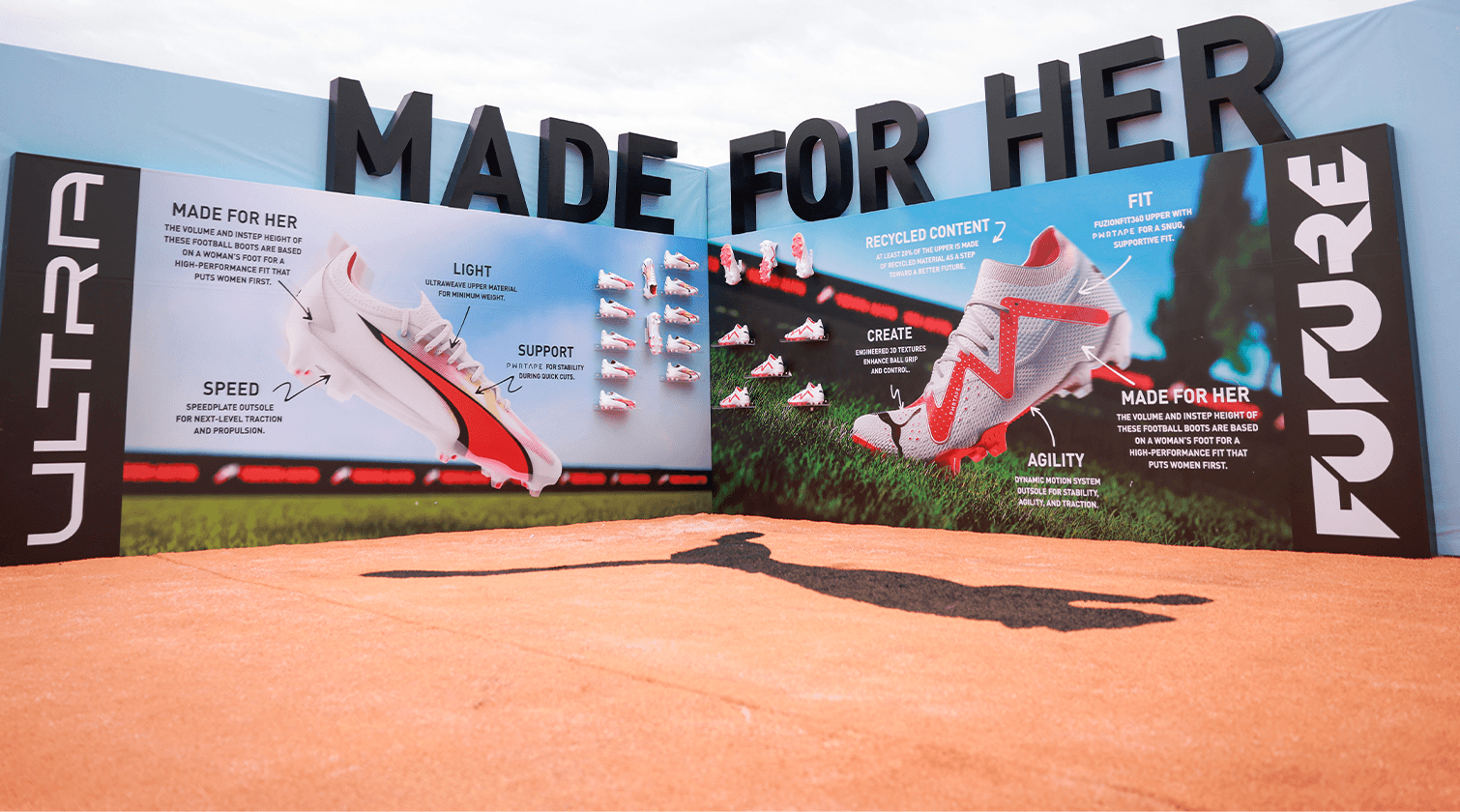
Female players are known to be between 2-10 times more likely to suffer an ACL injury than their male counterparts. PUMA has a proud history of more than four decades in women’s football and we understand the specific needs of women in sports. We were the first brand to offer football boots with a women-specific fit across all of our silos – FUTURE, ULTRA, and KING – our women’s specific fit has been adopted by over 90% of all PUMA-sponsored professional female players.
“Research into the anatomy of the male and female foot, combined with cross comparison fit testing, formed the basis to develop our women-specific football boots. Based on our findings we developed the women’s fit boots with a lower instep, along with reduced volume in the midfoot and the forefoot to create a better fitting boot for female athletes, creating a boot that is more tailored to the anatomical shape of the female foot.”
Stephanie Vieira, Senior Product Line Manager at PUMA.
To underline our commitment to providing the best possible equipment for our female athletes, we announced our investment in a research study that will further explore ACL injuries in women’s football. The research aims to delve into the injuries’ complex dynamics and to develop an effective training program to reduce the risk for female athletes and improve PUMA’s women-specific football boots. The ongoing research will help to continuously improve football boot offerings for athletes and will be designed with consideration for the unique risk factors identified in ACL injuries in women’s football. We aim to transform these findings into practical solutions through testing and validation in collaboration with partners (clubs and players).
“PUMA’s commitment to women’s football goes beyond the pitch. We’re are investing in a comprehensive research study with our partners into ACL injuries in women’s football, aiming to understand the risks, develop training programs, and enhance our women’s fit football boots. We’re dedicated to nurturing athletes, driving innovation, and ensuring player health and safety. The findings of the research will continue to influence our product moving forward and will support the objective with our PUMA partners in helping to reduce the risk of ACL injuries in the women’s game. As a brand PUMA exists to promote equality, identify challenges and work together with our partners to reduce barriers to women playing sport.”
Maria Valdes, Chief Product Officer at PUMA.

The research announcement took place on Friday, during a special panel talk at the newly opened PUMA pitch on Cockatoo Island. The panel featured:
⚽️ PUMA’s Chief Product Officer Maria Valdes
⚽️ PUMA’s Senior Product Line Manager for women’s football boots Stephanie Vieira
⚽️ Former Captain of the NZ women’s football team and Champions League winner Bex Smith
⚽️ Harry Raddick from Man City Women’s FC
⚽️ Professor Clare Hanlon of the Institute of Health and Sport at Victoria University.
Watch the panel highlights in the video below 🎬!
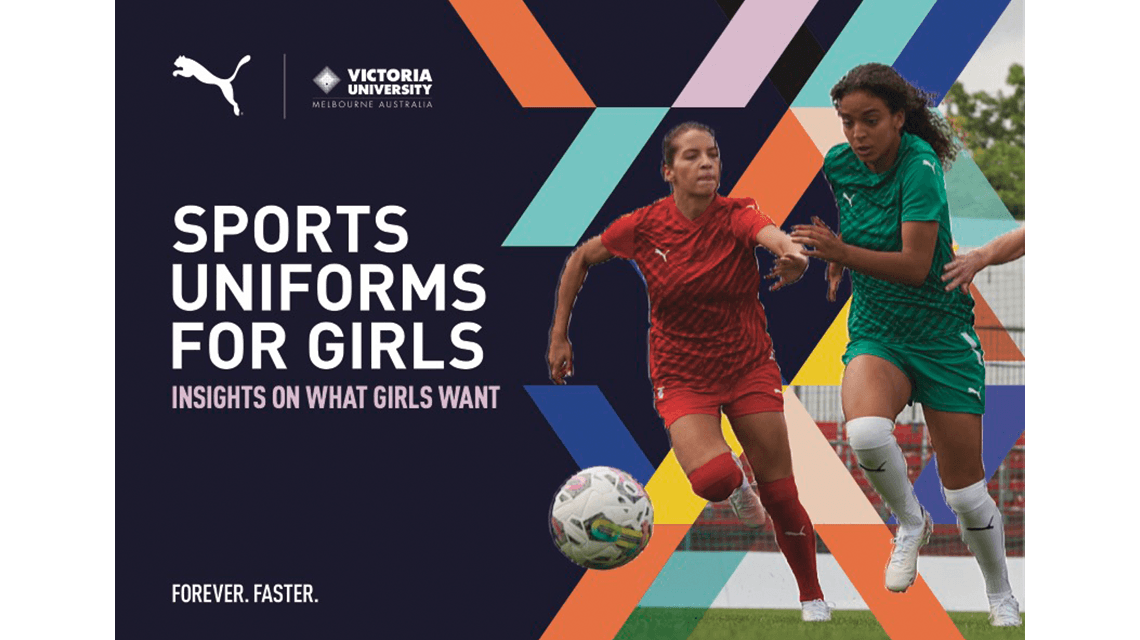
🎽🩳 Clare was also involved in our published insights on the impact of sports uniforms on girls’ participation in sport, igniting conversations around inclusive and insight-driven designs.
Background on ACL Injuries
⚽️ ACL injuries are considered among the most traumatic and debilitating injuries an athlete can sustain in team sport.
⚽️ Statistics indicate that only 63-81% of athletes return to the same level of competition following an ACL injury.
⚽️ The probability of an athlete tearing their ACL doubles after the first tear.
⚽️ In the long term, the probability of developing knee osteoarthritis within the next 10 to 15 years following an ACL injury increases by 20-50%.
⚽️ Women have been disproportionately affected by ACL injuries compared to their male counterparts since data began being recorded in the 1990s.
⚽️ Female football players have been shown to have between 2-10 times higher risk of ACL injury than their male counterparts.
⚽️ Historically, ACL research in sports science has been heavily focused on sex-based biological factors (“intrinsic” influences) at the expense of cultural and environmental (“extrinsic”) factors. In reality, these two factors are deeply intertwined.
⚽️ Successful training programs aimed at preventing ACL injuries often target reducing knee moments.
⚽️ When girls and women participate in dedicated training programs, they experience a significant 67% decrease in non-contact ACL injuries. However, application suffers due to adherence levels.
Parsons JL, Coen SE, Bekker S. Anterior cruciate ligament injury: towards a gendered environmental approach. British Journal of Sports Medicine 2021;55:984-990.