DON’T CALL OUR FORMSTRIP A STRIPE
The history of one of PUMA’s most recognisable trademarks
November 25, 2025
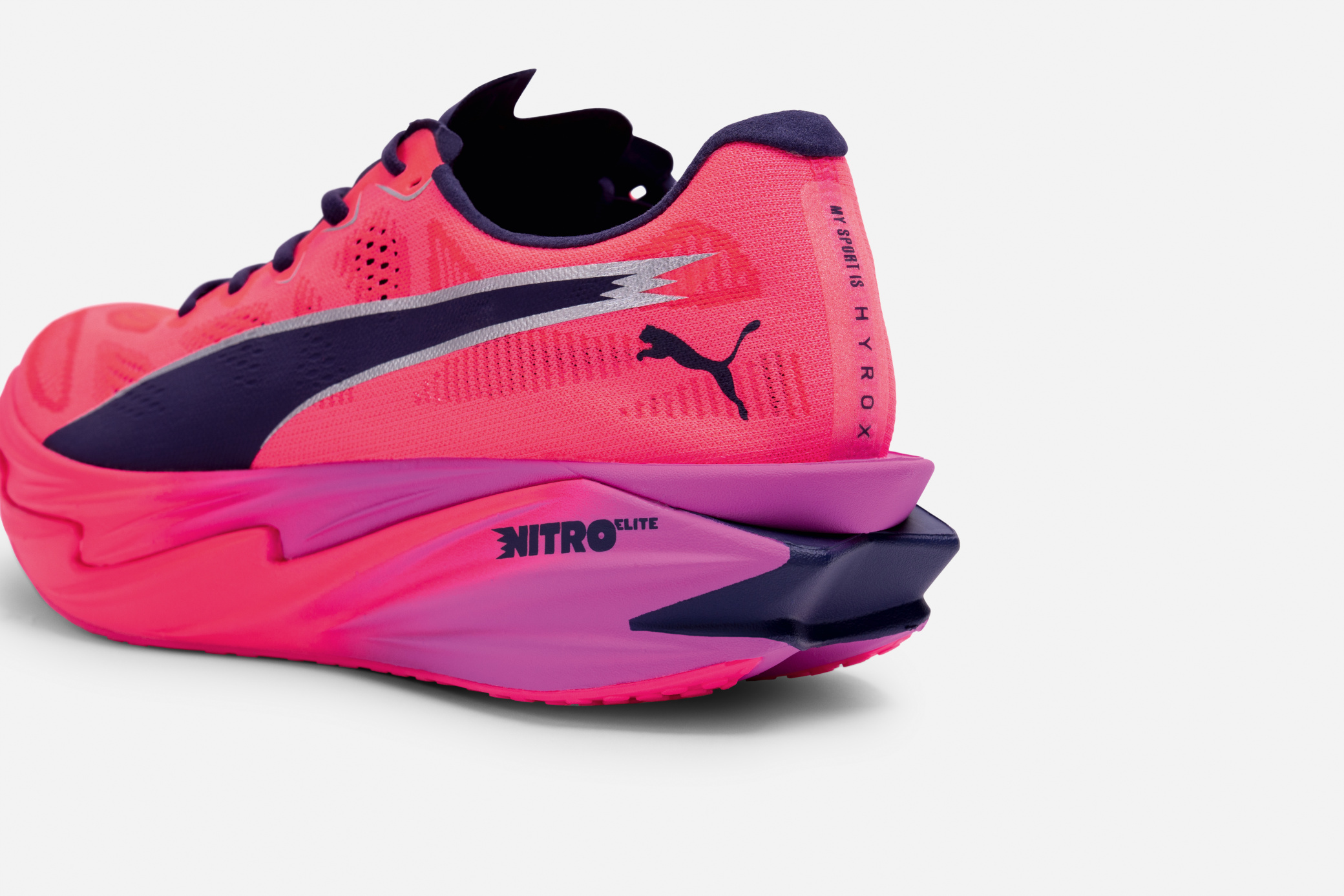
It’s one of the first things you notice when you see a pair of PUMA shoes, whether they are a SUEDE, a KING football boot or one of PUMA’s running shoes such as the DEVIATE NITRO™.
Apart from the famous leaping cat, the PUMA FORMSTRIP, which emblazons most PUMA Footwear, is one of our most iconic trademarks. With more than 65 years of history, the FORMSTRIP is so much more than just a stripe.
The history of the FORMSTRIP started in the mid-20th century, when football boots were a clunky affair and players needed to be thick skinned to play in them for 90 minutes. This all started to change when lighter materials became available in the 1950s. This, however, led to stability problems, with athletes complaining that they twisted their ankles when attempting quick direction changes in a fast-paced football match.
Listening to athletes’ concerns, PUMA’s founder Rudolf Dassler was looking for ways to use those lighter materials in football boots but also guarantee the same level of stability and control for the players. The result were the first Football boots with the FORMSTRIP, literally a strip of leather on the side of the shoe for added lateral support.
PUMA applied for a patent for the FORMSTRIP in early 1958, just in time for the World Cup in Sweden.
The history of the FORMSTRIP started in the mid-20th century, when football boots were a clunky affair and players needed to be thick skinned to play in them for 90 minutes. This all started to change when lighter materials became available in the 1950s. This, however, led to stability problems, with athletes complaining that they twisted their ankles when attempting quick direction changes in a fast-paced football match.
Listening to athletes’ concerns, PUMA’s founder Rudolf Dassler was looking for ways to use those lighter materials in football boots but also guarantee the same level of stability and control for the players. The result were the first Football boots with the FORMSTRIP, literally a strip of leather on the side of the shoe for added lateral support.
PUMA applied for a patent for the FORMSTRIP in early 1958, just in time for the World Cup in Sweden.
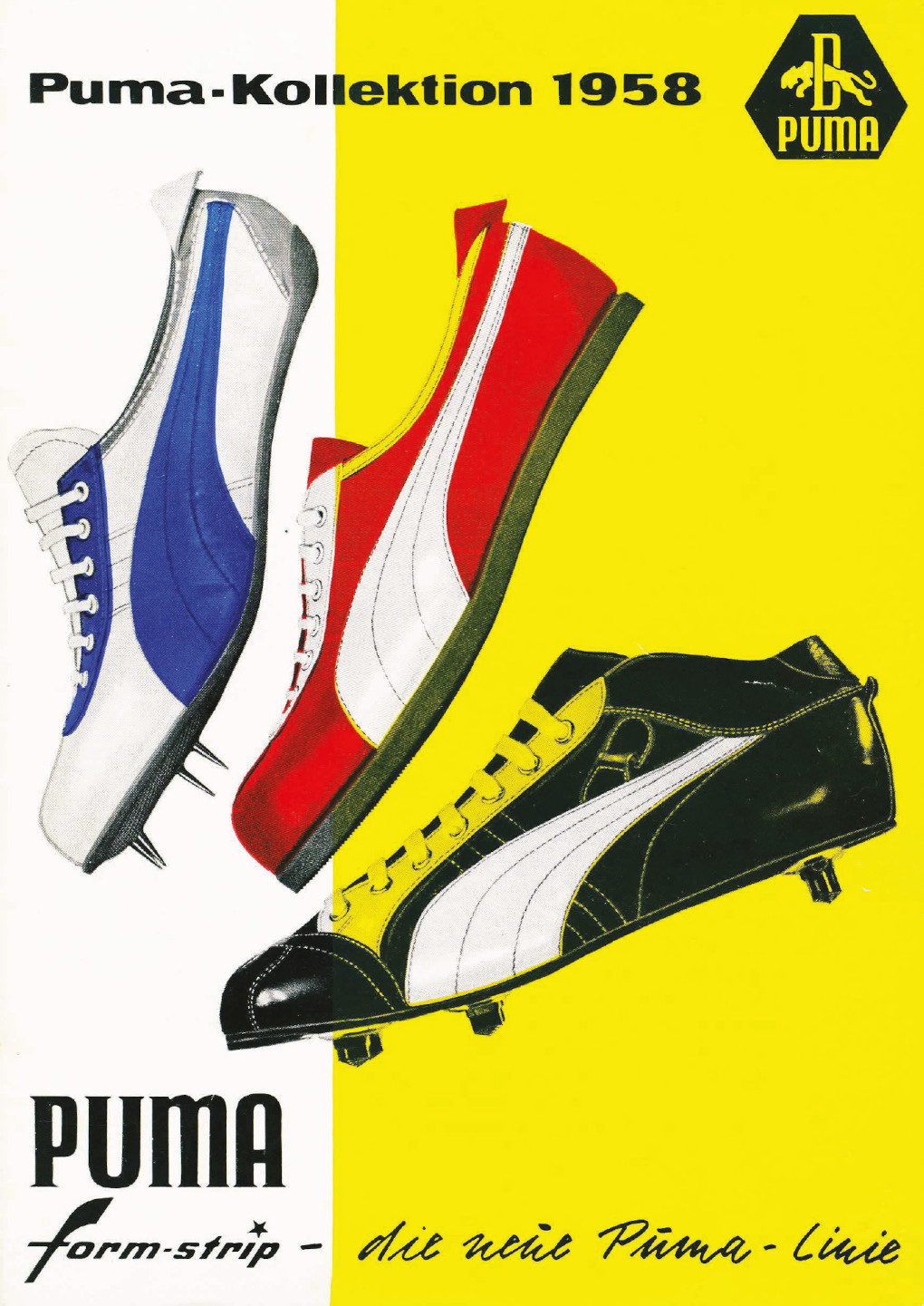
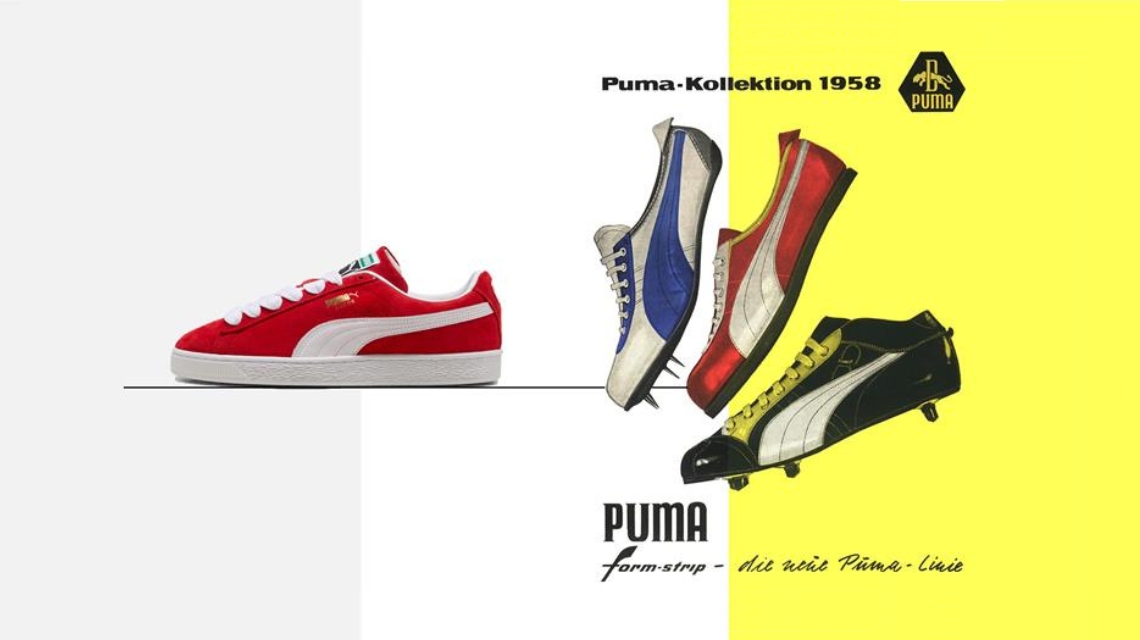
A PUMA catalogue from 1958 featuring the first FORMSTRIP shoes.
“A FORMSTRIP shoe cradles the foot securely while not compromising on the range of motion and without adding too much pressure. It also prevents twisting the ankle or stretching the leather too much to the side or towards the heel,”
the product description said at the time.
the product description said at the time.
The added benefit of the FORMSTRIP was that every PUMA shoe became immediately recognisable and distinctive. Even from the grandstands or on the (still) black-and-white TV, it was easy to spot an athlete in PUMA shoes thanks to the high-contrast colours of the FORMSTRIP and the other shoe materials.
Because it was possible to create the FORMSTRIP in different colors, it also worked as a very recognisable and fashion forward design element and it was introduced throughout PUMA’s Footwear range. Later, graphical representations of the FORMSTRIP also made it onto many PUMA products in Apparel and Accessories.
Because it was possible to create the FORMSTRIP in different colors, it also worked as a very recognisable and fashion forward design element and it was introduced throughout PUMA’s Footwear range. Later, graphical representations of the FORMSTRIP also made it onto many PUMA products in Apparel and Accessories.
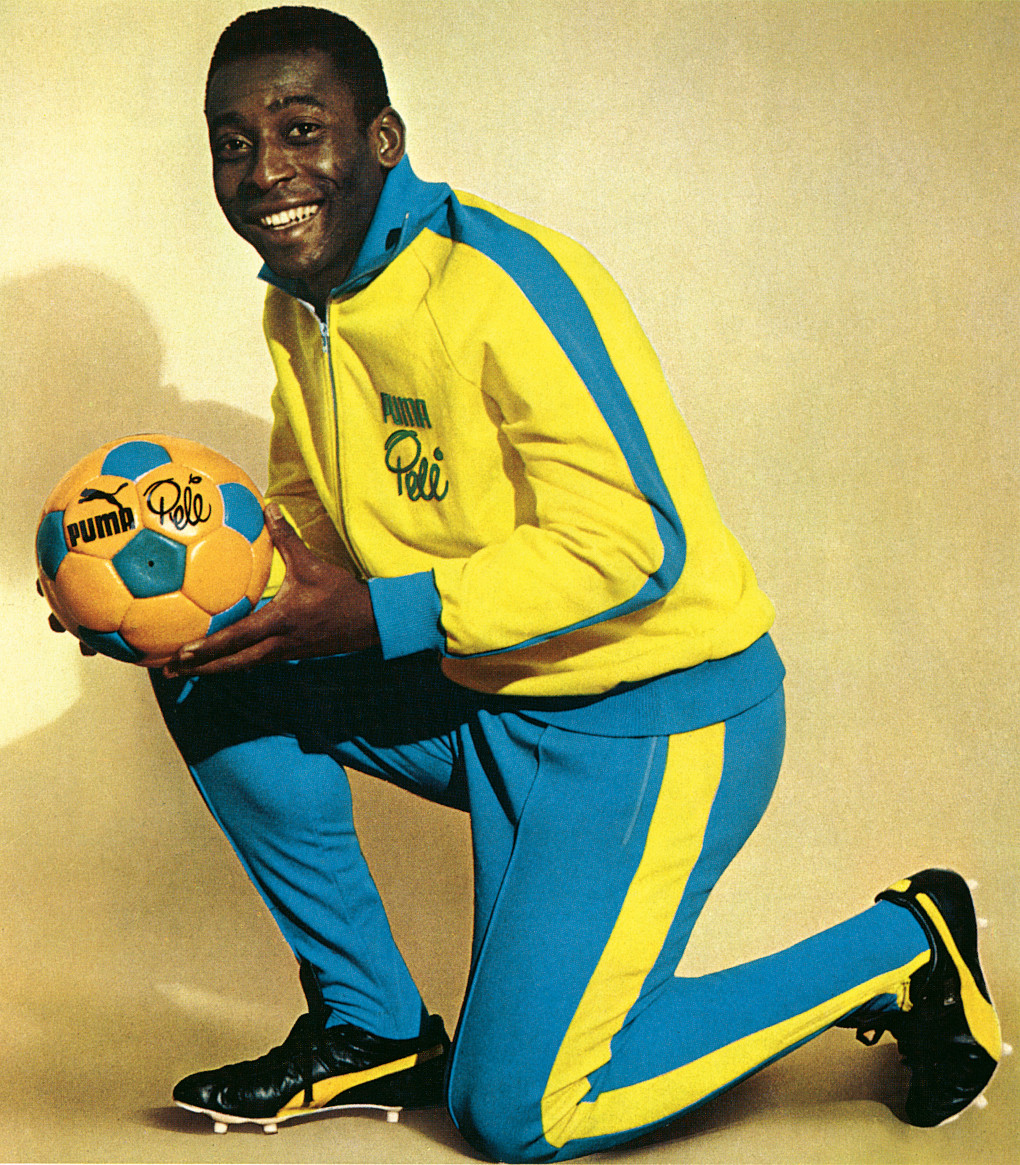
Pelé wearing PUMAs iconic T7 tracksuit with the FORMSTRIP in 1971
The boots for the 1958 World Cup were a big success for PUMA as they were very visible on pitch and drew attention to the brand. The Brazilian players, who won the tournament, also praised the boots with the FORMSTRIP for their performance credentials.
“For the first time in our history, we have won the World Cup. We are excited to tell you, that the PUMA Football boots have been a big part of this success, as they gave us a big advantage,”
an ad signed by the players of Brazilian team said after the event, including the team’s rising star, the 17-year-old Pelé.
an ad signed by the players of Brazilian team said after the event, including the team’s rising star, the 17-year-old Pelé.
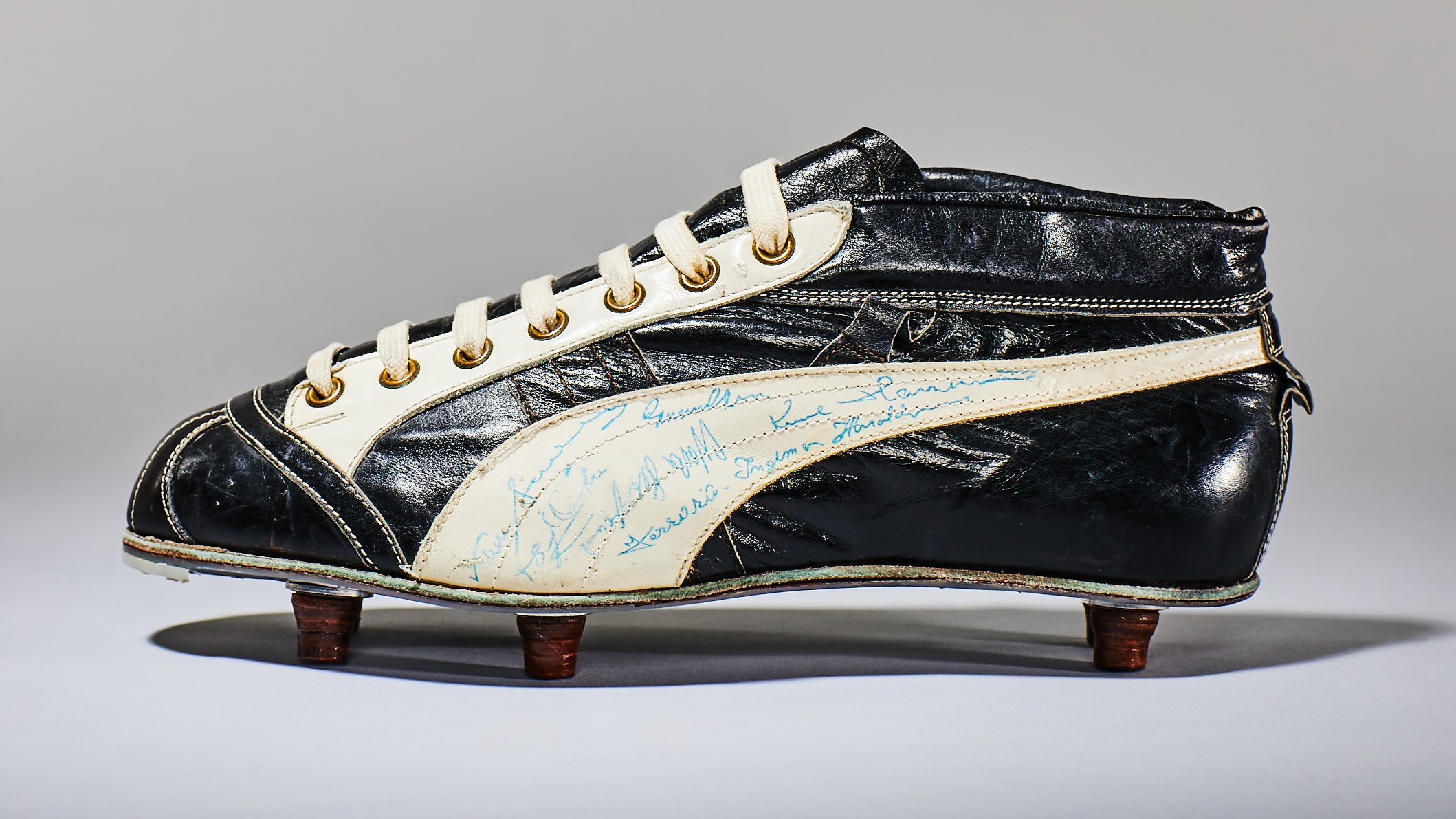
The 'PUMA WELTMEISTER' (German for 'world champion'), with which the Brazilian team won the tournament.
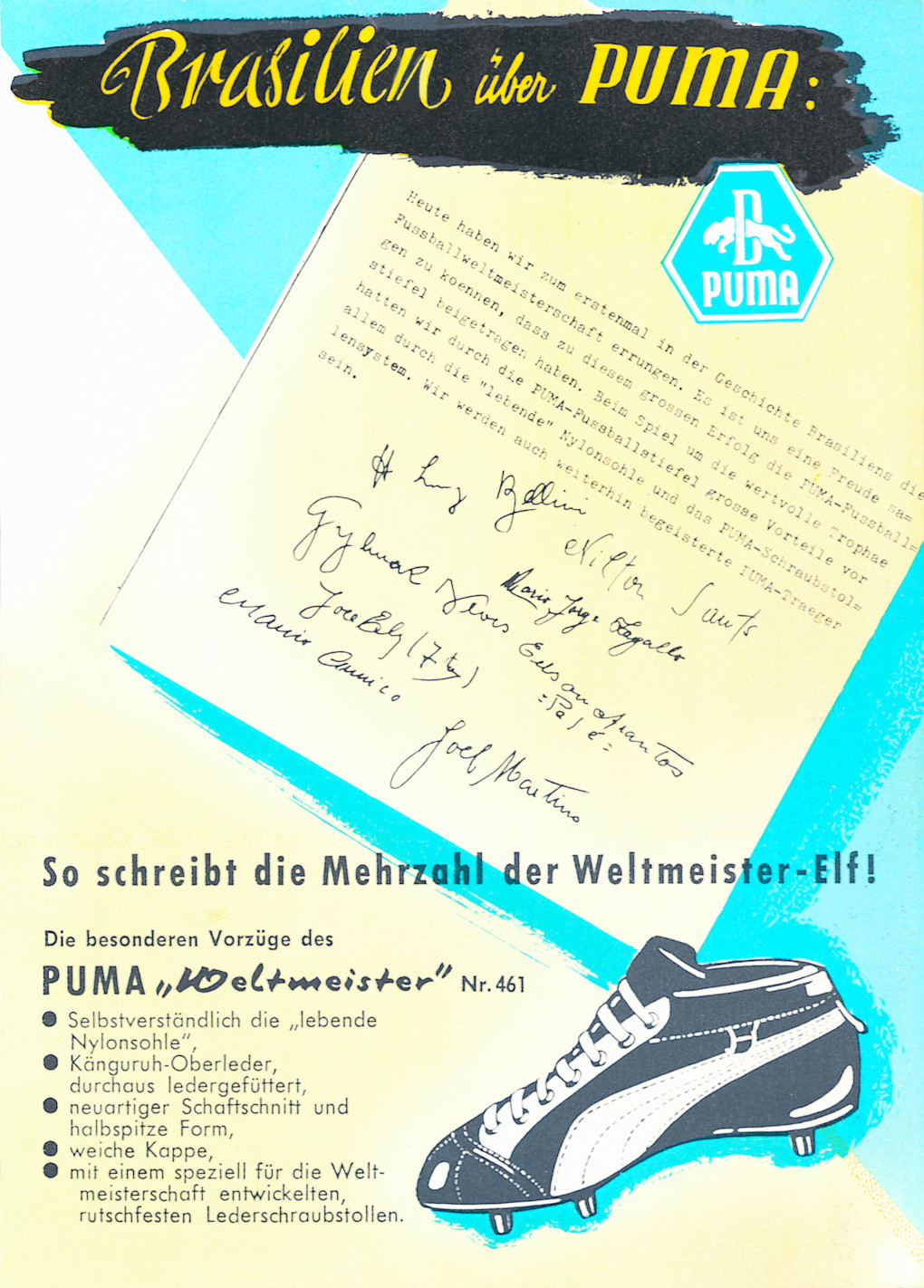
Ad signed by the players of Brazilian team, including Pelé, after the event
From then on, the FORMSTRIP was visible whenever PUMA athletes took centre stage, whether it was when Tommie Smith raised his fist in his historic silent gesture at the Olympic Games in 1968, when a 17-year-old Boris Becker won Wimbledon for the first time in 1985 or when Usain Bolt set his unbelievable 100 meter world record in 9.58 seconds in 2009.
So next time you see someone on the street wearing PUMA sneakers, think about the long heritage of the PUMA FORMSTRIP!
Catch up now speaks more languages
To enable as many users as possible to connect with us and be part of our world, we offer CATch up in English, German, French, and Spanish. Please note that these translations are automated and may contain errors.