More than a player: Johan Cruyff
How legendary PUMA player Johan Cruyff reinvented the game
February 12, 2026
Some footballers win matches. Johan Cruyff changed the game itself.
“With his style of play, his football philosophy, and his rebellious spirit, Johan Cruyff was not only the perfect PUMA partner. He inspired generations,”
Helmut Fischer, founder of the PUMA Archive and also known as Mr. PUMA.
Helmut Fischer, founder of the PUMA Archive and also known as Mr. PUMA.
To watch Cruyff play was to watch football being redefined in real time. Just like a real puma, he didn’t dominate through brute force or speed alone – he relied on intelligence, space, timing, and movement. Every touch carried intent and every run rewrote expectations. Many consider him to be the most intelligent footballer of all time. Watching him play was like watching someone solve a problem before anyone else even realized it existed.
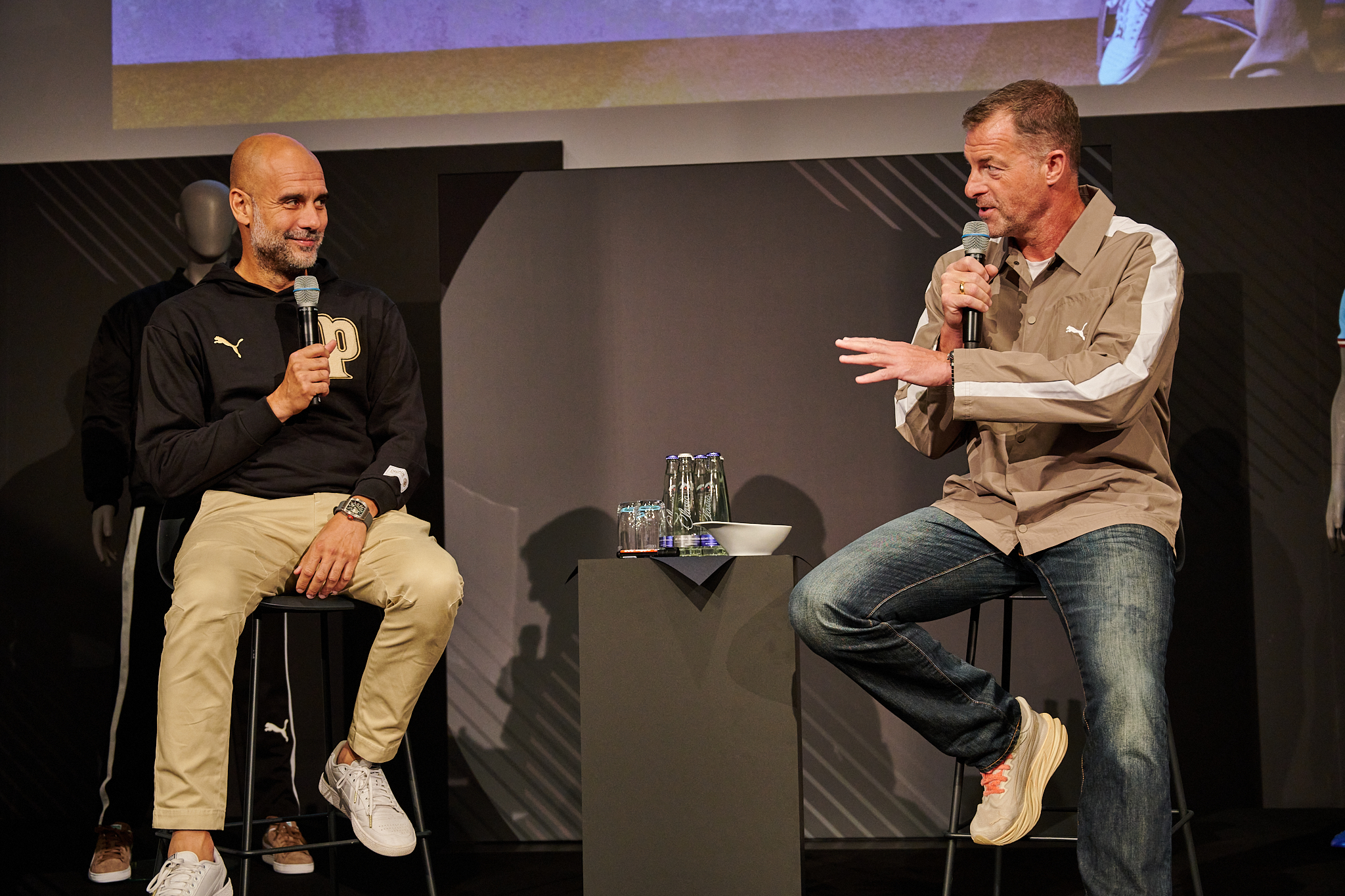
By the early 1970s, Cruyff was already a phenomenon. In 1973, he became the most expensive transfer in football history when he moved to FC Barcelona for six million Dutch guilders (approximately three million US dollars). With the Dutch national team, Cruyff didn’t just elevate the club, he introduced “Totaalvoetbal” (or “Total Football” in English), a philosophy where any player can take over any position, allowing the team to move and adapt as one unit. This fluid, collective style has shaped modern football and influenced generations of players and coaches. Pep Guardiola, one of the game’s most successful managers, often refers to Cruyff as his greatest inspiration and teacher.
By the early 1970s, Cruyff was already a phenomenon. In 1973, he became the most expensive transfer in football history when he moved to FC Barcelona for six million Dutch guilders (approximately three million US dollars). With the Dutch national team, Cruyff didn’t just elevate the club, he introduced “Totaalvoetbal” (or “Total Football” in English), a philosophy where any player can take over any position, allowing the team to move and adapt as one unit. This fluid, collective style has shaped modern football and influenced generations of players and coaches. Pep Guardiola, one of the game’s most successful managers, often refers to Cruyff as his greatest inspiration and teacher.
Only PUMA Will Do: The Two Stripes that Changed Everything
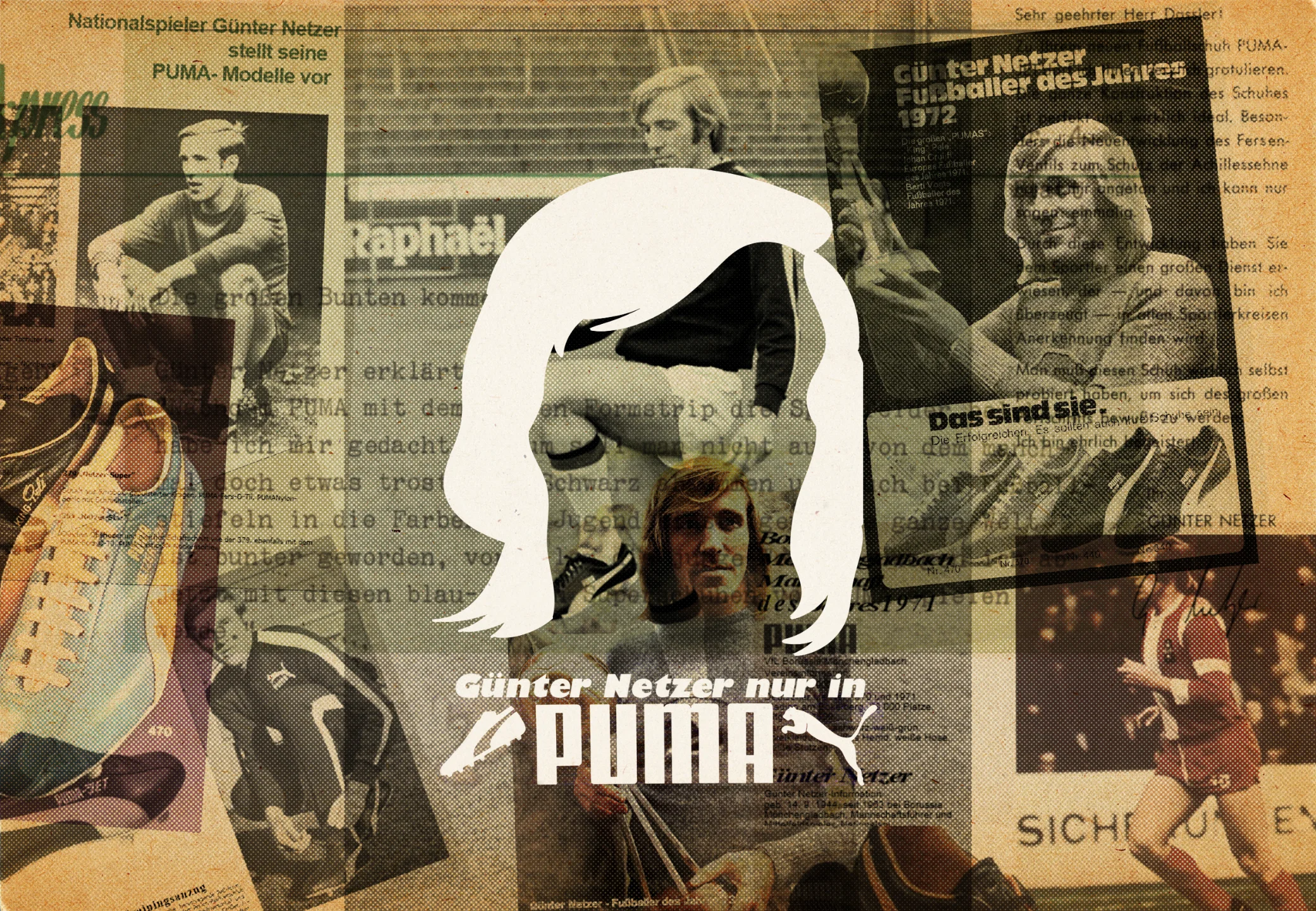
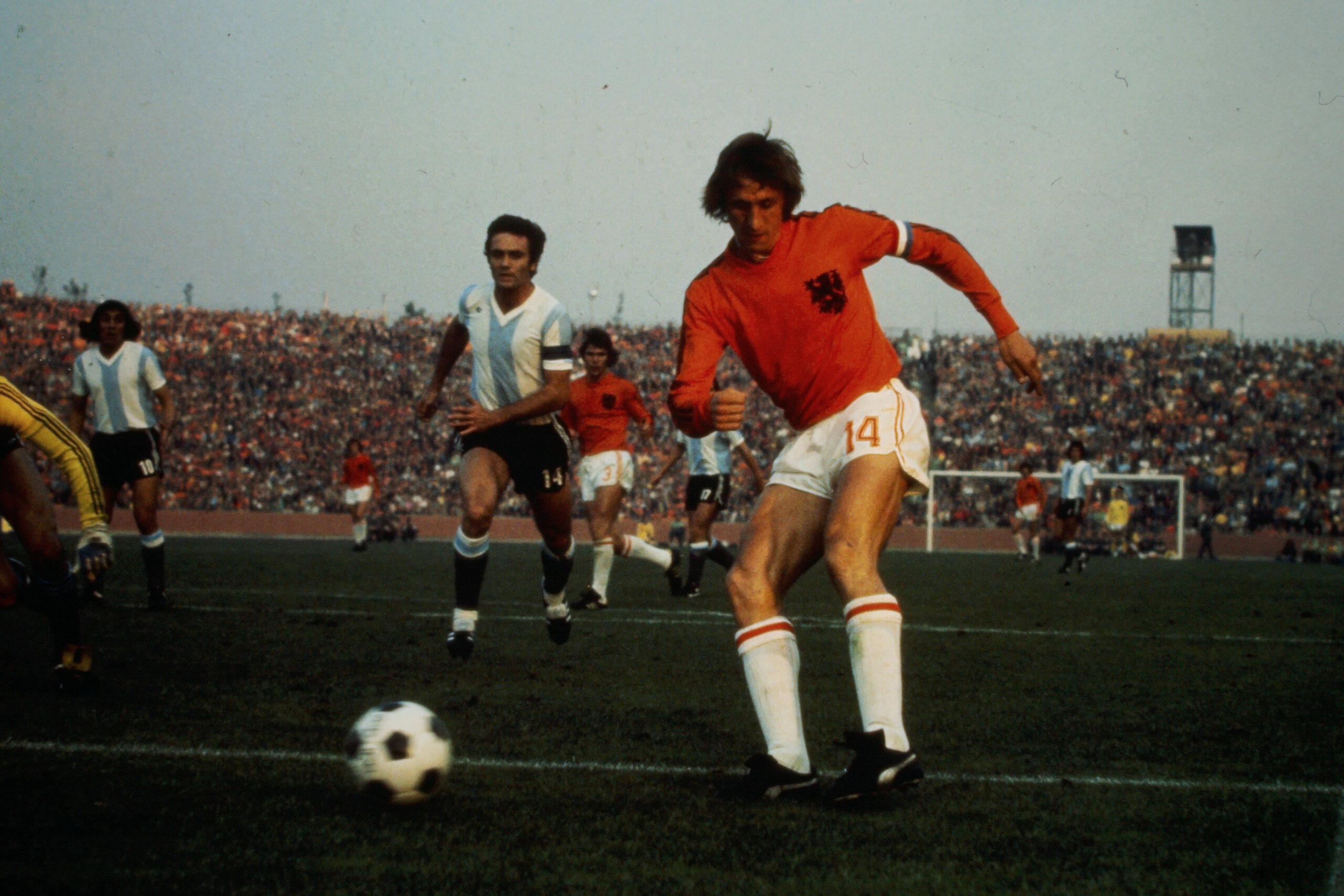
The 1974 World Cup became the defining stage for a moment that perfectly captured Cruyff’s spirit. Johan Cruyff was a deeply committed PUMA ambassador. He loved the KING boots, trusted them, believed in them. And he refused to compromise on that connection even on football’s biggest stage.
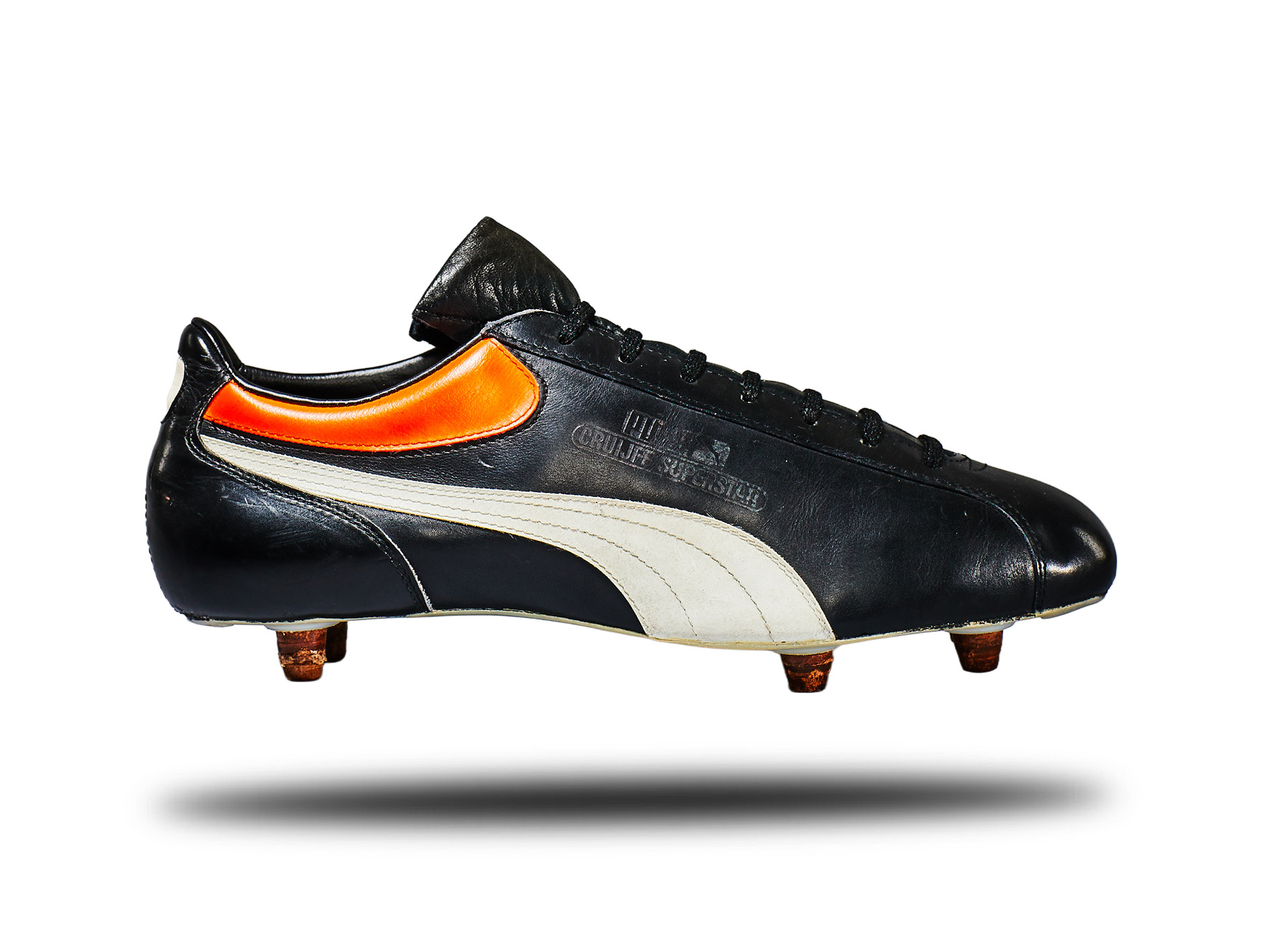
PUMA CRUIJFF-SUPERSTAR boot
So when the Dutch team had a different sponsor, he made a decision that was quietly defiant and unmistakably Cruyff. He had his three-striped shirt and shorts redone, so that it only sported two.
The clearest possible message.
The clearest possible message.
“Johan Cruyff has always been a PUMA player and refused to wear anything else,”
remembers Helmut Fischer.
“Back in the days, he could get away with that extra treatment, but, nowadays, I don’t think that he’d even be allowed to leave the dressing room.”
remembers Helmut Fischer.
“Back in the days, he could get away with that extra treatment, but, nowadays, I don’t think that he’d even be allowed to leave the dressing room.”
This wasn’t just about a fashion choice; it was about identity. It was about staying true to what you believe in, even (or, especially) when the whole world is watching.
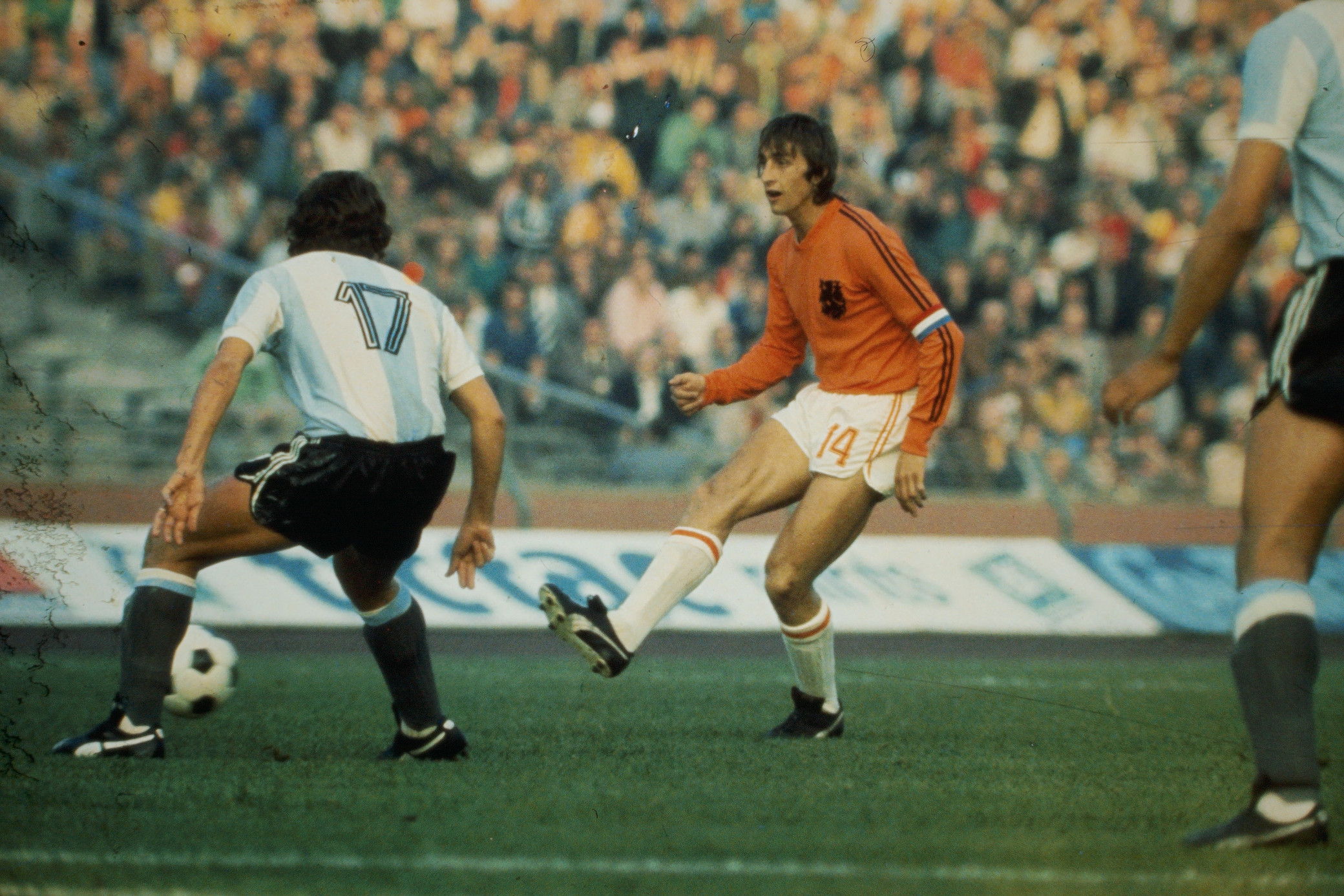
Johan Cruyff pictured during the 1974 World Cup wearing his personalized kit
The World Cup Final That Became His Stage
The 1974 World Cup final was the perfect stage for Cruyff’s ideas to meet with football’s biggest audience. From the opening seconds, he set the tone. Cruyff collected the ball, surged forward on a solo dribble, gliding past defenders before being brought down in the penalty area. The Netherlands scored, while the opponents hadn’t even had the chance to touch the ball yet.
Although the Netherlands would ultimately lose the final, a legend was born. Cruyff was named Player of the Tournament and later that year claimed his third Ballon d’Or. Decades later, he would be honoured as European Footballer of the 20th Century, a title that feels less like an award and more like an acknowledgment of fact.
The Turn That Lives Forever
Cruyff’s influence didn’t stop with philosophies and trophies. He also left the game with something tangible, something every young footballer learns almost instinctively. “The Cruyff Turn”.
Chances are you’ve seen this move more times than you can count. Simple in appearance, devastating in execution. This move involves pretending to make a pass, then pulling the ball behind your standing leg, spinning 180 degrees, and accelerating away in the opposite direction.
With its simplicity, effectiveness and unpredictability, the Cruyff turn remains one of the most commonly recognized dribbling moves in modern football. It continues to serve as a reminder that sometimes intelligence can outplay raw power.
More Than a PUMA Player
Three Ballon d’Ors. A revolutionary playing philosophy. A footballing school of thought that still defines modern play.Johan Cruyff didn’t just shape matches. He shaped minds.
Number 14 may belong to the past, but Johan Cruyff’s impact is timeless.