Bare Arms And Bold Ideas
PUMA’s Three-Decade Bet On Africa – Which Paid Off!
December 19, 2025
With the World Cup just weeks away in 2002, freshly crowned AFCON Champions Cameroon, who had already played in PUMA jerseys at the World Cup in 1998, were eagerly awaiting their turn to shine on a global stage.
But then it came. Sudden and unexpected. The FIFA said the very same PUMA-designed kit which they had wowed fans with during the January-February AFCON of 2002, was not allowed. For FIFA, PUMA’s design was simply unacceptable, and its backlash was swift and robust.
For Johann Adamsson, then Head of Sports Marketing and Sports Licensing at PUMA, FIFA’s decision was a massive shock. “We knew that our sleeveless green shirt was daring – I mean, for the first time in football history, it means the arms were bare, and the shoulders totally exposed.” But there was actually nothing written in the rules at the time which said that this was not allowed.
The brand was locked in a fierce and public regulatory battle with football’s most powerful institution.
The brand was locked in a fierce and public regulatory battle with football’s most powerful institution.
“We were extremely taken aback,” Adamsson says. “We felt FIFA had completely missed what we were trying to do.”
What PUMA had done was introduce a new way of thinking into football. Until then, footballers had simply dressed as footballers. PUMA challenged this norm, asking an uncomfortable question: why shouldn’t footballers also dress like athletes?
PUMA showed resilience. After examining FIFA’s regulations line by line, the brand realised it still had space to act. The solution kept the shirt’s original form, adding only a lightweight black mesh sleeve. It was a remarkable turnaround – that is still remembered today.
PUMA showed resilience. After examining FIFA’s regulations line by line, the brand realised it still had space to act. The solution kept the shirt’s original form, adding only a lightweight black mesh sleeve. It was a remarkable turnaround – that is still remembered today.
A Continent That Welcomed Change
PUMA’s designers were looking to introduce speed, adaptability and their bounding drive and passion for creative thinking into their designs. And here Africa provided the ideal environment for all of this to flourish.“I really do believe this is what helped make it all work so well,” Adamsson explains. “The whole feeling around African football at the time was a really powerful sense of excitement. African football was vibrant, joyful, emotional, confident. All this was brilliantly aligned with what we as PUMA stood for as a sports brand – it mirrored PUMA´s identity.”
But for Adamsson, it was Africa’s openness which was just as much as its aesthetic power.
But for Adamsson, it was Africa’s openness which was just as much as its aesthetic power.
“We found the African federations easy to work with, because change and innovation was really encouraged. People just loved new ideas and we in turn loved this about them.“
It was a culture of fast decision-making, where approval chains were short.
With an ever-growing confidence in its freedom to be creative, PUMA went on to expand its range of African partnerships throughout the 2000s and early 2010s.
It was a culture of fast decision-making, where approval chains were short.
With an ever-growing confidence in its freedom to be creative, PUMA went on to expand its range of African partnerships throughout the 2000s and early 2010s.
Ghana: From Breakthrough to Belief
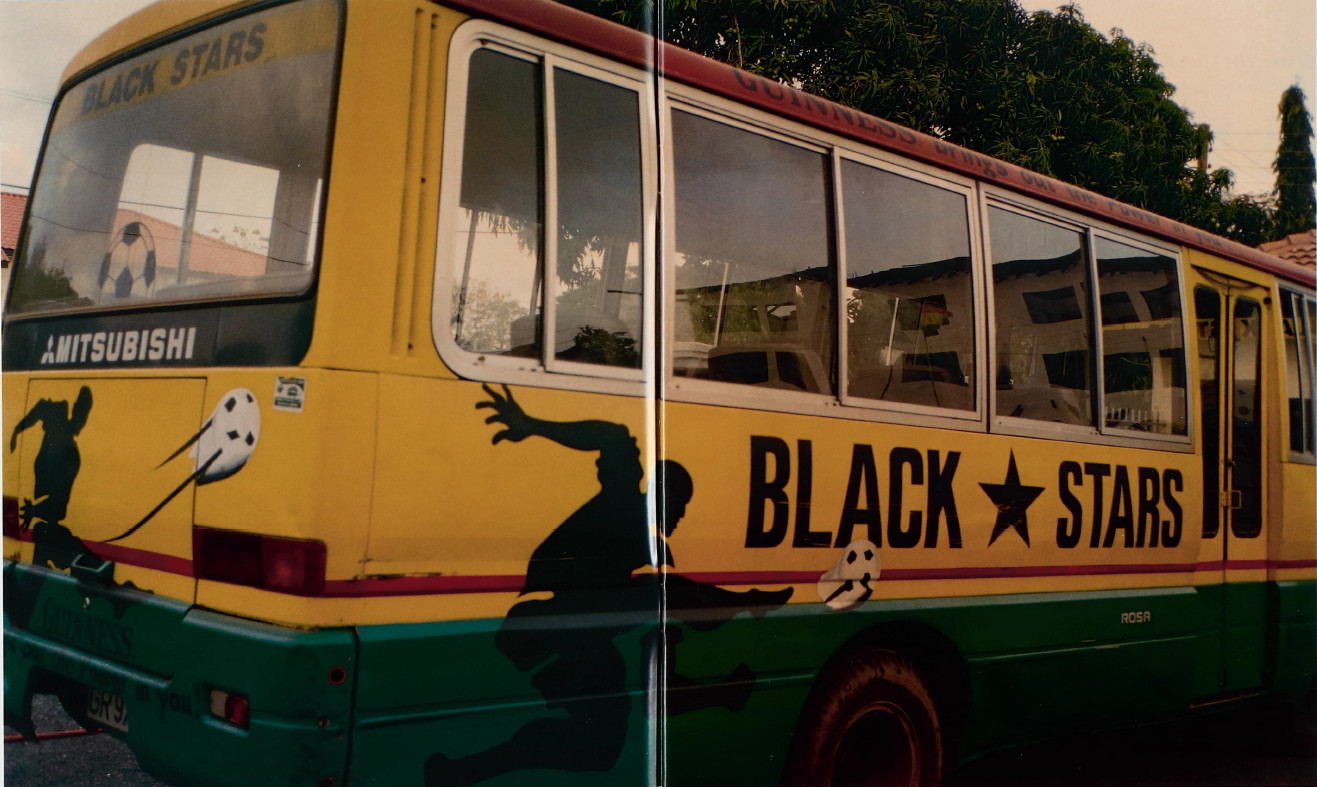
Here one of the most successful relationships was with Ghana, with PUMA supplying kits at three consecutive World Cups. This includes 2006 in Germany, 2010 in South Africa and 2014 in Brazil.It was the strongest period in Ghana’s modern international history, with the nation on fire for football. Ghana rose rapidly – qualifying for its first World Cup in 2006, reaching the knockouts and finishing second behind Italy in the group stage. In 2010, it again progressed from the group stage behind Germany, before earning a dramatic 2–2 draw against them in 2014. No longer a small player, Ghana had become a formidable contender in its own right.
Egypt was a very different, but equally significant part of PUMA’s African involvement. Rather than World Cup success, Egypt mattered because it dominated African football, winning the Africa Cup of Nations three times in a row in 2006, 2008 and 2010.
Egypt was a very different, but equally significant part of PUMA’s African involvement. Rather than World Cup success, Egypt mattered because it dominated African football, winning the Africa Cup of Nations three times in a row in 2006, 2008 and 2010.
That achievement cemented PUMA’s association with winning football in Africa’s most important competition.
Morocco: A New African Benchmark
Another key moment came with Morocco, when in 2022, with its players all dressed in a PUMA kit, became the first African team ever to reach a World Cup semi-final.It proved an incredible event for the country, as the team managed to even knock out the established teams of Belgium, Spain and Portugal.
But the event was also monumental for PUMA, as it delivered an enormous global visibility, totally reshaping how African teams were perceived.
Morocco was not just seen as enjoying an unexpected run of luck, but put in a controlled, impressive organised and highly professional performance.
PUMA had done it. It had stayed for the long haul, standing its ground for three decades investing into African football. From Cameroon’s defiance, through Ghana’s consistency and Egypt’s dominance, to Morocco’s breakthrough, the PUMA / Africa relationship was built slowly but surely, through hard-work, commitment and risk-taking.
Today the partnership between PUMA and African football is as strong as ever, perhaps most evident in the upcoming AFCON. With 24 teams, six host cities and nearly a month of football, AFCON is CAF’s biggest shop window.
PUMA had done it. It had stayed for the long haul, standing its ground for three decades investing into African football. From Cameroon’s defiance, through Ghana’s consistency and Egypt’s dominance, to Morocco’s breakthrough, the PUMA / Africa relationship was built slowly but surely, through hard-work, commitment and risk-taking.
Today the partnership between PUMA and African football is as strong as ever, perhaps most evident in the upcoming AFCON. With 24 teams, six host cities and nearly a month of football, AFCON is CAF’s biggest shop window.
AFCON 2025: PUMA and African Football, Continuing the Journey
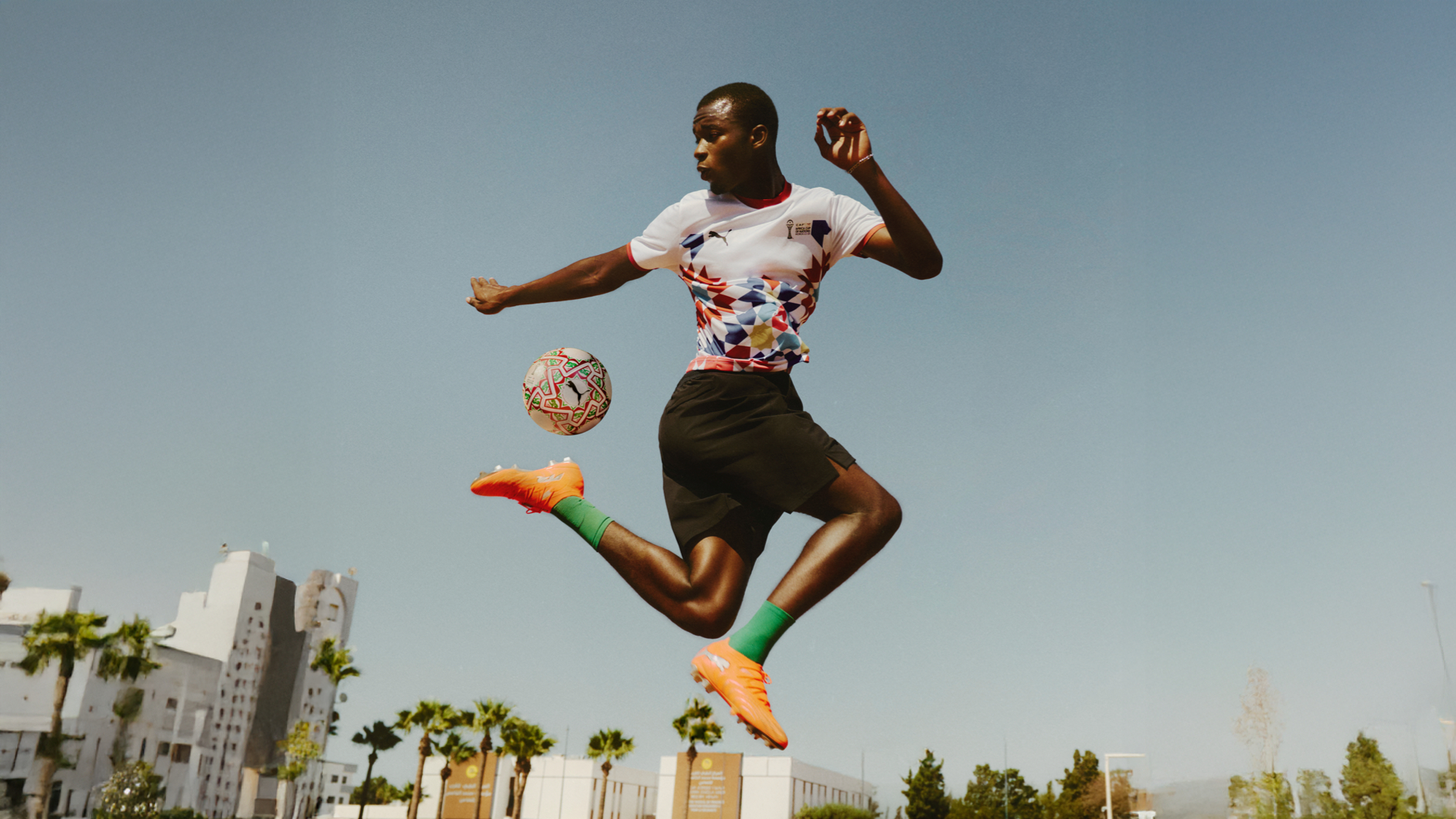
PUMA is the official technical supplier and match ball provider of the TotalEnergies CAF AFCON Morocco 2025. This year’s host nation is Morocco, which will once again be proudly wearing PUMA, as will the most successful AFCON nation in history, Egypt. Meanwhile Senegal, one of the continent’s strongest modern sides, are another dedicated PUMA team.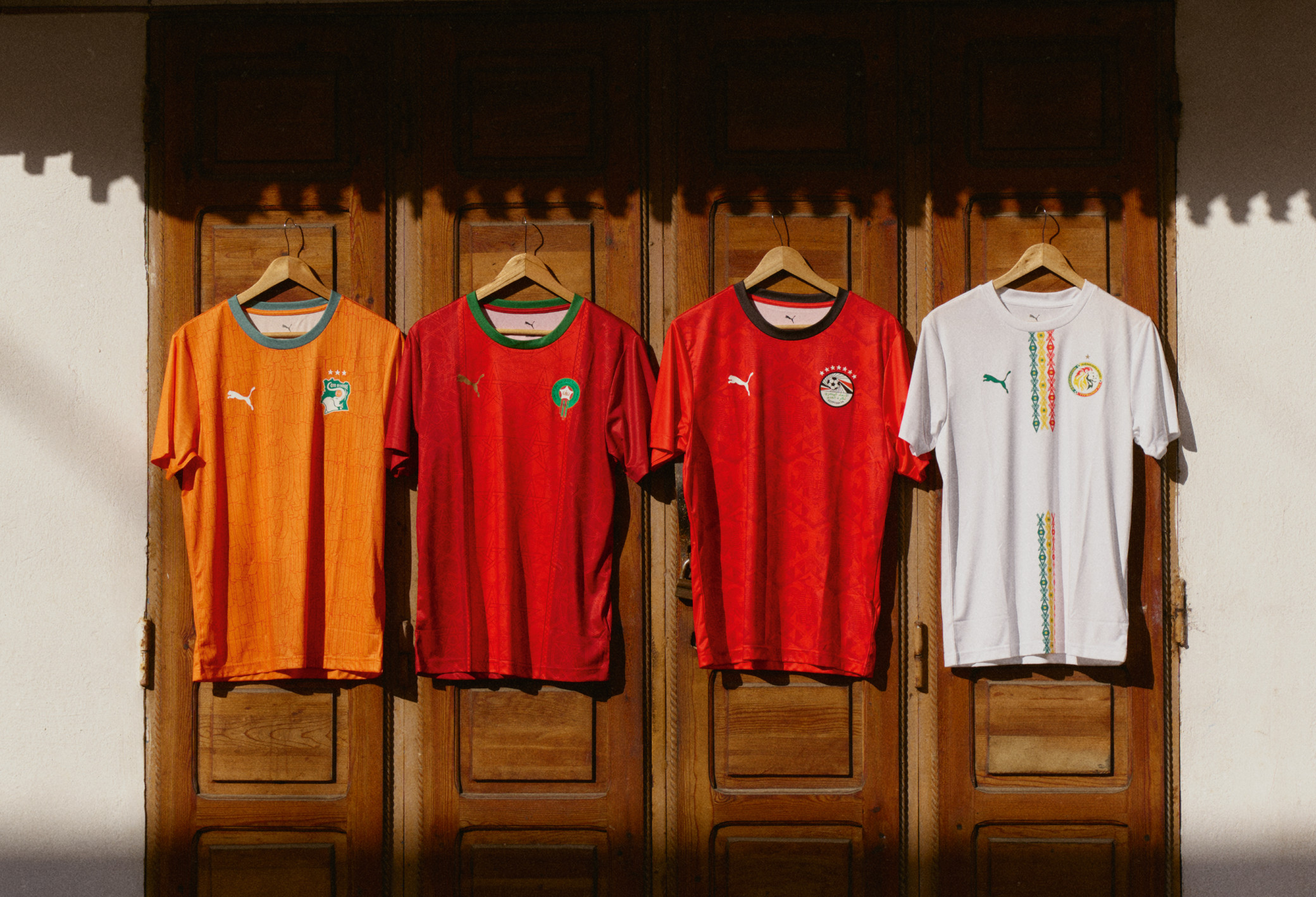
So when TotalEnergies CAF AFCON Morocco 2025 starts on 21 December, PUMA certainly won’t be lurking in the background. No – it will be front and centre – on the hosts, on heavyweights, and all over one the biggest football competition of the continent which it fell in love with.