Mastering the Moment: The Rise of Sport Psychology
From pressure moments to lifelong skills, Sport Psychologist Babett Lobinger on mental strength, old stigma and why its impact reaches far beyond.
November 29, 2025
At 16, she was sponsored by PUMA, competing in 400-metre hurdles races in track and field. Years later, Dr. Babett Lobinger is one of the leading sports psychologist in German football. Every Bundesliga coach trained within the German system has learned from her, as have generations of students at the German Sport University Cologne. From managing high-pressure moments to why it’s never too early to start – discover one of the most intriguing aspects of an athlete’s world: sport psychology.
Flashback to September 16th – Armand “Mondo” Duplantis stands alone. In the middle of the buzzing Japan National Stadium. With 53,000 eyes fixed on him. It’s his third attempt in the pole vault final, chasing another world record. Pure pressure.
Asked what an athlete like Mondo can rely on in such a high-stakes moment, Dr. Lobinger explains.
Asked what an athlete like Mondo can rely on in such a high-stakes moment, Dr. Lobinger explains.
“In an ideal world, an athlete has already trained for this kind of pressure. They’ve rehearsed that ‘one last attempt’ feeling, so the moment isn’t new. The height stays the same – whether it’s your first or third try – but your thoughts can get in the way. That’s where it becomes crucial”.
One of the most important mechanisms here is routine – from breathing techniques to visualizing the run-up to self-talk. “These routines help shut out everything that doesn’t matter – the crowd, the noise, the expectations – and keep the athlete in their own rhythm. Every athlete has personal little tricks that vary a lot, Mondo probably has his own. Often those are the athletes closely kept secrets”.
For too long, these situations were described as, either you got the nerves or not. People were convinced it was something fixed. This mindset is something Babett Lobinger experienced herself on a very personal level, “at the beginning of my career, I almost always had to apologize for being a psychologist and say, ‘I don’t have a sofa with me either,’ and first explain what I´m actually doing behind all those myths.”
Such misconceptions have persisted for decades, even though sport psychology itself has been around far longer.
For too long, these situations were described as, either you got the nerves or not. People were convinced it was something fixed. This mindset is something Babett Lobinger experienced herself on a very personal level, “at the beginning of my career, I almost always had to apologize for being a psychologist and say, ‘I don’t have a sofa with me either,’ and first explain what I´m actually doing behind all those myths.”
Such misconceptions have persisted for decades, even though sport psychology itself has been around far longer.
The Roots of Sport Psychology
The first publications in sport psychology appeared already in the 1900s and 1910s. The field was closely connected to physical performance and driven by the central question of how people can achieve their best. “Not only in sports but also in professions like aviation – scientists quickly realized that our mind, emotions, and feelings have a significant impact on performance – which ultimately gave rise to the field of sport psychology” says Lobinger.Since the US has, as usual in science, been decades ahead in sport psychology, in most other parts of the world it was still barely on the radar. “In the 1990s at the Olympic Games in Atlanta, the US team arrived with around 30 sport psychologists. In the German team, you didn’t see anyone.”, Lobinger recalls.
The pioneers for German sport psychology years later were Dirk Nowitzki and Jürgen Klinsmann. While German basketball legend Dirk Nowitzki treated psychological techniques as completely normal in the early 2000s, Jürgen Klinsmann was the first coach of a German national football team to bring a sports psychologist to the 2006 World Cup. With the foundations laid, not only in Germany but worldwide, the mental side of performance has finally earned its place in elite sport. And the debate moved on from its necessity to the question of how – and at what stage – psychological skills should be developed.
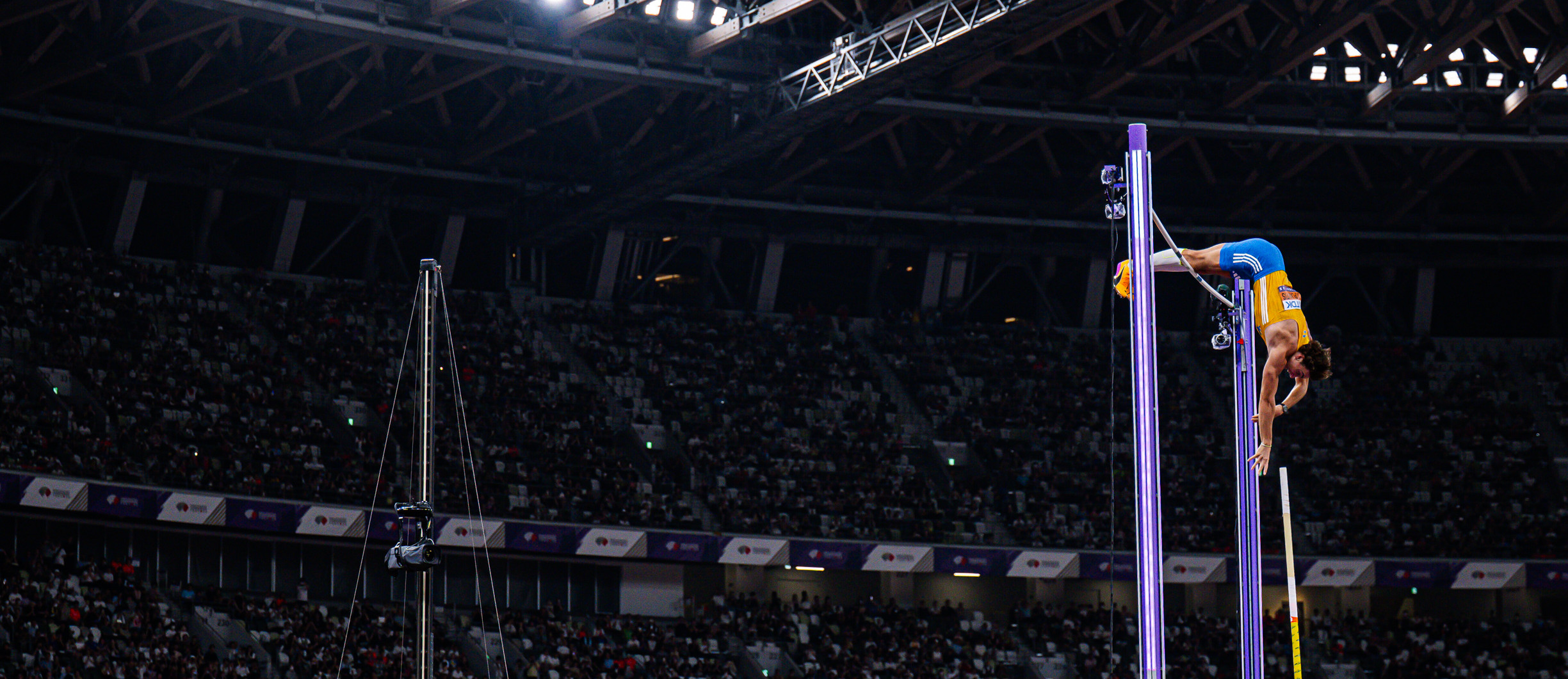
Armand "Mondo" Duplantis sets a new world record by clearing 6.30 meters on his third attempt in the pole vault final at the 2025 World Athletics Championships in Tokyo. Photo: Joel Marklund, ICON SPORT.
Why Psychological Work Starts Young – and Stays for Life
According to the expert, there is no minimum age to start working with your mind. “Psychological skills can be introduced surprisingly early – even at primary-school age. Children can already learn to sense how a movement feels, to handle nervousness and to develop teamwork”. All of this can then be taught in playful, age-appropriate ways, such as drawing or simple games.The advantage of starting early is that the risk of doing harm is minimal. “In my view, you can’t really ‘overtrain’ psychologically with young children if you do it playfully. Some methods won’t show results, of course, but that simply means trying a different one.”
While all of that supports athletic development, what is often even more important is that these skills matter in everyday life. Sport psychology often uses the image of a small toolkit – a safe place an athlete can fall back on when things get stressful. And whether those tools are used before a decisive penalty, in a school exam, or during a hectic week at work doesn’t really matter. They are skills that reach far beyond sport.
“And that’s the beauty of it,” Lobinger puts it. “The things you learn in sport are tools you can apply throughout your life.”
As Awareness Increases Across Society, Does Sport Psychology Benefit From This Trend?
Mental health and self-care have become topics people are finally willing to discuss openly – not only in society, but across sports. It’s a cultural shift that is increasingly shaping the world of performance. Much has already changed, yet elite sport is still marked by the old stigma that you must handle everything on your own.As Dr. Lobinger reflects, the sports world isn’t where it should be yet, but it is moving in the right direction.
“Thankfully, today’s generation of athletes – and society in general – is far more open. They understand that psychology plays an important role. That’s a big success.”