Les chaussures de football qu'il lui faut
How PUMA is rethinking the football boot for women
10 mars 2026
As women’s football became more professional, faster and more physical, a fundamental question emerged: is it really enough that female players simply wear a smaller version of an established men’s boot? For a long time, the industry’s answer was yes.
At PUMA , however, we knew that we had to look closer at what our athletes need. The company was one of the first players in the industry to make products specifically for female footballers, introducing a dedicated women’s football boot as early as 1971 with the Pelérina
At PUMA , however, we knew that we had to look closer at what our athletes need. The company was one of the first players in the industry to make products specifically for female footballers, introducing a dedicated women’s football boot as early as 1971 with the Pelérina
How football boots for female players are evolving today is explained by Katie Beech, Senior Product Line Manager Teamsport Footwear, and Rory Tatterton, Manager Research & Sport Science Innovation Footwear.
Katie Beech
Rory Tatterton
WHAT IS THE BIGGEST MISCONCEPTION ABOUT WOMEN’S FEET IN FOOTBALL? Katie: I think the biggest misconception is that men and women have the same foot anatomy and that they should use the exact same boots. This isn’t true. Female players have learned to adapt to men’s boots and find ways to make them playable. Whether that’s sizing down but still having empty space inside the boot, or needing to tie their laces super tight, many women have had to deal with playing uncomfortably.
A study by the European Clubs Association in 2023, which surveyed around 350 female players across Europe’s top leagues, found that 82 percent regularly experience discomfort from their football boots.
A study by the European Clubs Association in 2023, which surveyed around 350 female players across Europe’s top leagues, found that 82 percent regularly experience discomfort from their football boots.
AT WHAT POINT DID PUMA REALISE THAT WOMEN NEED DIFFERENT FOOTBALL BOOTS THAN MEN – AND WHAT EXACTLY CHANGED? Katie: PUMA first developed a football boot especially for women’s football back in 1971, called the Pelérina.
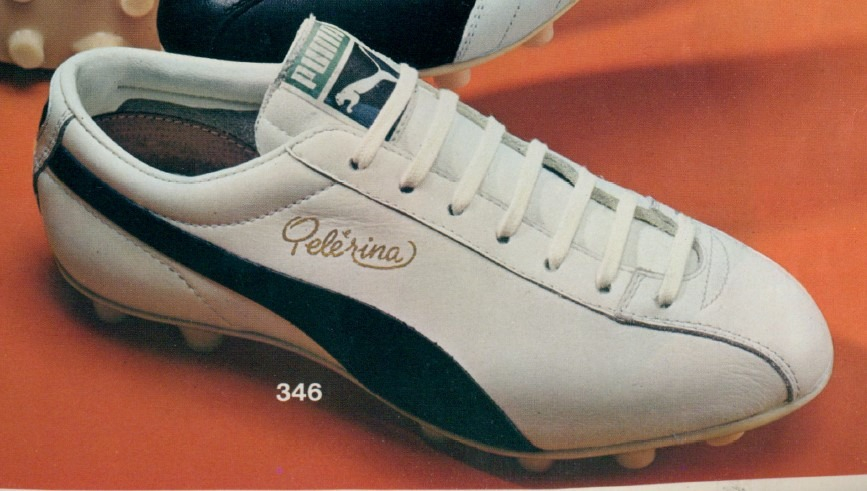
PUMA Pelérina from 1971
More recently, in 2021 we introduced our first iteration of Women’s Fit on the ULTRA boot franchise and then made additional updates for our 2025 Women’s Fit 2.0 on the FUTURE.
We’ve reduced volume around the forefoot and midfoot to fit better to her foot shape. We also added extra heel support to reduce slippage and improve comfort. The collar height was increased to ensure she feels secure and supported. And finally we’ve added in a second sockliner with reinforced arch support to help her feel more stable.
We’ve reduced volume around the forefoot and midfoot to fit better to her foot shape. We also added extra heel support to reduce slippage and improve comfort. The collar height was increased to ensure she feels secure and supported. And finally we’ve added in a second sockliner with reinforced arch support to help her feel more stable.
“I think it’s incredible that we can have a women’s boot that fits our feet and that we all feel comfortable in.”
Alex Greenwood , Defender at Manchester City on the progression of the women´s game
Alex Greenwood , Defender at Manchester City on the progression of the women´s game
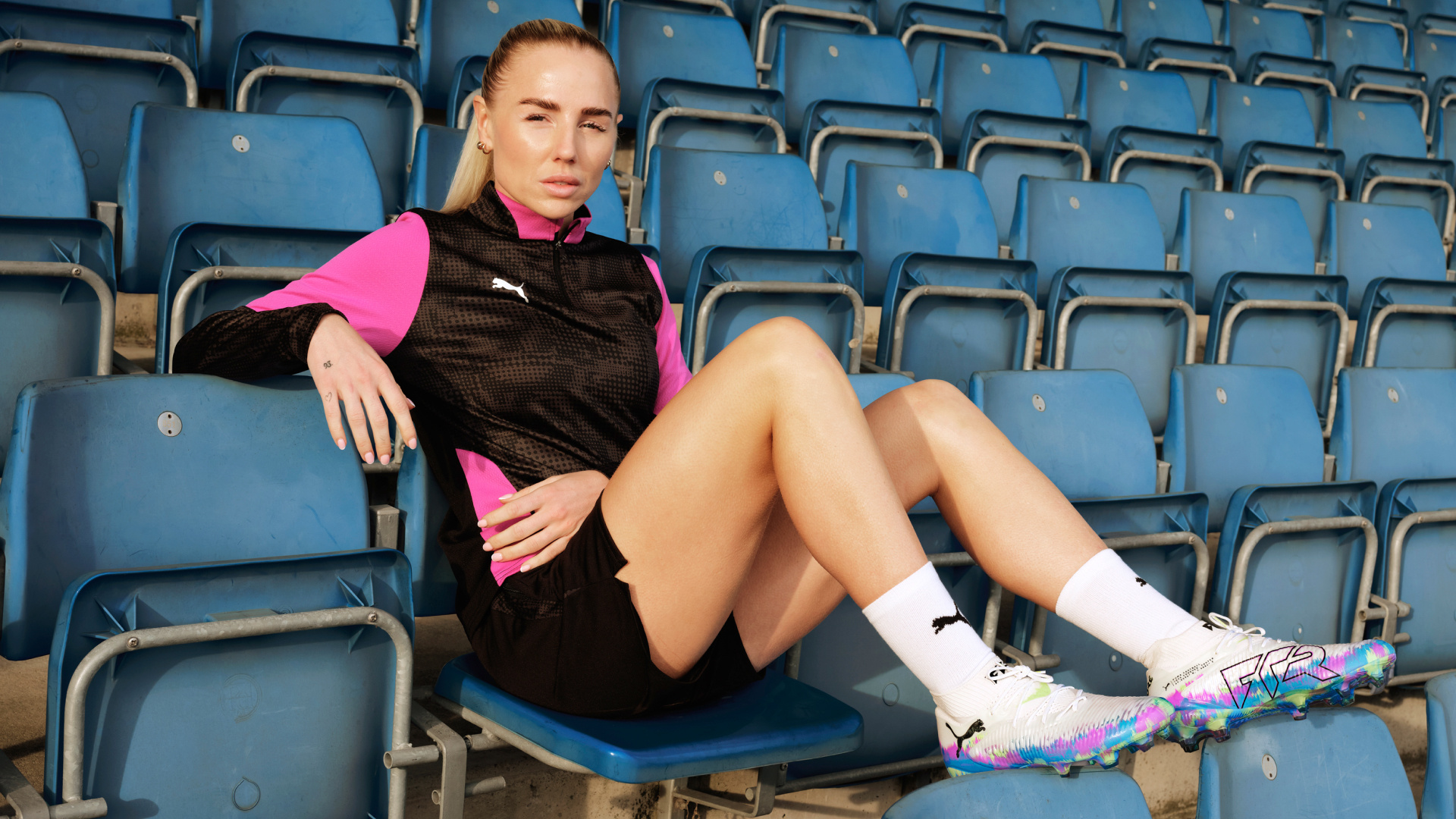
Alex Greenwood wearing the FUTURE 8 ULTIMATE FG Women’s Fit 2.0
WHAT ROLE DOES RESEARCH PLAY TODAY IN THE DEVELOPMENT OF FOOTBALL BOOTS FOR WOMEN? Rory: At PUMA we work with a range of partners and resources to ensure we are at the forefront of research and testing. We collaborate closely with our players, clubs and university partners to ensure we identify the most important issues to address and then validate our solutions with maximal depth.
This includes using extensive foot scan data and 3D motion capture systems from which we can extract the relevant kinetic and kinematic measurements for our female athletes.
Katie: Women’s is definitely a cornerstone for us at PUMA, especially in football. We are dedicated to always learning, researching, and evolving our product to ensure she is able to fully play at her best. A crucial step is to see more investment in female-specific research so that we are able to create data-driven product designs.
This includes using extensive foot scan data and 3D motion capture systems from which we can extract the relevant kinetic and kinematic measurements for our female athletes.
Katie: Women’s is definitely a cornerstone for us at PUMA, especially in football. We are dedicated to always learning, researching, and evolving our product to ensure she is able to fully play at her best. A crucial step is to see more investment in female-specific research so that we are able to create data-driven product designs.
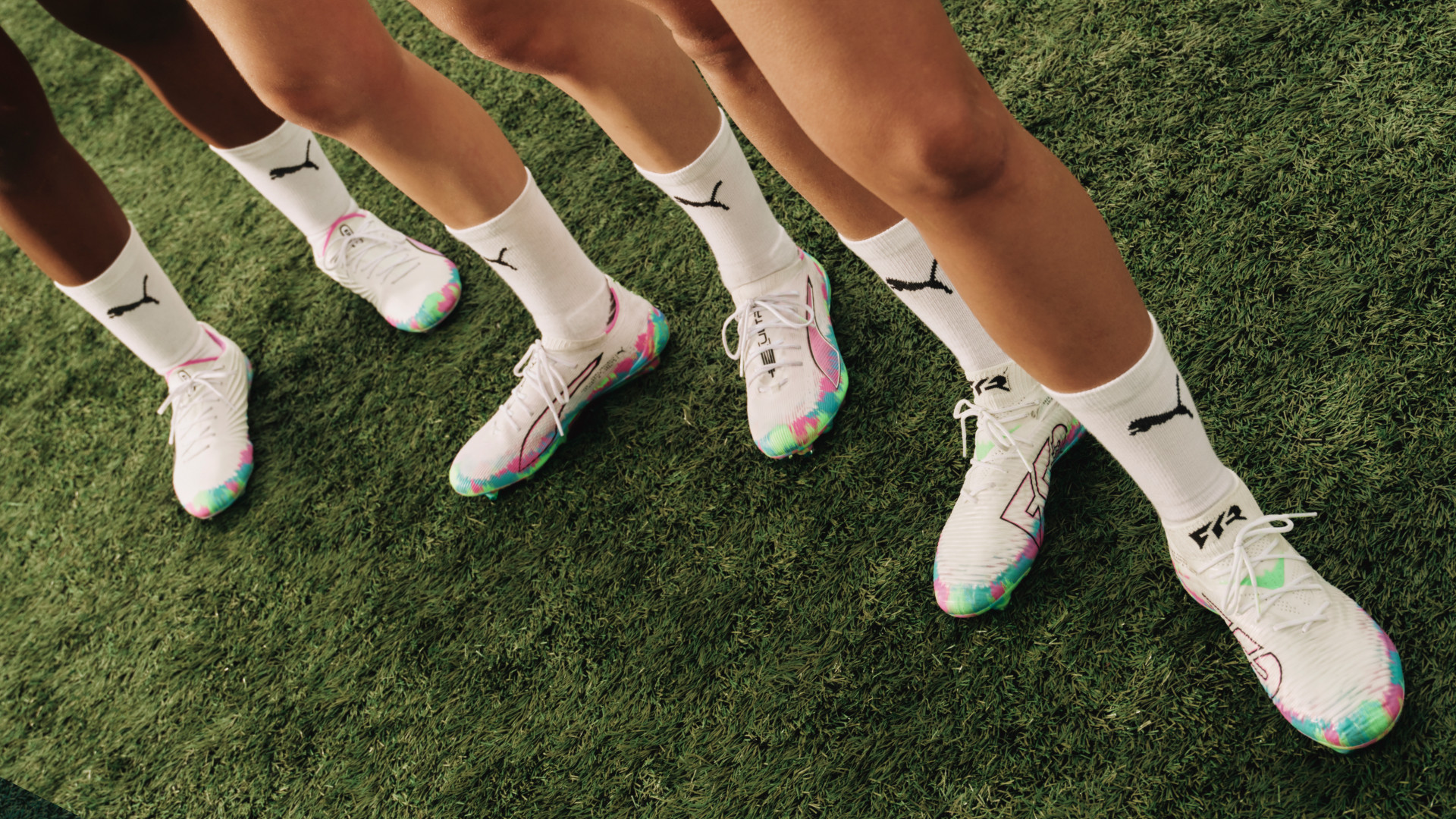
PUMA Women’s Fit 2.0 franchises: KING, ULTRA and FUTURE
DO DIFFERENCES IN PELVIC WIDTH AND Q-ANGLE PLAY A ROLE IN KNEE LOAD PATTERNS – AND DOES THAT INFLUENCE BOOT DEVELOPMENT?
Rory: The Q-angle, a measure related to knee alignment, is heavily cited as an anatomical difference between men and women that could influence knee loading, but it is not the only one. We also see differences in ACL size – the anterior cruciate ligament – as well as intercondylar notch width and more.
But in the end anatomy is just one piece of the puzzle and doesn’t even consider the hormonal, neuromuscular, environmental or equipment-related risk factors, all of which can impact knee loading. For the team here at PUMA, it is important to focus on what we can influence within footwear and how that can make an impact on athletes by mitigating risk factors for ACL injuries in our female players, which occur up to eight times more often in women than in men.
Rory: The Q-angle, a measure related to knee alignment, is heavily cited as an anatomical difference between men and women that could influence knee loading, but it is not the only one. We also see differences in ACL size – the anterior cruciate ligament – as well as intercondylar notch width and more.
But in the end anatomy is just one piece of the puzzle and doesn’t even consider the hormonal, neuromuscular, environmental or equipment-related risk factors, all of which can impact knee loading. For the team here at PUMA, it is important to focus on what we can influence within footwear and how that can make an impact on athletes by mitigating risk factors for ACL injuries in our female players, which occur up to eight times more often in women than in men.
CAN A SPECIFICALLY ENGINEERED BOOT CONTRIBUTE TO GREATER STABILITY AND INJURY PREVENTION – OR IS THAT EXPECTATION OVERSTATED? Rory: I actually think people often underestimate the impact that their footwear can have. Selecting the correct footwear for the correct surface, for example, is crucial to push your performance and mitigate injury risk.
When specifically looking at the female athlete, and the movement strategies they use compared to their male counterparts, it is obvious that we must design footwear with them at the centre.
Our PUMA Women’s Fit has gone a long way to solve several key issues for female athletes, and we have lots of exciting things in the pipeline.
When specifically looking at the female athlete, and the movement strategies they use compared to their male counterparts, it is obvious that we must design footwear with them at the centre.
Our PUMA Women’s Fit has gone a long way to solve several key issues for female athletes, and we have lots of exciting things in the pipeline.
CATch up est désormais disponible en plusieurs langues
Pour permettre au plus grand nombre d'utilisateurs possible de se connecter à notre plateforme et de faire partie de notre univers, nous proposons CATch up en anglais, allemand, français et espagnol. Veuillez noter que ces traductions sont automatisées et peuvent contenir des erreurs.