Accountability Starts on the Factory Floor
How audits help keep PUMA’s sustainability commitments real.
February 25, 2026
At PUMA, we hold ourselves and our suppliers to strict social, environmental, and safety standards. To make sure that our suppliers around the world adhere to these standards, we have a team of compliance experts in all our major sourcing regions who regularly visit our core manufacturing partners. PUMA also works with third‑party audit firms to independently make such audits. Just like any good sports match needs a neutral referee, our external auditors help ensure that our T1 and core T2 suppliers play by the rules.
But who are the people behind this work?
And can they tell us what actually goes on behind the factory door?
And can they tell us what actually goes on behind the factory door?
Meet Mujtaba Hussain.
He’s an independent third‑party sustainability auditor with LRQA, one of the firms PUMA works with to conduct supplier audits. He sat down with us to shed some light on how his role is critical to making sure that brands and their suppliers alike walk the talk when it comes to responsible business.The key word here? Independent. It means the audits are conducted by someone outside of the organisation being assessed- ensuring credibility, objectivity, and trust.
“Audits play a critical role in protecting global brands like PUMA while also creating value for their suppliers,” Mujtaba says. “They provide assurance, transparency and a common standard across complex global supply chains.”
Audits are not about control, they’re an important building block to drive continuous improvement.
“Audits can have a real, measurable impact on improving both environmental performance and ethical practices, especially when they’re part of an ongoing and data-led improvement process rather than a one-off inspection,” he explains.
“Audits have also supported organisations to review working hours arrangements and strengthen controls around ethical labour practices, helping improve transparency and consistency across operations.”
A Typical Day in the Life of an Independent Auditor
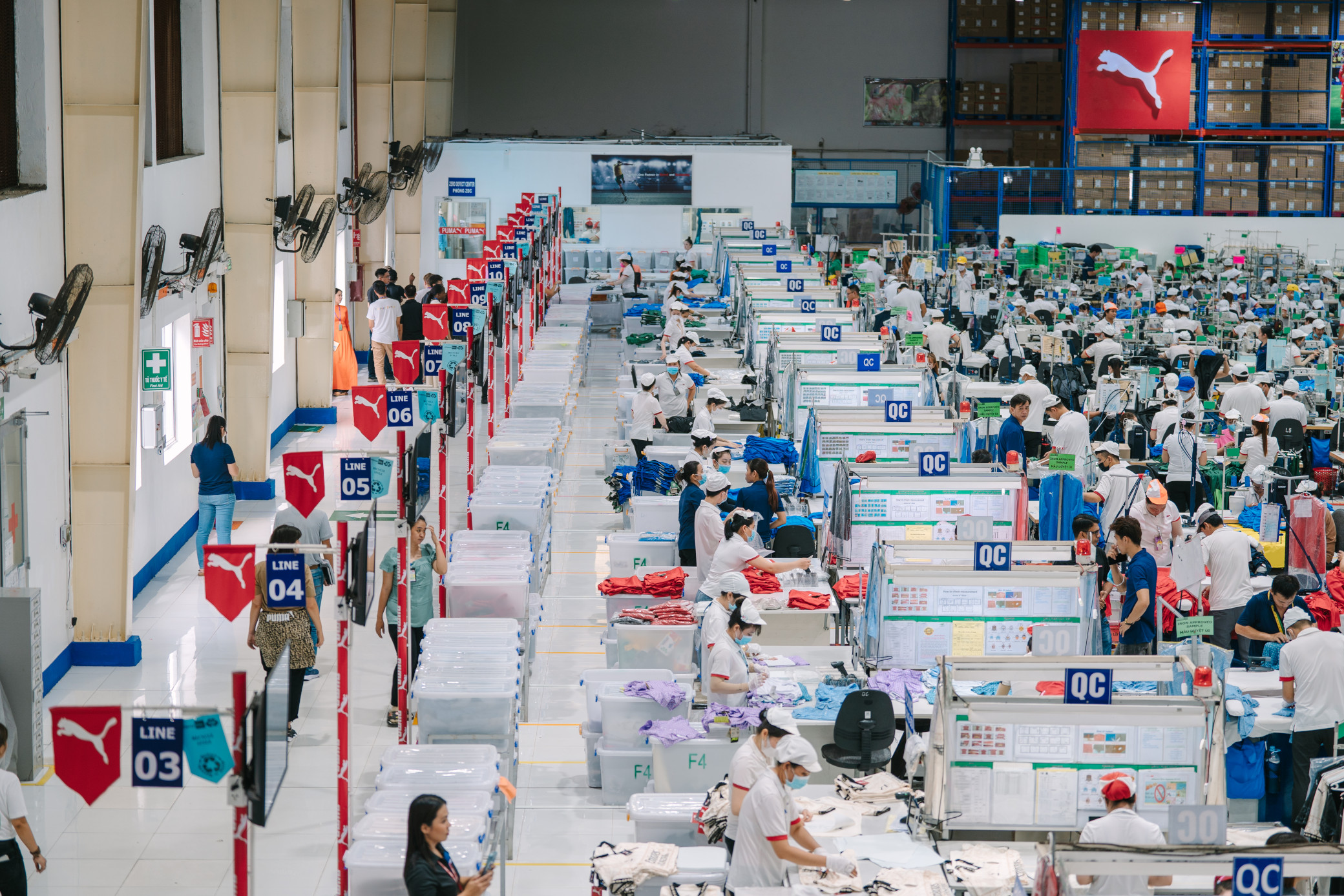
Long before a product ever reaches the shop floor, there’s a whole world behind the scenes making sure it’s produced responsibly. For Mujtaba Hussain, that world starts early – thousands of kilometres from PUMA’s headquarters – inside factories, warehouses and production sites across global supply chains.No two days are the same. But the structure is clear.
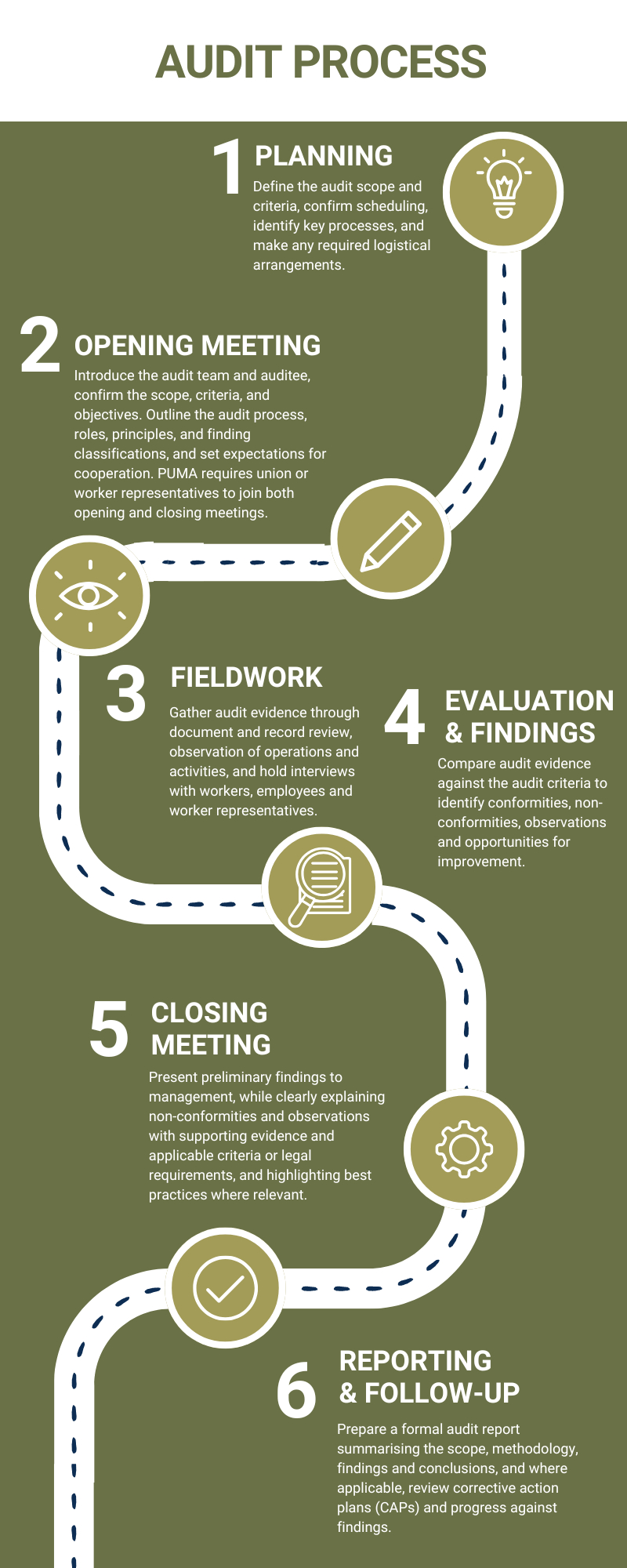
First: Setting the Tone
A typical audit day starts with conversations. Before any documents are opened or factory floors inspected, Mujtaba meets with site management to agree on the scope, standards and expectations of the audit.Mujtaba’s audits can cover a wide range of topics, from working hours and wages to health and safety, environmental management and human rights. The standards combine international frameworks, local labour laws and brand-specific requirements.
On the Ground
Once the introductions are done, it’s time for the detailed work. Mujtaba reviews records, inspects facilities and – most importantly – speaks directly with workers.Worker interviews are critical for Mujtaba, he says. “Speaking to workers directly provides a more accurate picture of actual working conditions.”
During this procedure, Mujtaba looks for indications of excessive overtime, gaps in documentation, limited training or weak safety procedures, all issues that would be in breach of PUMA’s guidelines.
Alongside these findings, he also keeps a close eye out for what PUMA defines as zero‑tolerance issues, such as child labour or forced labour. Any such violation results in the immediate failure of an audit. For new factories within the supply chain, this means they will not be allowed to produce PUMA goods, and for existing suppliers, all zero‑tolerance issues must be remedied. If existing suppliers do not manage to remediate these within 6 months, this will result in PUMA terminating the business relationship with them.
“The commitment of the factory’s management plays a critical role,” he adds. “Sustained improvement depends on leadership prioritising compliance, accountability and continuous improvements.” Across the industry, social compliance requirements and customer codes of conduct are now more clearly defined, better understood and more consistently applied than in the past.
These improvements reflect the impact of repeated audits, alongside the high compliance expectations of large global brands like PUMA and evolving industry standards more broadly.
Finally: Turning Findings into Action
Audits don’t end with a checklist. After gathering and verifying evidence, findings are evaluated against the relevant standards. At the end of the day, Mujtaba presents the results to the factory management in a closing meeting and informs PUMA if the factory meets the brand’s standards.If needed, Mujtaba and the supplier develop a corrective action plan to initiate further improvements. While auditors remain independent, they play a crucial role in ensuring expectations are clearly understood.
“A typical corrective action plan includes a clear description of the findings, the relevant legal standard reference, a root cause analysis, who will be responsible for implementing the improvement, as well as a target completion date and follow up comments with a close out date.”
Such action plans ensure that both brands and suppliers alike follow through with their promises.
Looking Ahead: The Future of Auditing
The future of auditing is evolving fast.“Auditing will become more technology-enabled and risk-based,” Mujtaba predicts, “With a stronger focus on supporting improvement at site level rather than being purely compliance driven.”
Technology is already reshaping how audits are conducted.
“Cloud-based platforms can support collaboration across multi-site audits, real-time data improves risk-based decision-making and continuous monitoring, and AI-enabled tools help streamline manual processes and reduce the risk of errors. These tools work hand in hand with auditing expertise – both within audit firms and in partnership with client site teams – to ensure insights are applied effectively and audit outcomes remain robust and credible.” Mujtaba adds.
The Bigger Picture
What keeps you motivated after years in the field? For Mujtaba, motivation comes from both impact and the discovery that each new audit brings.“Each audit provides insight into different cultures and industries, as well as management system standards, which keeps my work challenging and meaningful. Knowing that my work supports transparency, accountability and responsible business practices across global supply chains is a strong motivator.”
It’s a reminder that sustainability isn’t built in boardrooms alone. Many times, it starts with a conversation on a factory floor and someone, like Mujtaba Hussain, asking the right questions.
At PUMA, we are proud to work closely with people like Mujtaba.
Below you’ll find a quick visual breakdown of a typical audit process: