Les mouvements de mobilité réellement utilisés par les athlètes
La mobilité est indispensable, quel que soit le sport
21 février 2026
Bien qu'il s'agisse d'un terme à la mode dans le monde du fitness, les athlètes de haut niveau connaissent mieux que quiconque l'importance d'un entraînement adéquat à la mobilité. Réduction du risque de blessure, augmentation des performances et un corps en meilleure santé plus longtemps ? Nous sommes preneurs.
Lorsque nous parlons de mobilité, nous parlons d'entraînement pour la longévité et de maintien de notre niveau de vie. capacité à se déplacer avec aisance et contrôle au fil des saisons. Il s'agit d'atteindre son plein potentiel et de rester capable et compétitif tout au long de sa carrière sportive et de sa vie.
Cela semble important, car ça l'est. Approfondissons un peu ce type de formation.
Cela semble important, car ça l'est. Approfondissons un peu ce type de formation.
Qu'est-ce que c'est ?
La mobilité est la capacité de déplacer une articulation dans toute l'amplitude de mouvement utilisable, avec contrôle et force. À ne pas confondre avec la flexibilité, la mobilité décrit la capacité à effectuer des mouvements actifs et contrôlés.Le maintien de votre mobilité vous permet de bouger votre corps avec aisance et liberté.
La mobilité, c'est :
La mobilité ne l'est pas :
Dans toutes les disciplines, l'entraînement à la mobilité aide à préparer les articulations à des mouvements à grande vitesse ou à grande force et à maintenir une mobilité complète sous des charges lourdes, et c'est donc quelque chose que vous devez absolument faire.
Alors, comment s'entraîner ?
L'objectif de l'entraînement à la mobilité est de préparer le corps au mouvement, et non de l'épuiser. Voici une brève description de la recette du succès, ainsi que quelques exemples de mouvements pour vous inspirer.Dosage pratique :
Exemple d'exercices de mobilité
Dans le court clip ci-dessous, l'athlète américaine HYROX et l'athlète PUMA Megan Jacoby partagent une routine de mobilité simple et reproductible qui est une partie essentielle de son entraînement, aidant à prévenir toute limitation dans ses mouvements.les tendances dans les différents sports
Athlétisme : Vitesse et élasticité
Karsten Warholm de l'équipe de Norvège (Photo by Matthias Hangst/Getty Images)
Karsten Warholm, Le recordman du monde du 400m haies est en compétition dans une épreuve qui exige une amplitude extrême des hanches, une posture droite et un rythme répétitif à la vitesse. Dans une interview accordée à LetsRun*, Il a expliqué que son objectif en matière de mobilité était de libérer les hanches et la colonne vertébrale avant les séances techniques, en utilisant souvent des exercices d'activation avant de marcher sur les haies pour s'assurer que rien ne limite les mouvements explosifs nécessaires.
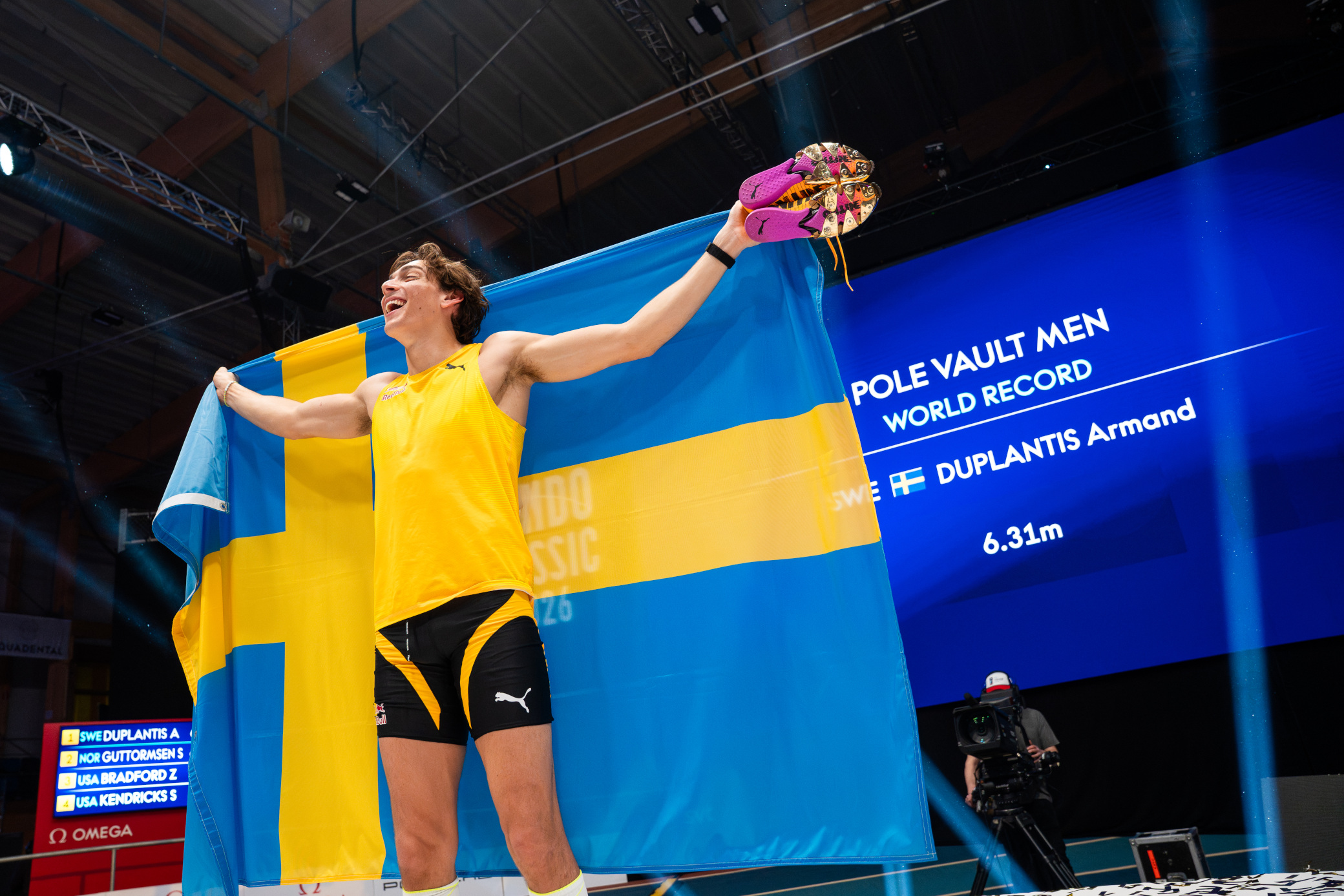
Pour le champion de saut à la perche Armand “Mondo” Duplantis, Il s'agit d'une mobilité de haut niveau au niveau des hanches et des épaules, ainsi que d'une extension de la colonne vertébrale et d'un rebond élastique. D'après le La tribu des coureurs*, Son travail préparatoire comprend généralement des étirements en forme de crêpes pour l'ouverture des hanches, des exercices de mobilité scapulaire pour le contrôle de la tête, et des routines d'étirements dynamiques avant chaque séance.
Armand Duplantis de l'équipe de Suède (Photo by Christian Petersen/Getty Images for World Athletics)
Golf : Rotations sans restrictions
Rickie Fowler
Le golf est un sport très exigeant en matière de rotation et d'enchaînement pour effectuer un swing sans limite. Le golfeur professionnel américain Rickie Fowler connaît l'importance de la mobilité et y consacre 20 à 30 minutes avant de jouer au golf, en se concentrant sur la colonne vertébrale (pour la rotation) et l'activation des fessiers pour la puissance contrôlée, comme il l'a expliqué dans une interview accordée à GOLF Magazine*.
Briser les mythes sur la mobilité
Résultat final
Si vous aimez bouger (et continuer à bouger), le travail de mobilité est votre meilleur ami. Planifiez votre entraînement de manière stratégique, comme un athlète d'élite, et adaptez votre travail de mobilité aux exigences de votre sport (ou simplement pour compenser le temps passé assis) et vous continuerez à bouger plus fort et plus longtemps.*Sources
CATch up est désormais disponible en plusieurs langues
Pour permettre au plus grand nombre d'utilisateurs possible de se connecter à notre plateforme et de faire partie de notre univers, nous proposons CATch up en anglais, allemand, français et espagnol. Veuillez noter que ces traductions sont automatisées et peuvent contenir des erreurs.